





]]>
Parallel to the tech industry’s own decade-long R&D investment, and strategic pursuit of consumer smart glasses, a second battle has been playing out in near choreographed tandem, yet virtually invisible to most inside the Silicon Valley bubble.
If the tech industry’s watershed date of April 15, 2013 saw the introduction of Google Glass crystallizing the tech industry around the pursuit of the next logical human-machine paradigm—that smart glasses are inevitable—across the pond a completely unrelated set of events were put in motion that have reconfigured the premium eye-frames market.
While these two sets of unrelated events have unfolded on the same timeline, most in the tech industry remains blissfully unaware—unaware of the companies concerned, the players involved, or the dynamics shaping the industry.
This article will educate on where the eye-frames industry has been, where it’s going, and in some specific cases of interest where it has already intersected with the tech industry, in order to enlighten us to where opportunities exist.
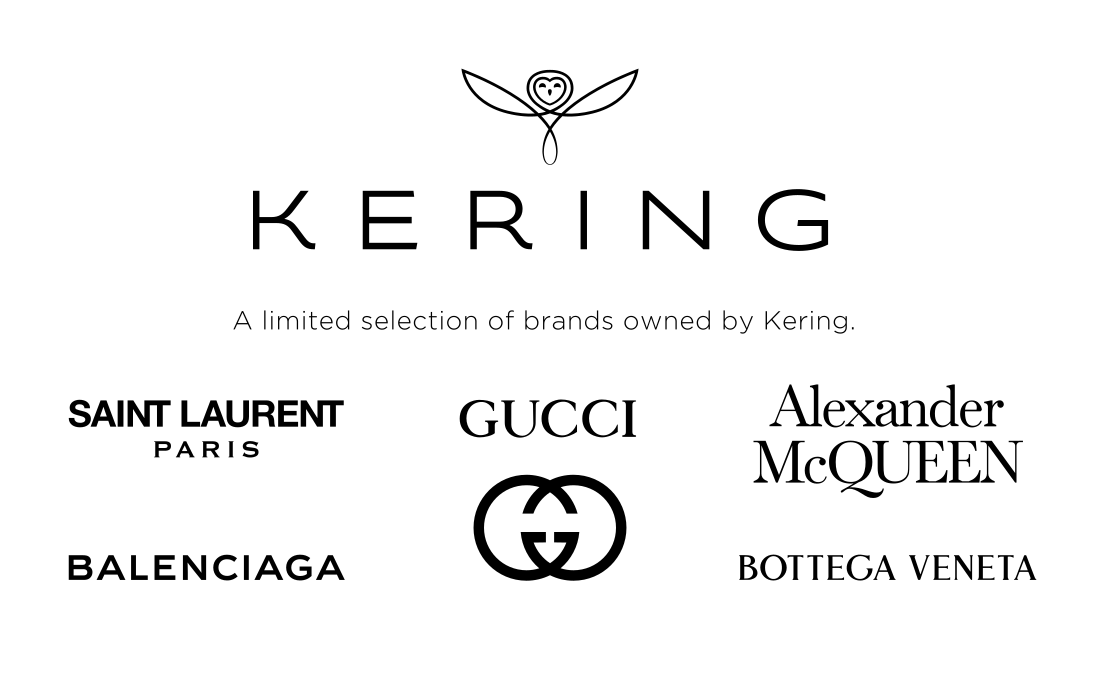
In March of 2013 the French conglomerate of Pinault-Printemps-Redoute (PPR) announced their rebranding as Kering—the culmination of an earlier transfer of power from father to son, that in turn led to a corporate restructuring.
François Pinault (the elder) had diversified the lumber yard he founded in the 1960s into other industries and interests across the French economy, and eventually ran the holding company’s investment portfolio a bit like a private equity firm, with substantial investments across many French industries. Most notably, through this diversified national investment strategy, by the late 90s PPR had acquired shareholder dominance in the French fashion house of Gucci.
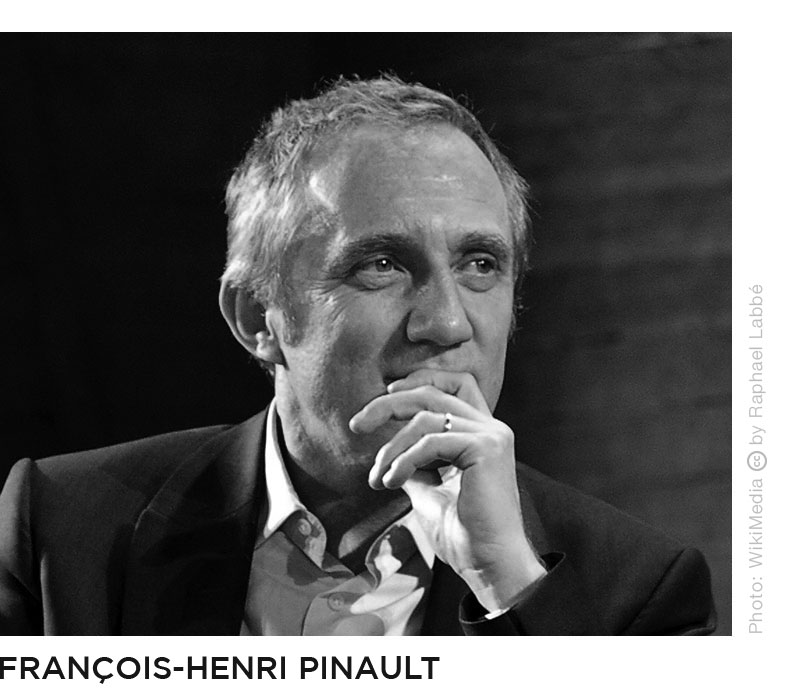 The chairmanship and reins of the family empire were fully transferred to François-Henri Pinault (the younger) in 2005 who—through a process of asset liquidation, and subsequent acquisitions—moved the company his father built from a diversified national conglomerate, to a vertically integrated global fashion and luxury goods brand stable—flipping from >90% French domestic revenue, to >90% international revenue.
As part of their rebranding and reorganization, Kering did extensive research on the international fashion and luxury goods industry, leaving nothing to assumption or conventional wisdom.
One question Kering wished to answer: What is the first brand touch-point of a Gucci buyers who becomes a lifelong customer?
The conclusion? Sunglasses. There was just one problem…
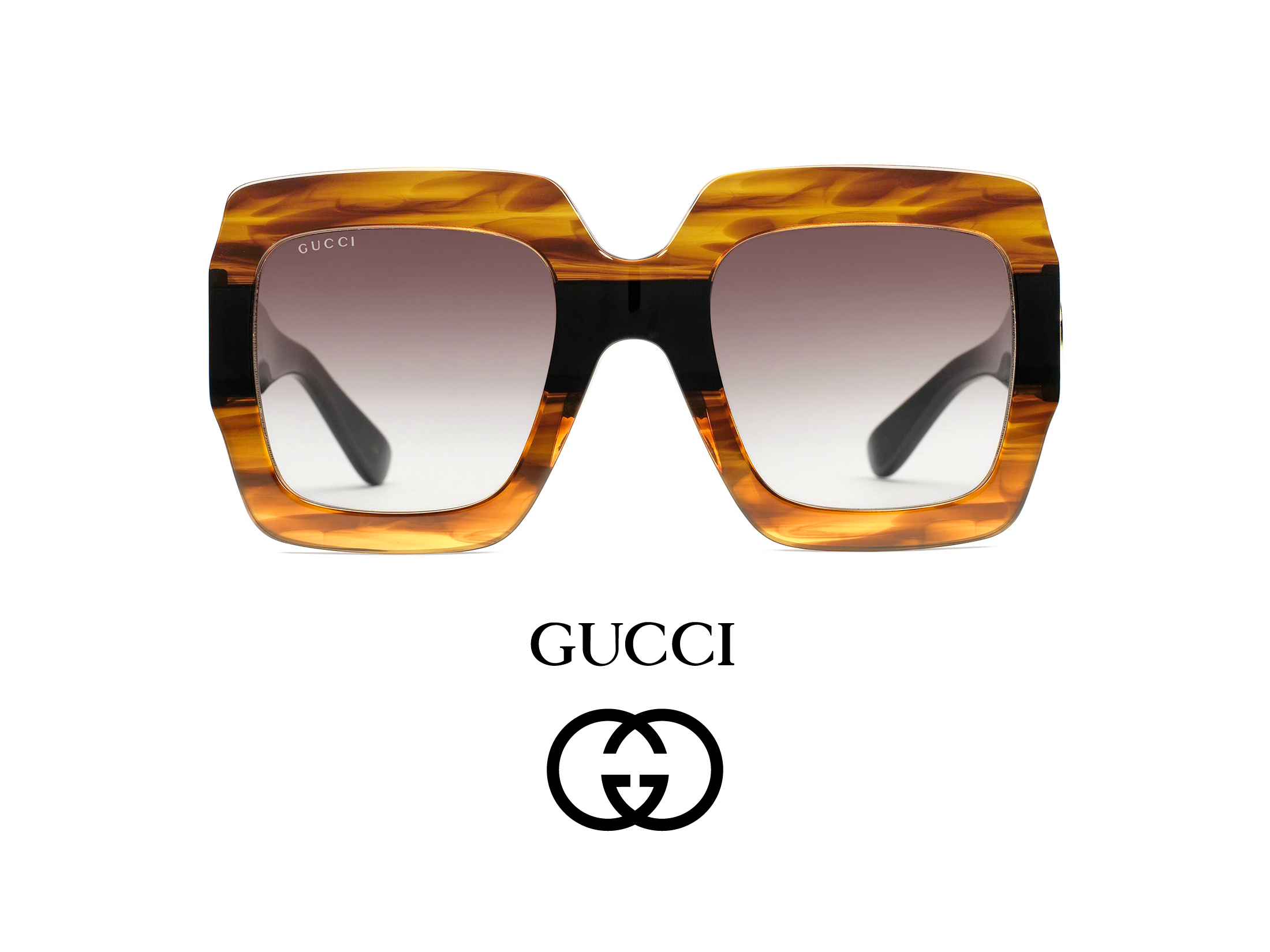
…Gucci eye-frames were not even made by Gucci, or by Kering at all, but through a brand licensing deal with Italian eye-frames manufacturer, Safilo. Not only was this true of Gucci, but this kind of licensing arrangement was common practice—the entire industry was structured this way…
Back in Silicon Valley, in May, 2014 Google Glass were first made available for purchase by the public through their Explorer Edition, setting off shockwaves in the tech industry that have compounded into the driving force for the largest R&D investment made across Apple, Microsoft, and Facebook, in their collective histories.
In September, 2014, Kering unveiled their plan to consolidate their brand stable’s eye-frames under their own umbrella. Not only did they launch a subsidiary, Kering Eyewear, and negotiate with Safilo a €90M payment to terminate their Gucci brand-license early, they also poached Safilo’s own CEO, Roberto Vedovotto, to build Kering’s new eyewear business unit. At that time Safilo was the second largest eye-frames company in the world (second only to Luxottica).
Kering’s move roiled the fashion world, resulting in an industry-wide realignment still reverberating through the global fashion and eye-frames industries to this day.
These two industries—tech and eyewear—have been moving headlong on a course of collision and convergence ever since. Probably the greatest misunderstanding about the emerging consumer smart glasses market is that this is a battle between Apple, Google, Facebook, Microsoft, Amazon (or insert your favorite indy, whether that be Vuzix, MagicLeap, etc.).
Premium eye-frames are a pre-existing $148B global market. The adjacent optometry industry is a $61B market. Completely apart from smart glasses, both are aggressively growing markets in their own right, and that’s without mentioning other adjacent industries like vision-care insurance.
If there is a battle at all, it could more accurately be framed as one between the tech industry as a whole, and the existing eye-frames and eye-care industries, because the decision in the minds of consumers will not be whether to purchase Apple glasses, or Google glasses, or Facebook glasses, or Amazon glasses, etc. The question will be, do they buy smart glasses at all, or do they continuing wearing their existing eye-frames, and sunglasses.
In March of 2014, Google announced that they would be launching versions of Glass in partnership with Luxottica, co-branded with two of their house brands: Ray-Ban, and Oakley. This co-branded product development was negotiated by then Luxottica CEO, Andrea Guerra.
In a story that first broke in the business section of Corriere della Sera, Italy’s leading newspaper, Luxottica’s founder and Chairman, Leonardo Del Vecchio, was alleged to have had a disagreement with Guerra over the Google contract, a decision some felt placed the reputations of two of Luxottica’s house brands at risk, through association with Glass—a product which by this time was experiencing substantial social backlash (wearers had by some acquired the unenviable moniker of “glassholes”). According to this version of the story, Del Vecchio wanted Luxottica to withdraw from the contract, while Google’s team steadfastly held Luxottica to the negotiated terms.
Del Vecchio contested this framing.
Guerra had been CEO of Luxottica for a decade at this time. He was not new in the role, and up to then his performance was widely praised—Luxottica’s market cap tripled under his tenure.
Nonetheless—whatever the source—the row between Guerra and Del Vecchio achieved operatic heights in the Italian trade press, reaching a crescendo on the first of September when Guerra’s termination was announced.
In spite of Guerra’s departure, the Google contract reportedly remained immovably in place, as Del Vecchio was quoted in the Wall Street Journal as being embarrassed by the scandal, having played out rather publicly. The business press was assured the Google contract would nonetheless be honored, and the story went away… yet no Luxottica / Google cobranded glasses under the Ray-Ban or Oakley labels ever shipped.
Further—now seven years later—Luxottica and Facebook are scheduled to ship consumer smart glasses, cobranded with the Ray-Ban label later this year. Now would be a good time to get to the bottom of whatever happened to the ill-fated Google / Luxottica partnership.
Apple is also preparing to launch a smart glasses product.
Four days after Guerra’s exit from Luxottica, news leaked that one time design director of Ikepod watches—famed Australian industrial designer, Marc Newson—had joined Apple. In another four days they would unveil the Apple Watch.
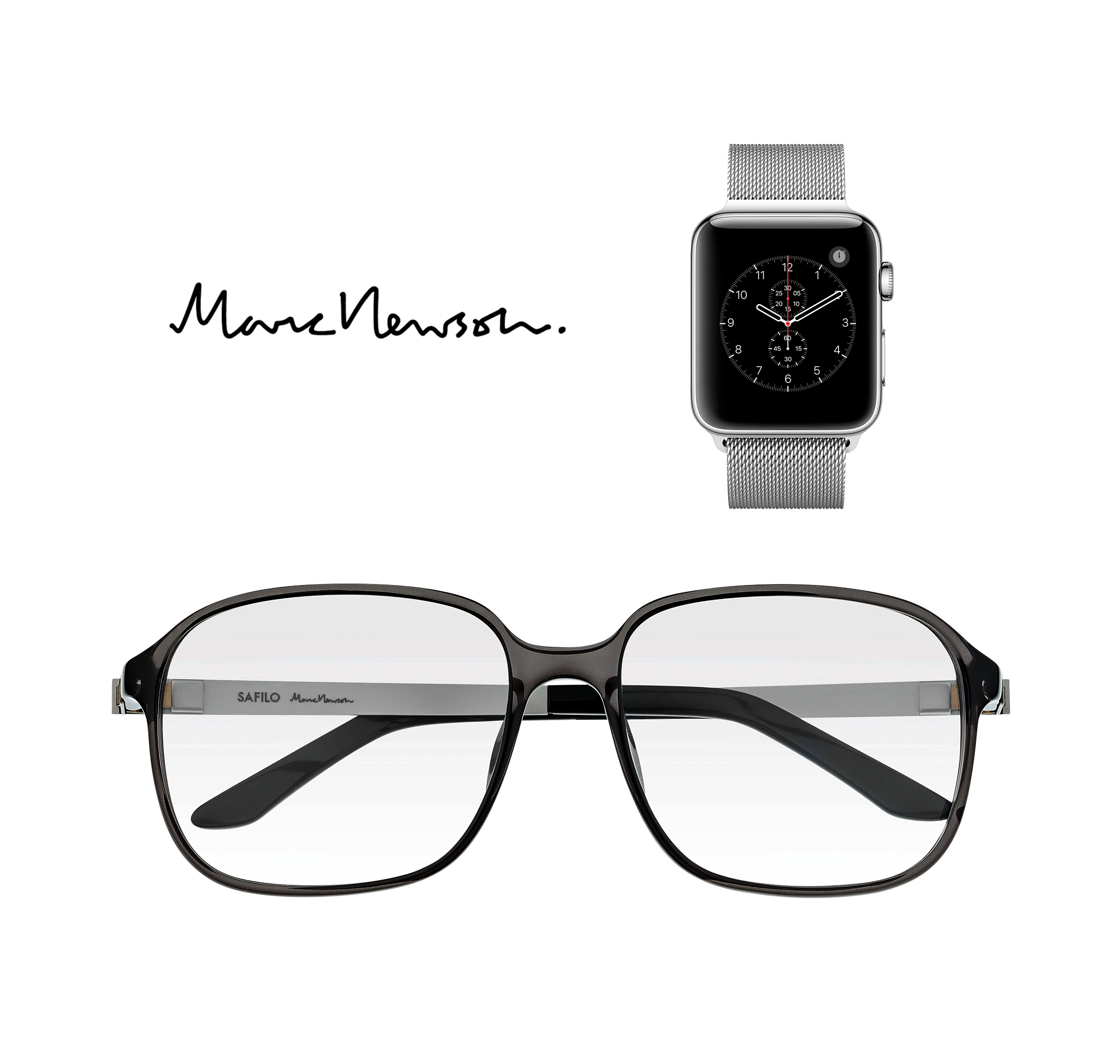
Peculiarly unmentioned in the tech-press coverage of the Apple Watch announcement was that Newson had also just launched another wearable accessory: a line of eye-frames for Luxottica competitor, Safilo. At this time Apple had already begun their streak of augmented reality related patent filings and acquisitions. What contact, if any, had Apple had with Safilo regarding smart glasses? Another reasonable question that no one in the tech press seemed interested in asking.
Given the loss of the Gucci contract (and their CEO), as well as the eminent expiration of Kering’s others brand licenses, any incoming CEO at Safilo would have an unenviable task upon arrival. The ever-so-recently renowned Italian eye-frames manufacturer was now maligned. An executive search for a qualified CEO would be difficult, unless they could find someone from within the firm to step up, and take the reins.
 A recent Financial Times biography described Luisa Delgado’s career as a “mosaic.” The Swiss executive launched her career at the European arm of American consumer package goods giant, Procter & Gamble, eventually leveling-up to Managing Director of Nordic operations (Denmark, Finland, Iceland, Norway and Sweden), before holding executive and/or board positions across a broad range of industries including Swedish furniture manufacturer, IKEA; German software firm, SAP; British investment bank, Barclays; and at this stage of our story, Safilo.
Stepping from her board director role into CEO, Delgado quickly looked to establish new brand license deals to offset the revenue loss from the Gucci exit. Other Kering brand departures would be imminent. New brand licenses would be needed, licenses not entangled with the large French fashion stables who had suddenly turned fickle—fickle not just at Kering, but now in a contagion extending to their largest rival LVMH, one for which Safilo also held prominent eye-frames licenses. The crown jewels of the LVMH stable—their Louis Vuitton namesake, as well as Dior—were both coming up for renewal.
Another puzzling mystery regards Safilo’s preexisting relationship with Marc Newson—what if any contact might Safilo have sought to established with Apple, regarding potential future smart glasses?
Before the end of this story, we’ll get to the bottom of this mystery, as well as the Google / Luxottica contract that never materialized… but for now we’ll wrap some needed context around the premium eye-frames industry.

 Leonardo Del Vecchio’s father died when he was five-months old, and his mother, destitute, turned him over to a Catholic orphanage at age seven. Raised by nuns, at fourteen the young Del Vecchio began an apprenticeship as a tool & die machinist at a factory in Milan, eventually earning enough to take evening classes in industrial design. With this experience, in his twenties he would relocate to the North Italian town of Agordo, in the province of Belluno.
(He was not the only one.)

Agordo is a small factory town near the Austrian border. Even in the era of the youthful Del Vecchio, the mountainous region known as the Dolomites—part of the Italian Alps—was already home to Italy’s famed eye-frames industry. This was principally due to Safilo, then located in the Belluno municipality of Calalzo di Cadore. Safilo was established in 1934 when its own founder, Guglielmo Tabacchi (1900-1974) acquired Carniel, Italy’s “original” eye-frames factory (built in 1878). Other smaller optical companies built up around it. The region has a long history in spectacles.
Del Vecchio initially worked for hire as a component supplier to other frames companies, and in 1961 he named his studio Luxottica. He had a vision that eye-frames could be elevated to a high fashion accessory on par with designer shoes, or fine watches. He sold his first pair of frames under the Luxottica name in 1967, and by 1971 he introduced his first full eye-frames collection.
Just a few miles away from Del Vecchio, also in the province of Belluno, another young designer in Longarone named Giovanni “Nanni” Marcolin would launch his eponymously branded Marcolin Eyewear—like Del Vecchio’s Luxottica studio—also in 1961.
The municipality of Limana, also in Belluno, is the home of De Rigo, the smallest and youngest of the “big four” Italian frames houses. It was founded first as Charme Lunettes by brothers Ennio and Walter De Rigo. Soon after, the brothers would acquire the brand right to “Lozza,” the namesake label of Carniel’s founder, Giovanni Lozza, giving both Di Rego and Safilo competing claims of heritage to Italy’s oldest eye-frames manufacturer.
The globally dominant, Italian eye-frames industry is comprised principally of these four companies (as well as a fifth American owned company, Marchon, that manufactures in Italy, that we’ll get to in time).
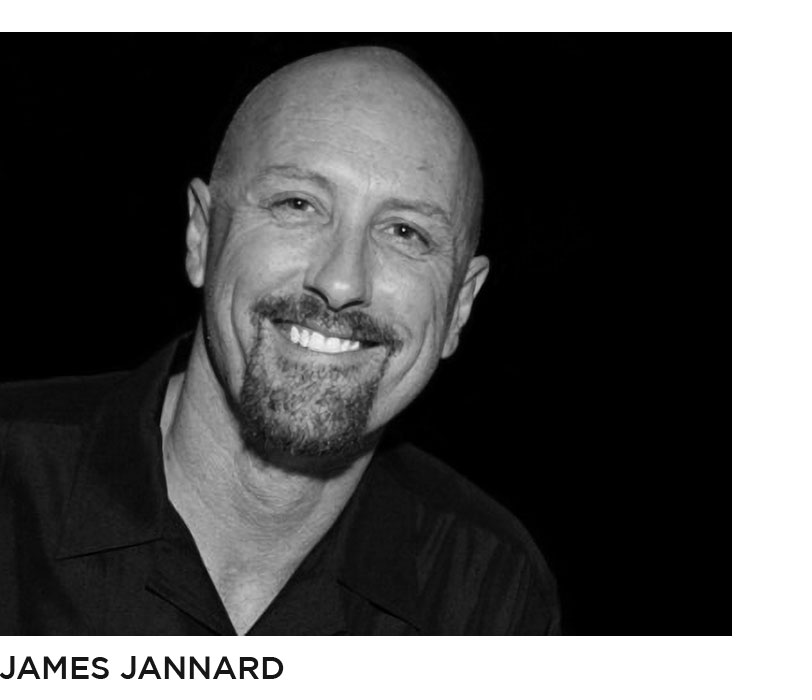 Also in the 70s, an American entrepreneur named Jim Jannard launched Oakley as a BMX and motocross sports apparel and accessories company. While his first hit product were “Oakley Grips,” for motorcycle handlebars, by the 1980s his stylized eye-frames had become their high-margin hit product, so much so that he discontinued motocross parts, and pivoted the company to apparel, leading with eyewear. Jannard and Del Vecchio’s paths would soon collide.
In the ensuing decades, Del Vecchio earned for himself a reputation as a visionary entrepreneur of ruthless ambition, growing Luxottica into an international juggernaut, and with an estimated personal net worth of just over $30B, becoming the wealthiest man in Italy, in the process.
Let’s take a closer look at the company Del Vecchio built.
A milestone in Luxottica’s history was partnering with famed Italian fashion house, Giorgio Armani. In 1988 Luxottica signed a brand license deal to manufacture and sell fashion eye-frames under the Armani name, establishing the fashion brand licensing strategy that they would master, and which would become the norm throughout the eye-frames industry.
In 1990 Del Vecchio took the company public, listing on the New York Stock Exchange. The 90s would see fabulous growth, largely through acquisition.
Corporate raider style, in 1995 Luxottica successfully staged a hostile takeover of United Shoe Corp. If this seems an odd target, United had diversified out of shoes. Luxottica’s goal was to get control of United’s wholly-owned subsidiary, LensCrafters.
As Del Vecchio’s reputation as a cutthroat businessman grew, his two most infamous acquisitions were yet to come.
In 1999 Luxottica acquired Bausch & Lomb’s eye-frames business, the gem of the deal being Ray-Ban, America’s number-one selling sunglasses (It also came with the lesser known Revo brand, which Luxottica would sell-off in 2013).
 Ray-Ban had been mismanaged—though the styling remained iconic, the build quality was low. Worst of all, the price-point was far below what designer label frames cost, and the sales channel was both enormous and pedestrian. Any average Joe could buy a pair of Ray-Ban Wayfarers at a convenience store or gas station for as little as $35. Ray-Ban was both a legendary brand, as well as a low cost competitor undercutting Luxottica’s price model. Upon acquisition, Luxottica shut down 13,000 points of sale. As the few existing sales channels depleted the remaining inventory, Ray-Bans became almost impossible to find. Used pairs increased in value on ebay.
Ray-Bans were effectively removed from the market, manufacturing relocated to Italy with state-of-the-art tooling and improved materials, the new Ray-Bans were brought up to Luxottica’s build quality. With the sales channel constricted, and inventory depleted, Luxottica relaunched Ray-Ban in 2004.
A pair of classic Wayfarers now retail for over $150.
While Bausch & Lomb exited the eye-frames market voluntarily, to focus on their contact lens business, not all brands succumbed to Del Vecchio’s will so gracefully.
Throughout the 90s, Oakley butted heads with many competitors, mostly over allegations of infringing on their design and engineering patents. Among others, Bausch & Lomb stood accused of making Oakley knockoffs, against which Oakley won a landmark case in 1995.
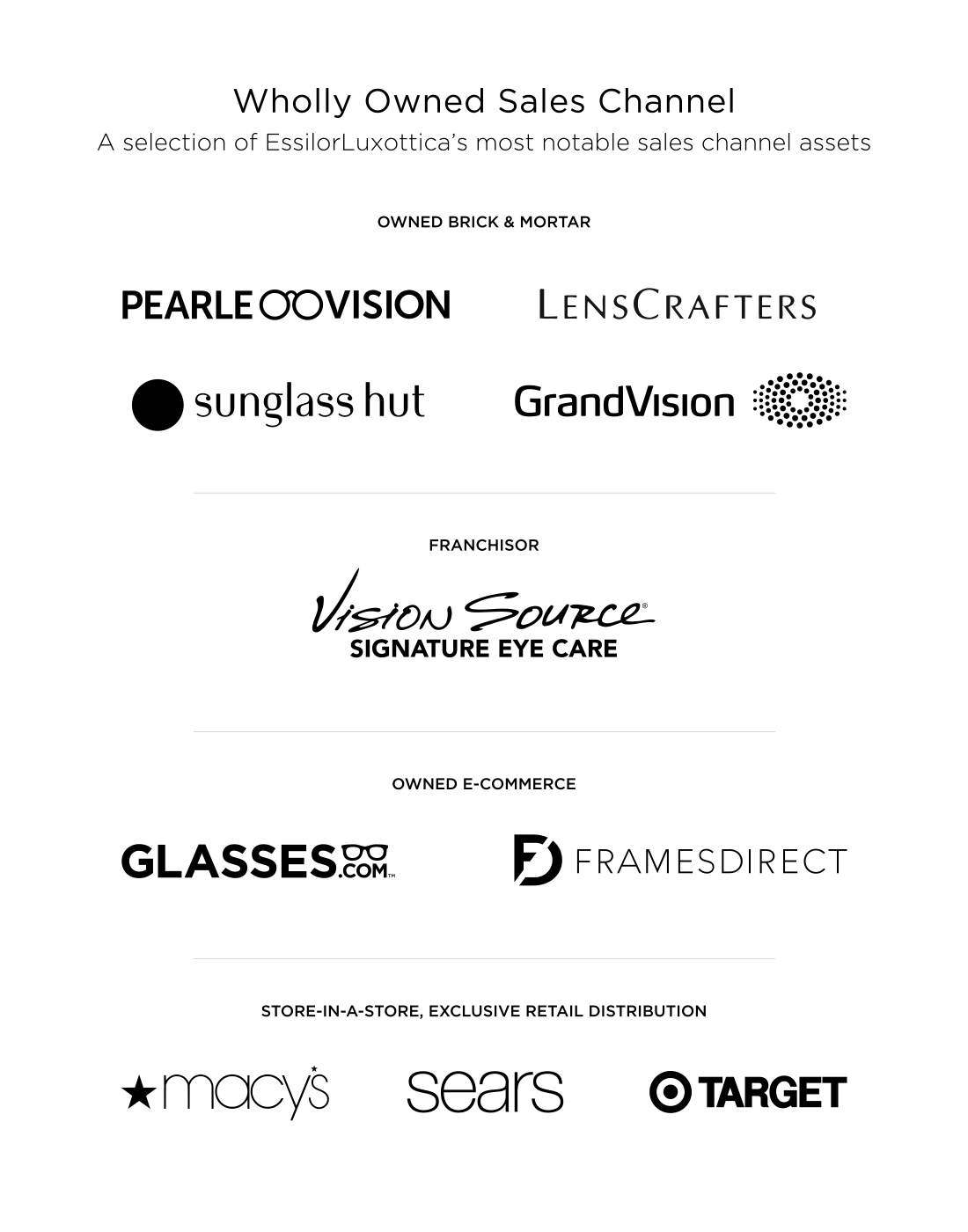
 Luxottica acquired Sunglass Hut in 2001 and, together with LensCrafters, meant that their competitors also had to move a substantial amount of inventory through Luxottica owned points of sale. Oakley fought with IP litigation. Luxottica responded by dropping their Oakley inventory to 1/6 their previous orders. Oakley rebutted by implementing a strategy to build out a sales channel circumventing Luxottica, both seeking new regional sporting goods partners, as well as acquisitions of independent retailers. In 2003 Oakley “settled” two IP lawsuits with Luxottica without a win, Jannard stating, “This settlement eliminates one of the potential obstacles to the continued development of a strong commercial relationship between two leaders in the sunglass category.” (i.e.: We need their sales channel.) In January 2004 Luxottica closed a deal to acquire Cole International, the holding company of Pearl Vision Center, that also had exclusive sale channel rights to run the vision centers inside Sears and Target stores. Oakley followed with an acquisition of OliverPeoples in 2006—a Los Angeles based eye-frame brand that owned their own retail, prominent in the California market.
Jannard hired Scott Olivet—a former Nike VP over subsidiary brands. Interesting choice as Jannard had also fought a nearly five year long legal battle with Nike, with dueling counter claims of design infringements. Jannard had successfully leveraged IP to protect his market position in the past. He could be pretty ruthless himself.
With PearlVision, LensCrafters, Sunglass Hut, Target, and Sears points of sales all under Luxottica’s control, they could now effectively rattle Oakley’s stock price at any time by adjusting their volume of Oakley inventory.
Jannard, a billionaire, had much of his net worth tied up in Oakley shares (though publicly traded, he owned 68%). Any stock price slide placed Jannard’s own fortune at risk. He succumbed, and Scott Olivet negotiated Oakley’s sale to Luxottica. Jannard’s battle with Del Vecchio finally came to an end in 2007.
By this point in Luxottica’s rise they had begun to draw accusations of anti-competitive behavior from both the media and ambitious political figures, including then New York State Attorney General, Eliot Spitzer who launched a 2003 antitrust investigation into Luxottica’s business (it went nowhere); and nearly a decade later 60 Minutes, produced a 2012 exposé… also resulting in nothing.
Not only had Del Vecchio established himself as a competitor to be reckoned with, but also an untouchable Teflon Don. Business was good (and still is).
In January 2017, Del Vecchio bested even himself.
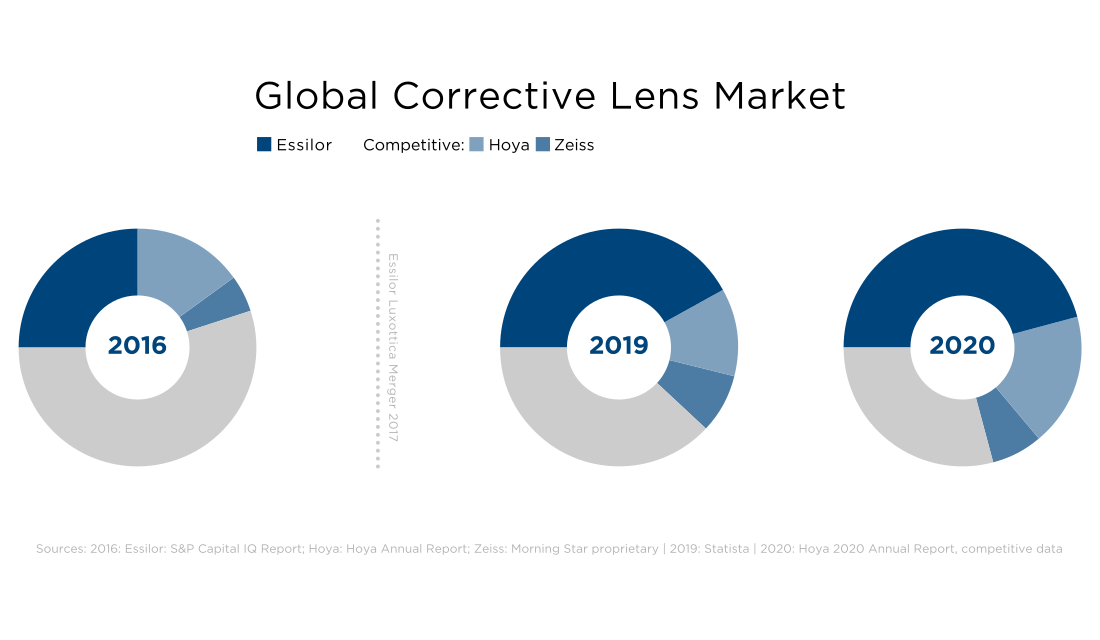
The Luxottica / Essilor merger was technically an acquisition. Essilor acquired Luxottica for $24B. One could be forgiven for thinking it were the other way around. In a post acquisition analysis, industry trade publication, Business of Fashion noted two developments driving the merger: the shakeup in the eye-frames brand-licensing model triggered by Kering, and the emerging consumer smart glasses market.

This would be a good time to take inventory of Luxottica & Essilor’s combined holdings. Essilor has a dominant (but not majority) position in the global corrective lens market.
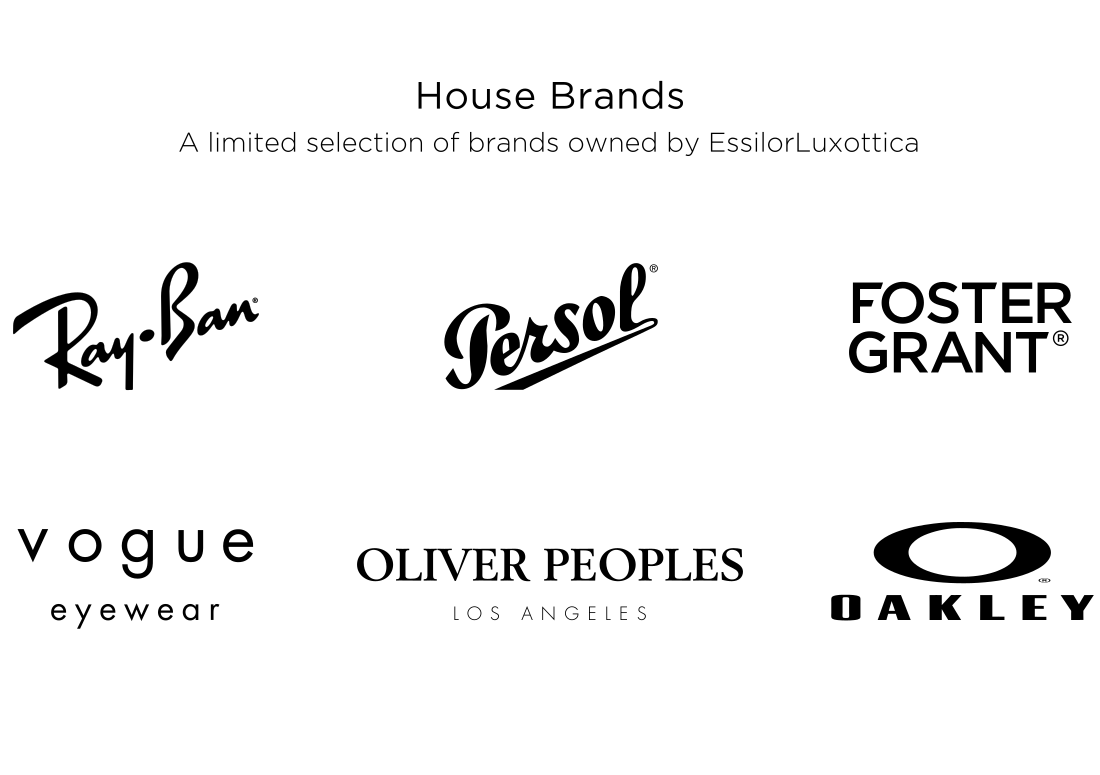
While their core business focuses on corrective lens manufacturing, Essilor also entered the eye-frames market by acquiring FGX International in 2009. This included their name-sake Foster Grant eye-frames brand, a portfolio of licensed brands, as well as their extensive non-prescription “reading glasses” business. Foster Grant itself did not directly compete with Luxottica. They cornered a lower end of the market. Foster Grant frames and glasses can be found in sales channels like Walgreens and other pharmacies, at substantially lower price points.
Essilor brought other significant sales channels into the fold with both FramesDirect, then the leading online eye-frames retailer; as well as Vision Source, the U.S.’ largest eye-care franchise (and largest retailer, overall in the U.S. market).
Not all of their revenue are frames and corrective lenses.
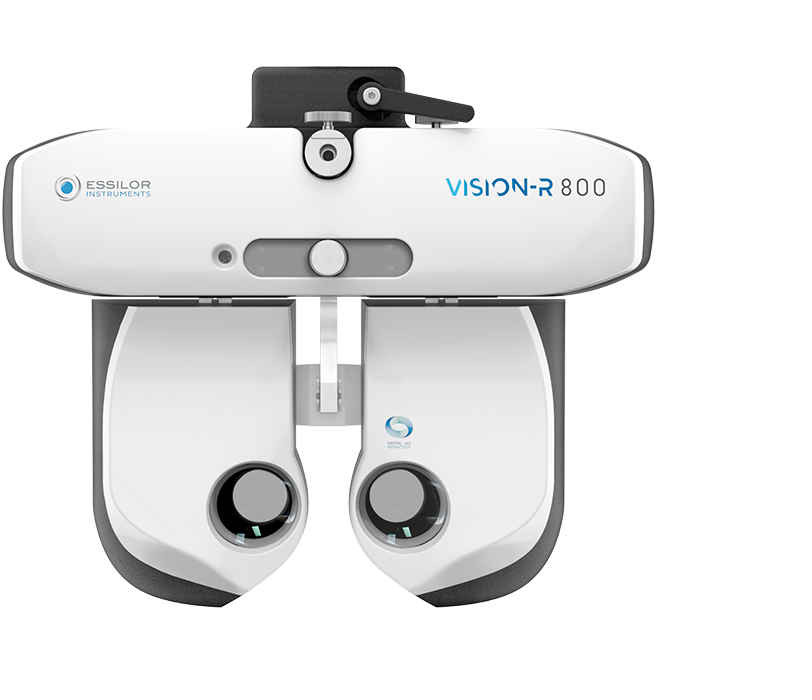 Essilor is also a leading manufacturer of ophthalmic equipment. Because few of the manufacturers in the medical equipment space are exclusive to vision equipment, divvying up who controls how much market share is not easily sussed out. One industry report noted Essilor as the second largest player in the space behind Alcon, but ahead of Johnson & Johnson; however of those, only Alcon’s Annual Report separated out revenue from such equipment… and even there lumps it together as “Equipment/Other” at 16% of their $7.4B in 2019 sales (where possible I’ve tried to avoid referencing 2020 reports, as the pandemic threw numbers into disarray). Johnson & Johnson doesn’t distinguish vision equipment revenue from other medical devices, and so on, down the list. Nonetheless the combined EssilorLuxottica is a major player in the medical vision-equipment space.
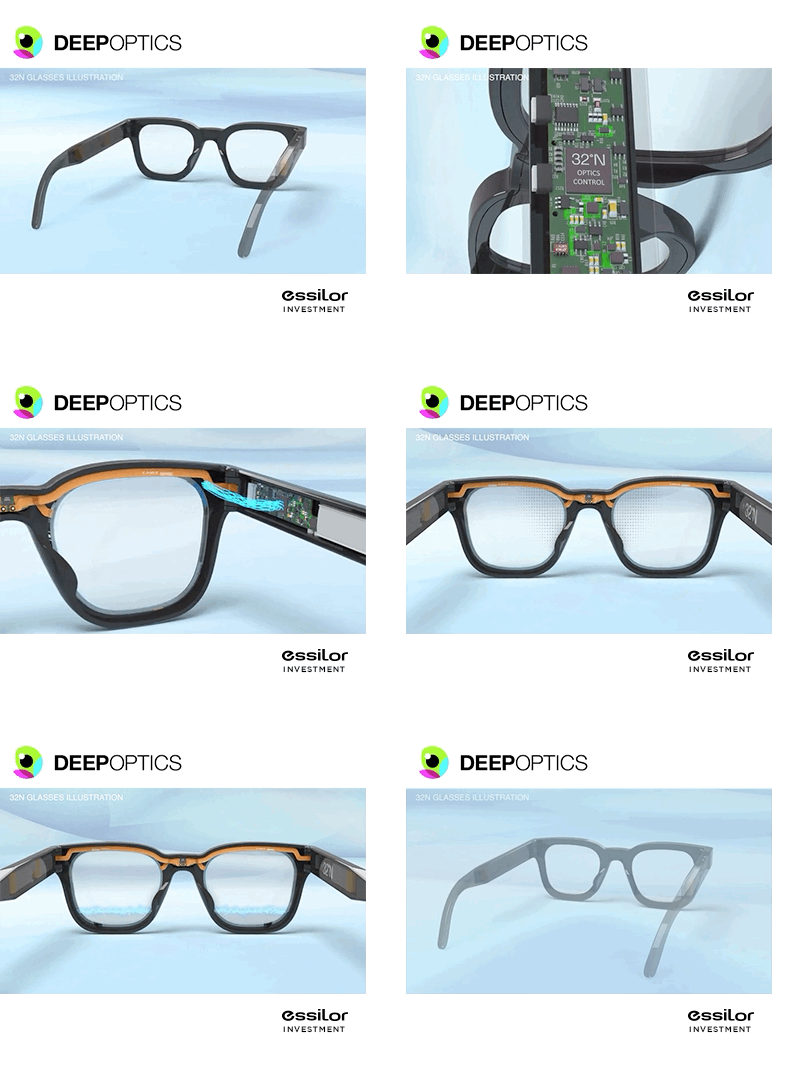 Essilor also has a substantial IP portfolio including waveguides and other near-eye display technology. While Silicon Valley tech giants have vast troves of IP across all aspects of a smart glasses product, Essilor’s patent portfolio (specific to smart glasses) is more narrow—focused in optics, but it is noteworthy. Essilor does not have a large startup investment portfolio, but one investment that’s currently having a moment is DeepOptics, which spent years developing digital adaptive focus lenses, around which they currently have a Kickstarter to productize their adaptive focus technology into a pair of smart consumer sunglasses.
While Essilor includes contact lenses among their product offerings, in a market dominated by companies like Bausch+Lomb, Alcon, Johnson & Johnson, and CooperVision, Essilor is not a leading player in contacts.
The combined manufacturing footprint of Luxottica and Essilor is both international, and staggering. Essilor has 27 international plants for fabricating prescription lenses, three more for photochromic (transition) lenses, and an additional three for sunglass lenses, with plants located on almost every inhabited continent except Australia. They then move the rough lenses through a network of 449 finishing laboratories around the world servicing regional retail, that mill and polish each pair of lenses to fulfill local prescription orders, and cut them to fit the desired frames.
Given that frames—unlike lenses—are not manufactured on demand, Luxottica’s operations do not require the edge manufacturing network of Essilor’s operations. They are nonetheless substantial and operate on multiple continents. They have one finished frames manufacturing plant each in southern California, Brazil, and India, as well as two component parts factories in China. While their supply chain is international, the largest portion of their manufacturing is still done in Europe, principally at their six frame fabrication plants in Italy, three of which remain in their founding province of Belluno: their Agordo, Sedico, and Cencenighe Agordino plants, respectively; one plant just to the south of Belluno at Pederobba, in the province of Treviso; one just to the west of Belluno at Rovereto, in the province of Trentino; and an additional plant in Lauriano, just west of Milan, approaching the French border. They also control a seventh fabrication plant in Italy through their Barberini subsidiary, located in Venice.
Further, as the owner of the U.S.’s second largest vision-care insurance provider, EyeMed; Luxottica also competes directly with Vision Service Plan (VSP)—America’s largest vision care insurance provider (who also service other international markets). We’ll look at them more later.
All of which leads us to Luxottica’s eye-frames brand licensing business…
It’s imperfect and surely even unfair—yet irresistible given my audience—to compare Hubert Sagnières to Gil Amelio, if only for Del Vecchio’s Jobsian takeover of his own acquirer. Hubert Sagnières retains his executive vice-chairmanship. It has been magnificent to observe, translated from the French and Italian business press, sometimes with drama. Del Vecchio never disappoints. Only in recent weeks has this struggle arrived at its inevitable conclusion… but for the moment we must catch up on some of the other threads, companies, and characters.

Let’s go back for a moment to early 2014—the Explorer Edition of Google Glass had been available to the public for about a year. While already working for Apple in secret, Marc Newson’s 80th Anniversary edition Safilo frames would be introduced that March. Seven days later Luxottica and Google would issue a joint press release on their strategic partnership. By September Apple held their teaser event, unveiling the Apple Watch just five weeks after Andrea Guerra’s ouster at Luxottica. Yet not only would the Luxottica-Google partnership never produce a product, no Safilo-Apple partnership precipitated either.
For years I’ve been determined to get to the bottom of these two matters.
What happened to the Luxottica-Google partnership? The tech press dutifully reported on it with much fanfare upon announcement… and seemingly forgot about it completely when no product materialized.
And what of Marc Newson’s eye-frames partnership with Safilo, while working on the Apple Watch? Was it really possible the subject of his existing product line at Safilo simply never came up internally at Apple, as they moved forward with smart glasses… with Newson then leading wearable product design, no less?
Seems implausible.
I finally got a break…
“You should talk to Colin Baden,” I was told.

When Oakley founder Jim Jannard commissioned a beach house on Orcas Island—the largest of the San Juan Islands, off the coast of Washington State—he hired architect Colin Baden, then a partner in the firm of Lewis Nelson Architects.
Jannard kept him busy.
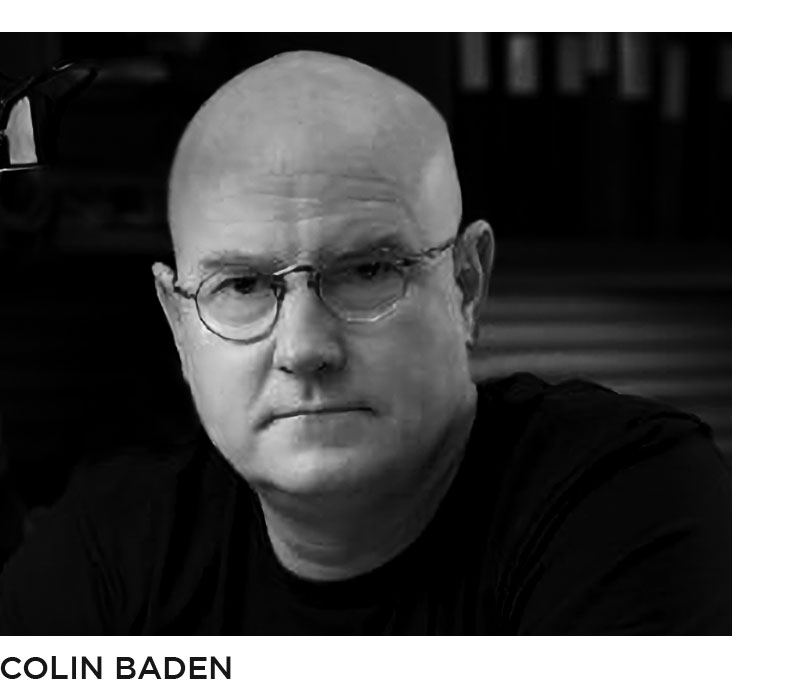 He would subsequently hire Baden to design Oakley’s now legendary headquarters (shown above). With an unlikely career path—sharing an aesthetic vision—Jannard persuaded Baden to depart his architecture firm and head up Oakley’s industrial design studio. Under Jannard, Baden would also be elevated to the position of President, and once acquired by Luxottica, Baden would take the reins as Oakley’s CEO.
Colin made himself accessible—indeed, within 24 hours of my outreach, we were on the phone. While divergent to our main storyline, I had to know the history of the Oakley Headquarters (I studied architecture myself, so humor me here).
Baden obliged.
Jim and I would watch science fiction movies and that was our inspiration—a bunch of, you know, great films that had great architecture in it, and that was how the building was created. I actually drew it in one night! My wife and I were living in a little cabin on Orcas Island—which is where we live now—that’s where Jim wanted to build his house. After dinner I just had this idea of what it should be and I drew it, drew it all night—it was a great; it was an amazing experience—faxed it to him, you know, fax machined long pieces of paper going through the machine at four in the morning. [laughter]
He said, “Do it!”
A great moment: “Go build it!”
Oakley was not your typical multinational, and we’ve established that Baden was not your typical CEO. I initiated my outreach because I wanted to get to the bottom of the Google / Luxottica cobranded glasses that never shipped. I also hoped to glean from Baden his own POV on the relationship between Silicon Valley, and the premium eye-frames industry. Few, maybe none would be as qualified.
When Apple partnered on their now forgotten first foray into cellphones with the Motorola ROKR featuring Apple iTunes, Oakley designed the accompanying headphone eyewear, the Oakley | Motorola O ROKR. Oakley has been shipping some form of designer smart glasses for almost two decades. Baden’s tenure bridged both the height of founder James Jannard’s success and the post acquisition period, where he rose to CEO of Oakley in the Luxottica era, including the time of the ill-fated Luxottica / Google contract.
How did this Google collaboration come about?
Oakley was the sharp end of the spear for Luxottica. We ran an R&D Department that they did not have when we were acquired, with a clear point of view about a multi-year evolution of innovation—AR was part of it. We obviously had a long history… and we were making products and selling in the marketplace. Some really successful, some not so successful, but it was all learning…
Given Oakley served as Luxottica’s smart glasses R&D department, the whole Google / Luxottica deal actually came in through them.
Sergey Brin approached Jim Jannard and said, “I’m havin’ trouble doing this Glass project. Would you take over the designer frames?” and Jim was, at that time, out of the Oakley picture. He said, “No, you need to go talk to my boys at Oakley, and do it with them.” and so Sergey and I met… He got his whole team in there. They were all wearing Google Glass, and we started having a conversation… and a short time later Oakley and our biz-dev team entered into a discussion with Google about helping them do their project. I thought it was a great representation of how progressive Luxottica and Oakley could be in the market place.
This meeting, Baden explained, took place before Glass had been revealed to the public—prior to April of 2012.
[Google] were very close… if [Glass] was going to have broad acceptance / adoption with what [Sergey] had created, he needed to partner with someone who made eyewear for a living, and we were the most progressive game in the marketplace.
How did it lead to the departure of Andrea Guerra? Turns out, it didn’t.
Baden explained that the Italian business press got everything wrong about the rift between Luxottica CEO, Guerra and founder, Leonardo Del Vecchio. The Wall Street Journal story was just following on, and by then it was probably impossible to stop the misrepresentation from circulating.
It was selling the Revo brand.
Along with Ray-Ban, the acquisition of Bausch+Lomb’s eye-frames business, also included the lesser known, Revo.
Andrea Guerra was a great guy to work for.
Baden elaborated how Guerra let the subsidiaries run with relative autonomy, particularly Oakley.
He respected the brand. He understood the concept that the brand was the culture, and the culture was the brand; and if you messed with that, what you bought would drop in value; and he let us have all the freedom in the world to do what we had been doing…
While Baden elaborated no further on Revo—after thirteen years Guerra decided to let the subsidiary go, and sold them to Sequential Brands Group, a New York based conglomerate. The Revo sale was hardly even a news story beyond a press release, even within the optician trade press.
So if Andrea Guerra’s departure had nothing to do with the Google contract at all, then why did no product result?
So what we did was, we tried to take what they had made, and blend it in to a series of frames that already existed in our portfolio… and… the way that that product functioned set very specific design parameters that you couldn’t work around…
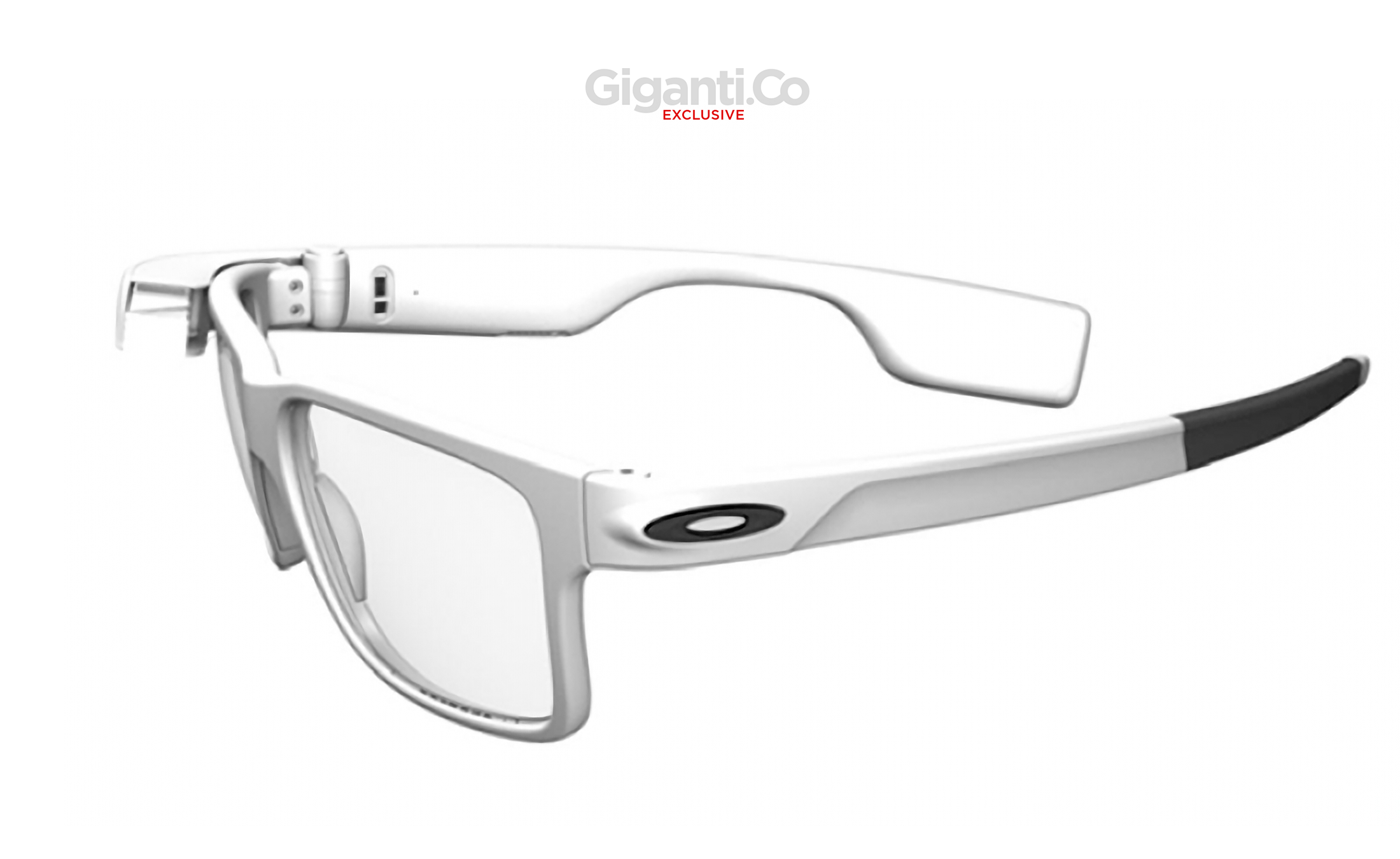
Through other sources I had come to understand that Oakley’s team had concluded by November of 2015 that there wasn’t going to be a product, and by January of 2016 Google made a strategic decision to pivot to enterprise. It was mutually agreed upon that Luxottica was the wrong partner for an enterprise product, and the companies parted ways.
It was completely amicable. There [were] no bad feelings; everyone… you know, there was a product we had developed on the table, [but everyone] agreed… we weren’t going to move forward… and by that time… we were already with Brian Krzanich, the CEO of Intel at the time, and we were busy with a roadmap we were going to partner with them on… They had the interest to invest millions of dollars…
Another source who declined to be interviewed simply stated that lawyers were not even involved, that it was a ‘hand shake’ parting of ways.
Baden would go on to share some of his thoughts regarding the state of smart glasses and what was needed to succeed in the consumer market, and we’ll hear more of that, but having resolved the mystery of the Luxottica Google contract, we have the second mystery to solve…
What of Safilo, and did they ever interface with Apple?
For this we head back to Italy.
 In the throws of transition, the struggling house of Safilo hired Nicola Belli as Head of Innovation. Belli, who had first made a name for himself in the space sciences division at Ferrari, was tasked with establishing Safilo’s wearable technologies studio for smart glasses.
Belli, no longer with Safilo, agreed to talk.
I joined Safilo back in in November 2013 and that was more-or-less the time when Safilo got in touch with Google. They were probably talking to Safilo and other eyewear manufacturers because they knew that was something not working—from the eyewear perspective—in their product.
From the start, this was new information. Before the Google/Luxottica contract went into effect, Google executives toured Italy, and met with all the frames companies. Finding Safilo’s place in the smart glasses market was Belli’s responsibility.
…my main background is in aerospace engineering: I had been involved in the technology transfer for Formula One to the sporting goods industry, including integration of electronics; so I got involved with the evaluation and our intent was to test Google Glass for a few months to get an a better understanding of what were the limits that the product had both from the design and the eyewear manufacturing perspective. The outcome was not encouraging.
I was interested in the Marc Newson relationship, and the Safilo frames he designed while working on the Apple Watch.
You clearly see the design imprinting from Marc Newson, the shape is very similar to the Apple Watch. I guess he was experimenting his design style related to Apple into other products. That was a capsule collection under Safilo’s own core brand, not intended for mass distribution.
Safilo’s most successful house brand, SMITH, was a 1996 acquisition (originally based in Idaho, US). Besides being a sports eyewear brand popular among skiers and cyclists (form whom they’ve also made helmets), the SMITH division of Safilo is also a supplier of military grade tactical glasses whose customers include the U.S. military. Through their SMITH division, Safilo had some past experience with embedding headphones insides of sports helmets—and hints of perhaps other undisclosed military work—and was therefore the natural choice when exploring a Safilo house brand for smart glasses development.
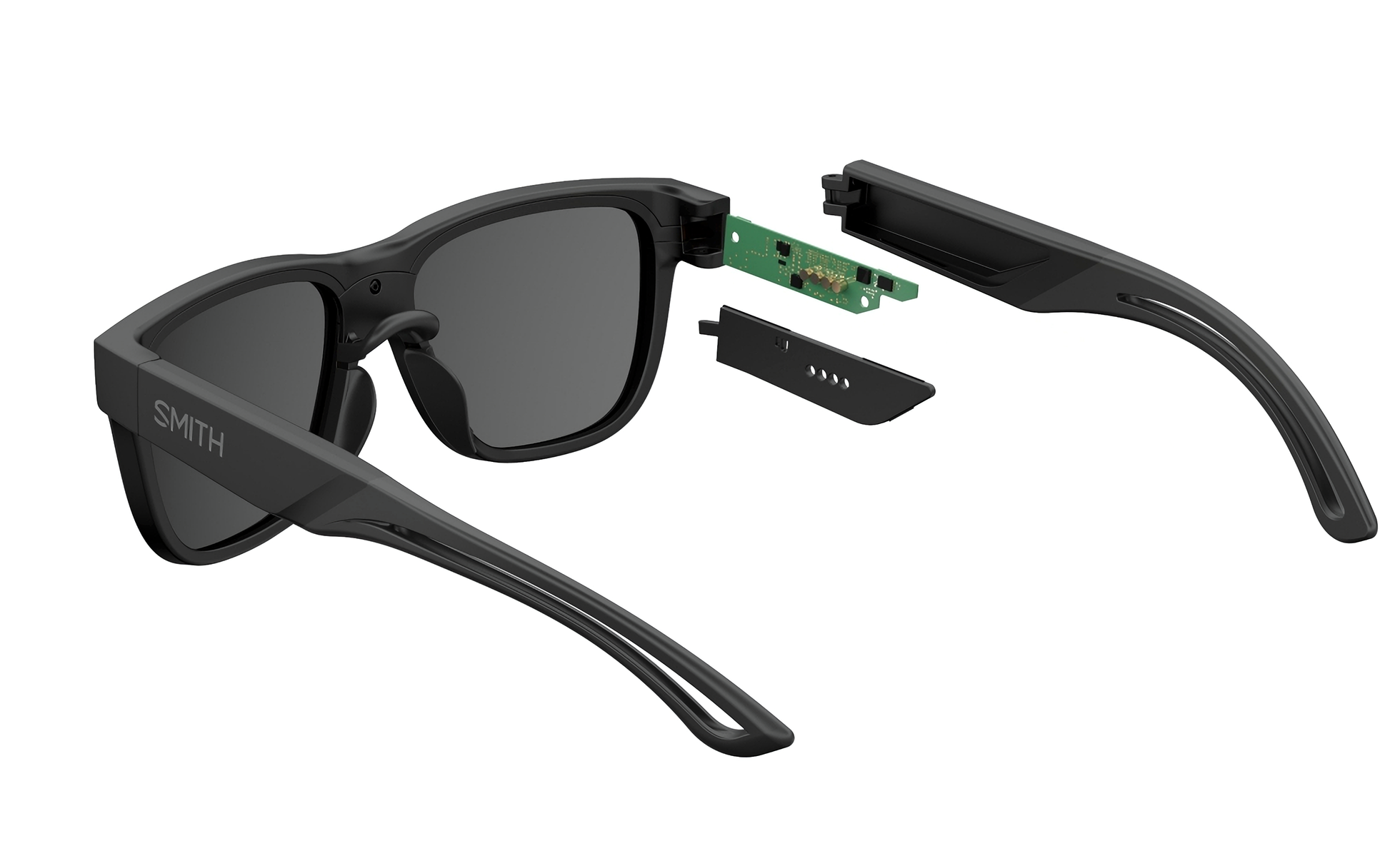
In 2014 Belli traveled to CES seeking a technology partner, and initiated a relationship with INTERAXON, maker of the MUSE wearable EEG meditation device.
The design of MUSE headband was somehow resembling futuristic glasses and the level of miniaturization, integration of electronics and lightness was a good starting point to be applied in eyewear. Also the idea of brain signals monitoring was catching my attention: it was something I had experience with in the past when I was working with Ferrari, I was involved in project about a brain interface for astronauts to be flown on the Nasa Spacelab. The rising trend of mindfulness, combined with the opportunity to improve fitness and training in sport drove us to the idea that SMITH was the right brand to experiment the first smart eyewear at Safilo. So the Lowdown Focus was born.
I pressed Belli several times about Apple, and the Marc Newson relationship. Belli noted that he himself had no contact with Apple in his role, but dodged when pressed as to whether anyone else had.
Ultimately Safilo would end up partnering with Google.
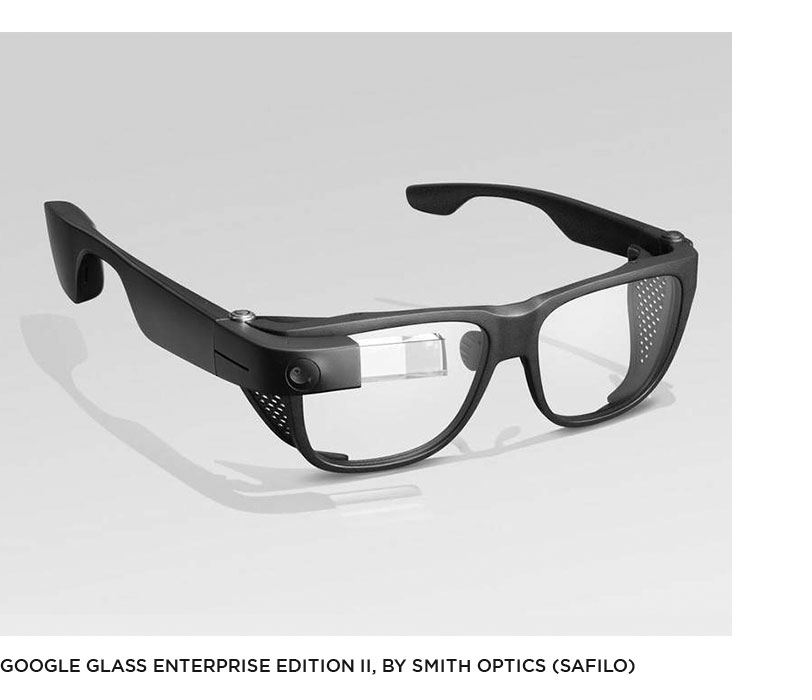
When Google and Oakley/Luxottica agreed to part ways in early 2016 without producing a product, Google would re-engage with Safilo. They were seeking a partner to collaborate on the design of an enterprise product, and called on Safilo, noting their collaboration between SMITH and the U.S. military.
The result was the Google Enterprise Edition II.
 Belli did opine on the Kering reorganization that saw the French fashion conglomerates pull all of their eyewear business under their own control.
The opening of this article gives an account of the creation of Kering Eyewear that I had corroborated via a phone interview with Kering’s communications department back in 2017. While Kering’s reorg was framed as a strategic decision around the long-term customer’s brand journey, Belli’s perspective was more practical.
The decision to move away from big manufacturers like Safilo, Luxottica, or Marcolin and verticalize design and manufacturing under their own controlling property and management is similar to what many fashion houses are doing on accessories like shoes, and handbags.
He saw it as more of an inevitability that these large vertically integrated fashion conglomerates would eventually bring their eye-frames in house.
Belli also shared some thoughts on Luxottica’s newest partnership with Facebook.
I’m very curious. My personal opinion is that the chances for electronics to become integrated in the proper way into successful eyewear sales are still limited by many usability factors: size, weight, battery life, eyes fatigue and distraction. There are opinions that in the future eyewear could become the replacement of the smartphone. Let’s see where innovation will drive us.
He was skeptical but if it came to pass, it would require somebody hitting upon, “the killer app of electronic integration into eyewear.”
Over the course of time, Google never launched a product with Luxottica, and they subsequently went on to work with Safilo; Luxottica is now working with Facebook; and Safilo never managed to work with Apple, in spite of their preexisting relationship with Newson.
I would finally make some progress, getting an answer about a possible Apple / Safilo relationship that could have been. Nobody, not even former Safilo employees since departed would speak on it… but one commented off-the-record, confirming indeed that contact was made, and that Apple, ‘did not feel that they needed us.’
I was encouraged to go to the top.
It was already my understanding that Newson’s relationship with Safilo was with former CEO, Luisa Delgado. While she declined to be interviewed for this article, she did agree to give a succinct statement regarding Safilo’s contact with Apple.
In my inquiry I specifically asked if she could both confirm that she had had contact with Apple in her time at Safilo, and if so—stretching a bit here—if she could clarify if the overture to collaborate on smart glasses was declined by Newson, Ive, or Cook.
Here is Delgado’s unedited statement:
Engaging with high profile brands on potential licenses and collaborations is top priority at a licensee company like Safilo. The highest end leads, like Apple or any other leading design/lifestyle/luxury brand would typically be owned directly by the CEO, others would be led in conjunction with the License VP, the rest only by the latter. As such indeed I contacted Apple, and selected other brands over my five years at Safilo, during which a series of licenses were signed and collaborations struck, and several others not. Indeed Apple was part of the latter, they declined to pursue beyond the initial approach. I’d personally consider information such as with whom exactly I engaged and how the conversation went as a reserved matter between parties
Professional.
LVMH was slow to respond to the reorganization of Kering’s eyewear business, but by January 2017 the other shoe dropped. News leaked that LVMH was in talks with Marcolin, possibly even an acquisition. Safilo’s stock price tanked, dropping 14% on the news. To calm the market, Delgado went to the press pitching her strategy to build a new license portfolio with less exposure to the French fashion houses.
Having guided Safilo through its darkest hour, within a year Delgado would step down from her glass cliff, to be replaced by Andrea Trocchia, former CEO of Unilever Italy.
For their part, Kering Eyewear would acquire the Cartier Lunettes eye-frames factory in Sucy-en-Brie from Richemont—finally bringing manufacturing in house, in earnest—where Richemont took a 30% stake in Kering Eyewear, as part of the deal.
With Kering Eyewear consolidating both Kering and Richemont’s brands; and LVMH and Marcolin creating the Thélios subsidiary, we can now have a look at the new brand licensing landscape, Starting with Safilo.
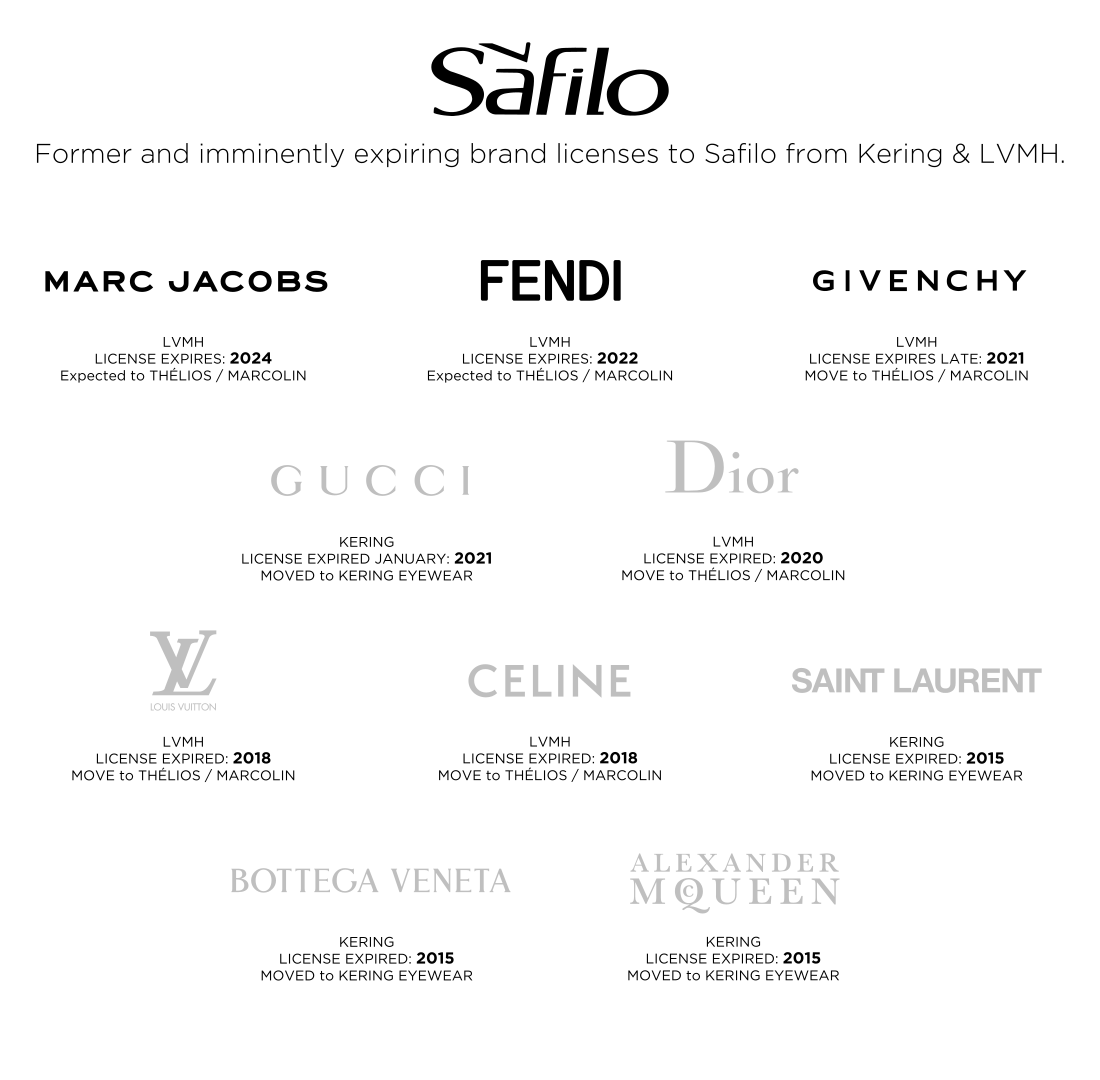
Even in spite of the Kering and LVMH losses, Safilo maintains a formidable collection of brands licenses. In 2019 dutch private equity firm, HAL Investments increased their stake in Safilo to 49.84%. They remain listed.
Safilo has made some strategic purchases. In December 2019 they acquired Blender Eyewear, followed quickly by another U.S. acquisition, Privé Revaux, that closed in early February 2020. The former came with e-commerce success, and the later with online celebrity affiliations and a strong social media presence—both youth-focused American branded.
Safilo has also made some strategic sales. Last year they sold off a manufacturing plant in Martignacco, and the year before they unloaded U.S. retail chain Solstice Sunglasses to buyer Fairway Eye Center.
They have made headway in Asian markets, entering a South Korean joint venture with Parma—Safilo as the majority owner—offering many of their brands through Korean sporting goods sales channels.
Trocchia has also secured some new brand license contracts including the first eyewear line for designer, Isabel Marant, as well as last year’s launch of a new David Beckham branded eyewear line. While the former may be a niche play, the later will expand their presence in sports and likely—along with SMITH—be a benefactor of their aforementioned Korean distribution venture.
In spite of all of this, Safilo’s stock price remains sluggish… I would suggest—as I have long suggested—that they are undervalued.
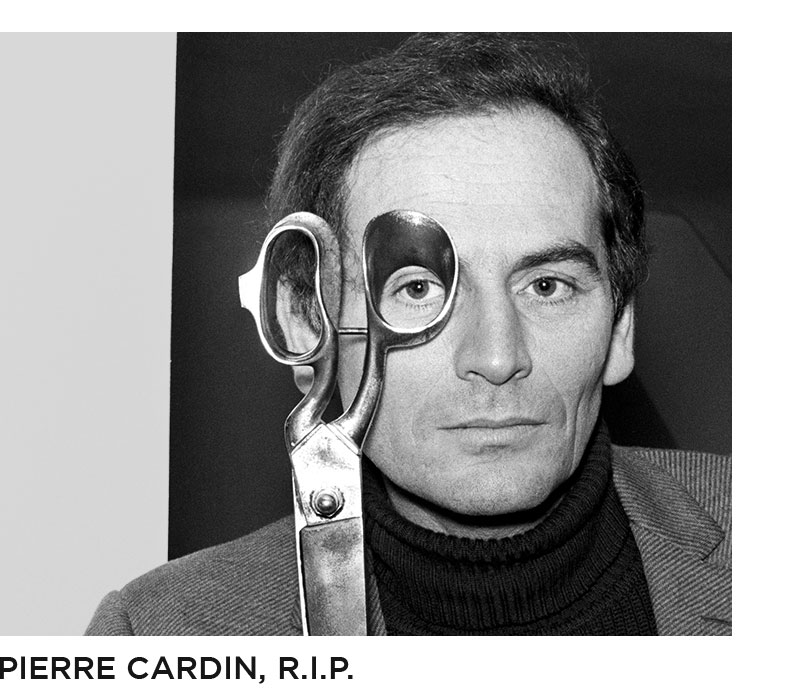 Safilo did suffer a symbolic blow earlier this year with the recent death of Pierre Cardin. As a designer, Cardin perhaps more than any was responsible for elevating eyewear as a fashion-statement accessory on par with handbags and designer shoes, within his own collections. His frames were produced by Safilo and so also helped elevate the Italian manufacturer’s prestige in the world of high fashion.
But Safilo’s solid performance has likely been obscured by immediate rival, Marcolin, who more than any other has been the winner in the reshuffle—capturing opportunity within chaos—from the eyewear industry’s upheaval.
Marcolin also had exposure to the French fashion houses, yet LVMH took a very different approach than Kering. While Safilo lost all Kering’s and LVMH’s licenses, Marcolin only lost one Kering eyewear license, Balenciaga, and one Richemont license, MontBlanc (Luxottica continues to hold LVMH’s Bulgari license until 2023, but can be expected to join Thélios’ stable of brands, at that time). By contrast, through their Thélios joint venture with LVMH, Marcolin gained the full stable of LVMH brands that Safilo lost, while continuing to service (and expand) their own collection of brand licenses through Marcolin proper. They do have some weakness with their house brands.
Also one peculiar anomaly: in 2018 Stella McCartney bought out Kering’s stake in her own eponymous label, then brought it into a negotiated partnership with LVMH, hence being the only major fashion label that has “changed houses.” This shuffled McCartney’s eye-frames license again. She had already moved from Safilo to Luxottica before the Kering eyewear reorganization took place, but more recently Luxottica lost her license in the move to Thélios (she likes to renegotiate).
Meanwhile in Asian markets—this past December Marcolin bought out Ginko’s stake in Gin Hong Lin International Co. Ltd., making it a wholly owned subsidiary. Gin Hong Lin was previously launched as a joint venture between Marcolin and Ginko Group—China’s largest contact lens company—at the time doubling Marcolin’s manufacturing capacity with the stroke of a pen. Now they are in full ownership of their Chinese operations. Also, to be clear: the frames that Marcolin is selling through their Chinese subsidiary, into the Chinese market are manufactured at their factory in Italy.
Amidst the pandemic, Marcolin also changed leadership, bringing in a new CEO, Fabrizio Curci. Coming to Marcolin as the former CEO of Fiera Milano, Italy’s largest trade fair organizer—which also manages Milan’s largest exhibition space of the same name—but Curci is perhaps more known as the former Fiat-Chrysler executive who previously ran Alfa Romeo.
In recent weeks it was also announced that former Luxottica CEO, Andrea Guerra—he who had the rather public falling out with founder Leonardo Del Vecchio back in 2014—has now joined the board of Marcolin’s LVMH joint venture, Thélios. While understandable hype and a dose of rumor swirled in the Italian business press around Guerra’s appointment to the board, he will not be running the firm, nor will he be departing his existing position where he has been the CEO of LVMH’s luxury hospitality group since early last year. This is, in a sense, a return to Guerra’s roots, having spent his early career as marketing director at Marriott. While his principal attention may be focused on growing LVMH’s footprint in the luxury hospitality space, it seems only reasonable that the former CEO of Luxottica would join the board of LVMH’s eye-frames subsidiary, given he’s already in the house.
If I had his ear, I’d tell Arnault to get his former CDO, Ian Rogers into a Thélios board seat, but so far he hasn’t asked.
In 2012 the French private equity fund, PAI Partners acquired control of Marcolin, and delisted it. PAI claims an average exit time of five years. They’ve been in control of Marcolin for nine. Just days ago Marcolin issued a €350M Senior Secured Notes Offering.
Given that Marcolin’s Thélios joint venture with LVMH was precipitated in response to Kering’s launch of their own eyewear subsidiary, we should see what the Kering-Richemont catalog of brands now looks like.
As of January 2021, Kering Eyewear is now firmly in control of Kering’s stable of fashion and luxury brand licenses, as well as the brand licenses of Richemont.
Richemont is the third largest fashion and luxury goods conglomerate after LVMH and Kering. Kering’s strength in fashion apparel compliment Richemont’s strength in jewelry and watches. The two have little direct competition with one another, while LVMH is the largest competitor for both. The joint venture in eyewear has added fuel to long speculation of a future mega-merger that appears closer to inevitable with each passing day. Last month Richemont Chairman, Johann Rupert confirmed that Kering had made past overtures while simultaneously assuring the media of his lack of interest in selling. This is of course all part of the dance—simply making these conversations publicly known fluffs Richemont’s stock price—I’m confident Pinault will eventually find Rupert’s price.
Among the Italians let’s see the smallest notable actor, De Rigo.
In 1995 De Rigo was publicly listed on the New York Stock exchange, only to have the De Rigo family launch a take over bid, delisting ten years later (2005). They operate a factory in Langarone, and also have a small footprint in optician retail in Europe, owning chains in Spain, Portugal, and Turkey, as well as a joint venture in the UK, Boots Opticians, with the American pharmacy retailer, Walgreens. They have subsidiaries in several countries, notably Australia. De Rigo also has a peculiar second line of business in commercial refrigeration units (yes they do).
Throughout North Eastern Italy, and the Belluno region in particular there are many other independent eye-frames manufactures, part suppliers and other companies offering supporting services.
Over the years Luxottica has occasionally caught the attention of regulators and media alike, frequently framed as a “monopoly.” One thing I hope this overview of the Italian eye-frames industry has shown is—in spite of Luxottica’s dominant market position—what a dynamic and hotly competitive market the premium eye-frames industry is… and we have not even ventured beyond the borders of Italy and France.
Back here across the pond we have Marchon, the U.S.’ largest eye-frames manufacturer, itself acquired in 2008 by VSP for $735M. VSP took Marchon private, and rolled their existing eyewear subsidiary, Altair into the larger Marchon business.
In spite of Marchon’s faux-French branding, it is an American company based on Long Island in Melville, NY. Nonetheless most of their frames are manufactured at their plant in Alpago, Italy… yes, in the heart of Belluno.
VSP is a unique entity in its own right. The vision care insurance provider had historically been run as a nonprofit, with a board dominated by independent optometrists whose industry they serve. Luxottica’s ownership of EyeMed makes the Italian giant VSP’s largest direct competitor in vision care insurance.
As vision-care chainstores grew, VSP expanded to provided more services to independent eye-care professionals to help their network remain competitive. In addition to launching their in-house eye-frames label Altair in the early 90s, the California based entity eventually expanded their offerings to include everything from their own line of corrective lenses and a network of optical labs to service their partner network; as well as business management software specialized for running a vision-care practice.
They also manage multiple innovation laboratories, developed a pair of health-tracker smart glasses branded Level, and have been forward-leaning in the smart glasses space in their own right. They collaborated with Google on a pair of Diane Von Furstenberg Google Glass frames, and have been proactive in ensuring their insurance coverage will adapt to the coming smart glasses market.
In 2008 VSP lost its U.S. nonprofit status, but it continues to run their holding company as a Not for Profit, that has privately held for-profit subsidiaries.
In 2011 VSP launched Eyeconic, an online eye-frames store that pays independent eye-doctors who provide eye-care support to the platform’s customers. In 2019 VSP experimented with it’s own brick-and-mortar eyewear locations under the Eyeconic brand name before then acquiring Visionworks—the sixth largest optical retailer in the U.S.—later that year. To be clear, VSP’s largest sales channel are the independent opticians and visioncare centers across the country.
In addition to the United States, VSP Global operates as a vision care insurance provider in Australia, Canada, Ireland, and the United Kingdom.
If you look at VSP and you squint your eyes, it begins to look at bit like Luxottica flipped upside down. Luxottica is a premium eye-frames manufacture that has built a vertically integrated operation encompassing corrective lenses, retail sales, and at the opposite end of their business, they offer vision care insurance. VSP Global is a vision care insurance provider that has built a vertically integrated operation offering corrective lenses, retail sales, and at the opposite end of their business they own an eye-frames subsidiary. Each of their core businesses could be described as being at the opposite end of their respective vertical—and a substantial piece of Luxottica’s business is in non-corrective sunglasses—but the inverted similarity is unmistakable. Further, VSP’s market dominance in their core vision care insurance business would suggest that more customers will come to Luxottica owned retail points of sale with a VSP insurance plan than Luxottica’s own EyeMed plan, so they must also play nice.
 I’m going to introduce one outlier into the mix: While still a smaller player globally than the Italian manufacturers—Warby Parker has captured far more mindshare than marketshare—they are nonetheless growing fast. Raising an additional $245M in F & G rounds last year, they leveraged the favorable buyer’s market of the pandemic to vastly expand their brick-and-mortar operations. This raised their valuation to $3B (for some, the pandemic was good for business). As of this writing their website lists 149 physical retail locations in 32 states plus DC, and in 2021 they have continued opening new stores at the rate of about one every three or four weeks, predominantly in affluent premium retail locations.
Historically Warby Parker’s frames have been manufactured in China.
Selling frames for cheap and undercutting the competition’s price by shipping manufacturing to China is the business model Warby Parker launched with. The buy-a-pair / give-a-pair glasses program was not a “business model,” it was the feel good PR component meant to generate positive press, to gloss over and misdirect attention from that business model. If you’ve ever worked in marketing and PR, this is understood. For whatever merit the program may genuinely have, and giving some befit of the doubt to the founders and their personal humanitarian inclinations, nonetheless business is business and so is the marketing calculus.
They have received heat in the past, under accusation of trying to obscure the Chinese origins of their manufacturing. This issue is not new for them.
As Warby Parker moves their brand up-market from a mail-order bargain frames supplier, into elite brick-and-mortar retail, they’ve also moved up market with at least some of their manufacturing. While most of their manufacturing remains in China, even Warby Parker has begun to move production of a few of their higher-end frames to Italy. Given that they promote heavily the “Made in Italy” origin of the few pricier frames that are, one can calculate by omission the majority of manufacturing remains in China. In 2019 Warby Parker Co-Founder & Co-CEO, Neil Blumenthal acknowledged their Chinese manufacturing origins, but declined to disclose specifically where, noting the confidentially of their sourcing relationships.
Perhaps their up-market retail will move more of their manufacturing to Italy over time. Their buy-a-pair / give-a-pair marketing campaign also appears to be phasing-out. In a December 2020 press release, WP quietly scaled the program back, replacing it with other perhaps legitimately more urgent social causes due to COVID19. In the future we will see if that program is reconstituted, or as they move past IPO, if the pressure of making quarterly numbers felt by a publicly traded company will cause it to be permanently disolved.
Warby Parker frames are designed in New York.
Even for frames manufactured in China, Warby Parker is widely understood to use acetate supplied by Mazzucchelli, an Italian plastics and chemicals company that specializes in the kind of Cellulose Acetate specifically used in the manufacture of eye-frames. They are a major supplier across the industry. New York based Marchon recently began using more recycled acetate from Eastman Chemicals in some of their frames, while Safilo recently partnered with DNV (Det Norske Veritas) of Norway to produced an eye-frames usable plastic recycled from the “Great Pacific Garbage Patch” (albeit for a one-off product). In order to accelerate development of more sustainable acetate options, this month Mazzucchelli took more outside investment, in this case from Luxottica who increased their ownership of Mazzucchelli to 35%. In this way Luxottica is underwriting R&D costs that the whole industry will benefit from.
Something noteworthy is that only Luxottica and Safilo have the full transparency of a publicly traded company. Kering Eyewear is a joint venture subsidiary of two publicly traded companies, Kering and Richemont, and therefore offers some degree of transparency by proxy. VSP is a Not for Profit which wholly owns Marchon as a for-profit, privately held subsidiary. In the United States an exceptional amount of privacy is afforded to privately held companies. Warby Parker is a privately held, venture backed startup. Marcolin was acquired by French private equity firm, PAI Partners but does continue to publish an Annual Report. This is likely reflective of both PAI’s desire to re-list, and the fact that Italy requires private companies to be more transparent than we do under U.S. law. As a consequence De Rigo, though also privately owned by the De Rigo family, publishes a minimal report to the requirements of Italian regulators. All of this makes the industry slightly more opaque than perhaps many other industries, while its largest player is the most transparent. Subsequently Luxottica receives more scrutiny partially because it is more easily scrutinized.
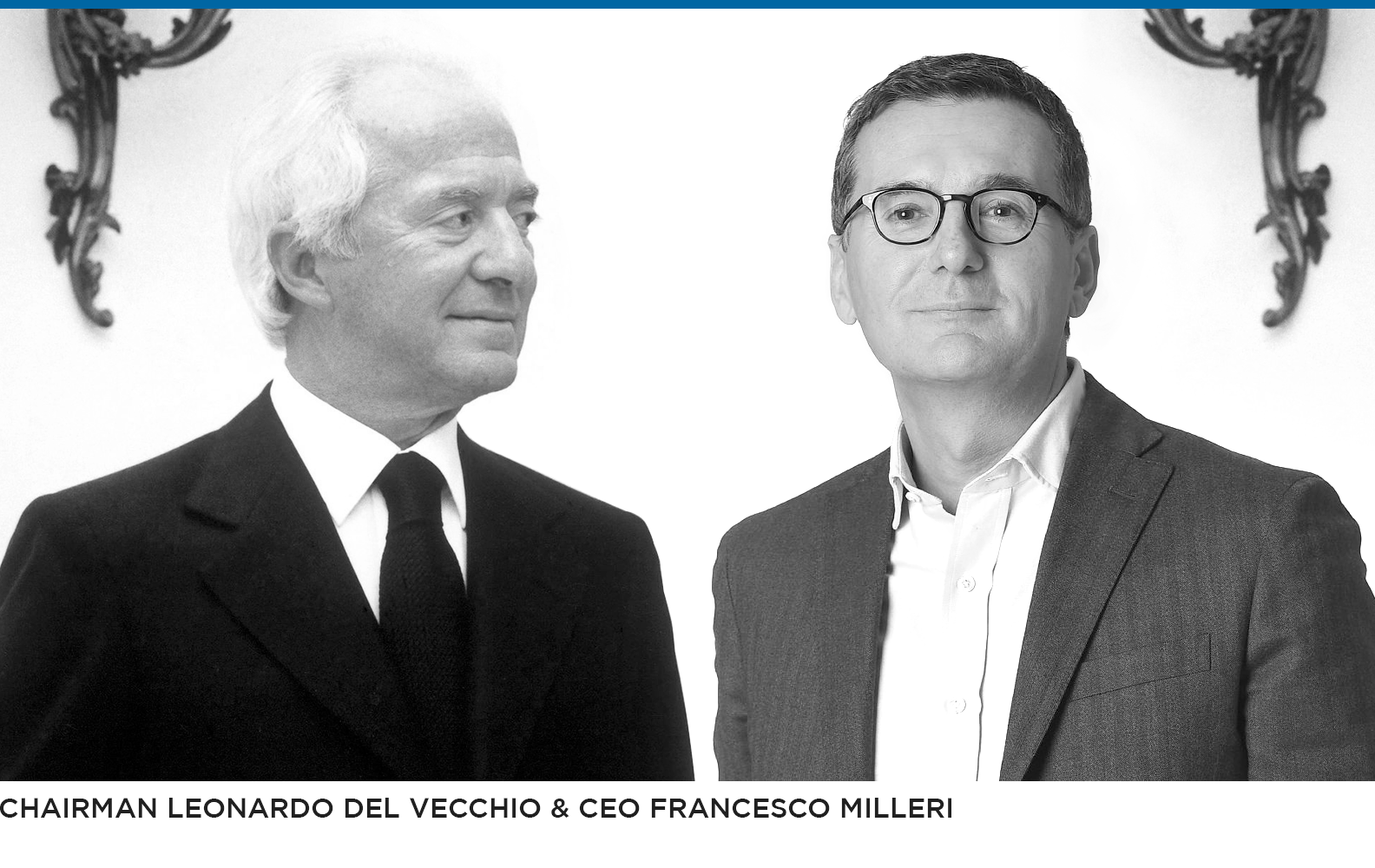
Although the acquired rather than the acquirer, at 32.3%, Del Vecchio remained the largest shareholder of the combined EssilorLuxottica, and retained his board chairmanship, though for an interim period of three years his voting rights were restricted. As such, any new CEO hired to run the combined company required both Hubert Sagnières’ and Leonardo Del Vecchio’s mutual approval. Throughout the merger Del Vecchio refused to approve any of the contenders to CEO. After an awkward bout of co-CEO management, Del Vecchio eventually bullied his own favored lieutenant into the role as a “temporary,” acting CEO for the remainder of the executive search. He then waited them out. Early this year, just as Del Vecchio’s voting restrictions were coming due to expire, he got enough of the board to approve adding his “acting CEO” and right hand man, Francesco Milleri to the board. With full voting rights restored, Del Vecchio has his hand-picked CEO both at the helm, and sitting on the board with him… and just like that, Del Vecchio’s people are in.
This has all happened just as Luxottica and Facebook are preparing to launch their first co-branded smart glasses under the Ray-Ban brand. Conventional wisdom says that Apple is positioned to dominate the smart glasses market. I have several reasons that suggest to me that this may not be so.
Conventional wisdom also says Apple leads in design.
But do they?
Can you name their Chief Design Officer?
No.
Jony Ive resigned in 2019. The position has never been filled.
More telling, Apple doesn’t list a single design or creative leadership position on the their company “leadership” page. Not one! …and they haven’t for over two years.
Ive’s departure was not itself a surprise. It was widely known that he had been preparing to move on for years. A smooth succession plan was in place. Ive hired Marc Newson as his heir apparent (who conveniently came in the door with recent eye-frames experience from Safilo)… but when Ive resigned in a power struggle with then VP of Supply Chain Management, Jeff Williams, Newson resigned along with him. Heading up supply chain management was Tim Cook’s position before Steve Jobs promoted him to COO (then acting CEO until Job’s passing). On the heels of Ive’s resignation Tim Cook placed Williams over the product design studio, and promoted him to COO, following his own career path, leading to the obvious speculation that Cook has his own succession plan in place. In a choice between who he valued most, Cook chose Williams, Ive walked, and much of the design leadership walked with him.
This is entirely Tim Cook’s Apple now.
Under Tim’s leadership Apple is an incrementalist and master of product iteration—a strategy that has made them staggeringly profitable in the Tim Cook era, in no small part due to Cook’s and Jeff Williams’ mastery of the supply chain (Apple’s innovative use of supply chain management to increase margins and retain market lead is a topic for another article… maybe by someone else).
After the passing of Steve Jobs, Jony Ive’s profile at Apple was raised substantially to fill the vacuum in the “creative visionary” department left by Jobs’ absence.
Apple’s reputation in “design leadership” is now coasting on past glory—its actual leadership gutted, and design demoted not only out of the C-Suit, but wiped clean from the executive management ranks all together.
To be clear, Apple is a huge company, and I’m sure there are still many talented industrial designers among the rank-and-file of Apple’s product design team, but Apple is no longer a design driven company. In the most literally sense, design no longer even has a seat at the table.
A decade ago Apple began hiring fashion executives. Paul Deneve, former CEO of Yes Saint Laurent; Angela Ahrendts, former CEO of Burberry; TAG Heuer’s former VP of Global Sales, Patrick Pruniaux. Ahrendts was the last to depart, just weeks before Ive’s own departure.
All of this, just as Apple is preparing for the launch of what ought to be the most fashion-forward, and design centric product in their history… and their design studio is being run by their supply chain guy.
In the consumer market, smart glasses will live or die by the value of design.
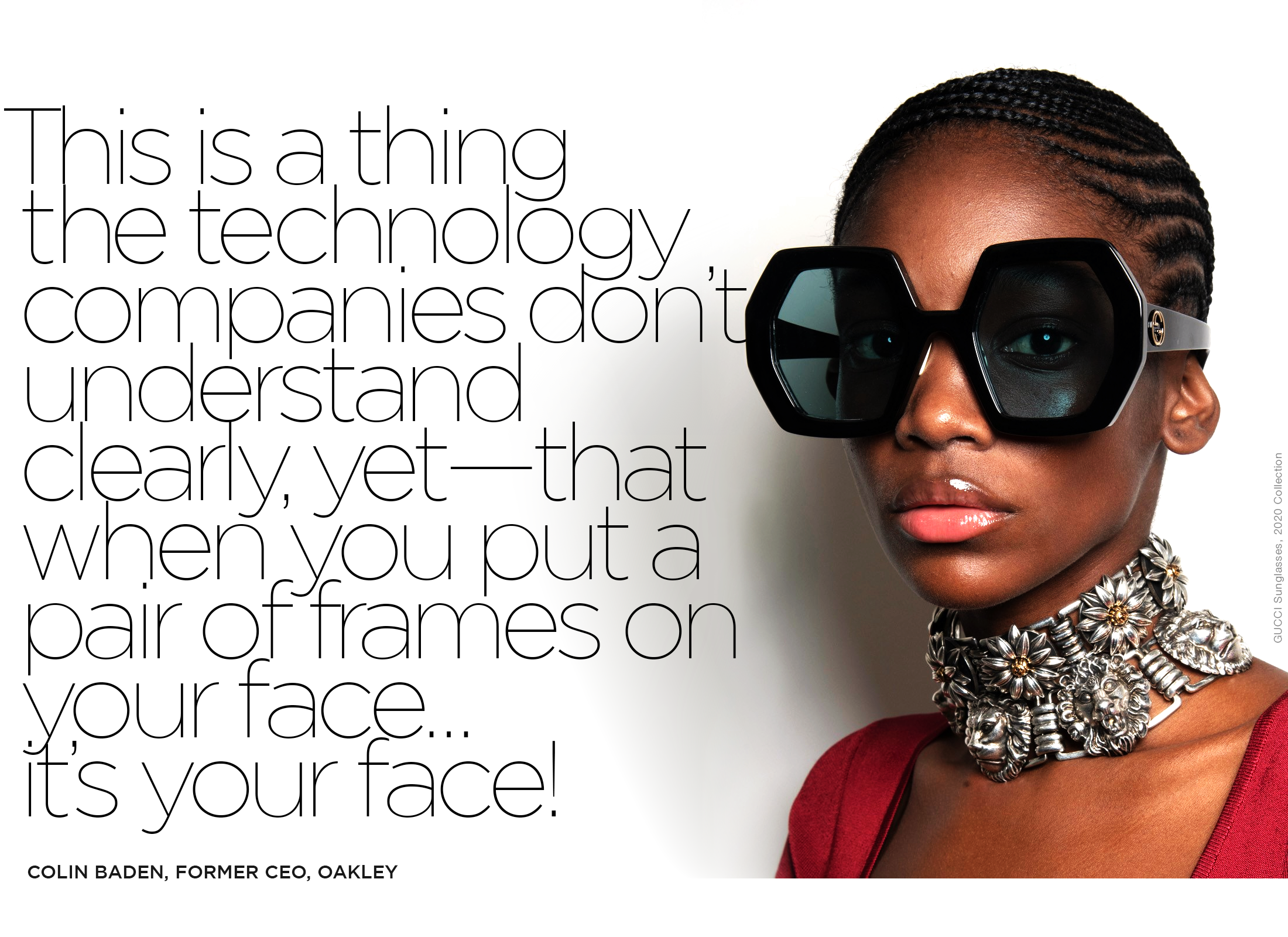
Colin is right.
People in tech often assume that the importance of style, of aesthetics only matters in high-fashion, effecting some small portion of the market.
To counter, I often share this anecdote:
Imagine yourself on a road-trip across the heartland of middle America. Maybe you’re in Kansas, or a lonely stretch of highway cutting across Nebraska—far from the epicenter of fashion. Pulling into a truck stop or a gas station, you observe a long-haul truck driver climbing down from his rig.
Perhaps he’s in overalls, work-boots and a greasy-billed baseball cap… that son-of-a-bitch will still be wearing a $200 pair of Oakleys.
Put another way: a cultural specimen one might size up as the least fashion conscious among us will still spend more money on a pair of sunglasses—that contain no electronics—than he spent on the Android phone in his pocket.
How we choose to frame our face matters to us a lot. How we frame our eyes matters to us even more. There’s an entire industry, mostly located in Italy, that not only knows this better than anyone, but have built a near $150B global industry around it.
You show me a consumer facing smart glasses product that doesn’t lead first with design, and I’ll show you an industry that is going to fail. It matters a lot, and particularly matters a lot to me, because I’ve invested a great deal of my soul, playing my own small part to nurture this industry into existence, and do not want to see it fail.
I want to make something else clear here: I’m a lifelong Apple guy. I’m typing this on my Mac, with an iPhone in pocket. I’ve been a Mac user since the late 80s.
Tim Cook still sits on the throne, but for the first time since Jobs bestowed Apple’s kingdom upon him, I’m uncertain he can defend it (the fact that this opinion is met with the shock of heresy by most in the industry only hardens my position). There are many pretenders to the crown. Evan Spiegel gave an excellent presentation for the new Snap Spectacles, then announced the acquisition of their lens partner, WaveOptics the following day—a company whose technology partnership with Luxexcel (waveguide inside a prescription lens) I ever so recently referred to as the technological “Holy Grail” for consumer smart glasses. Spectacles new form-factor made clear this isn’t really a consumer product, but a developer prototype.
To be clear, this is not a one horse race.
I look at Mark Zuckerberg—the undisputed frontrunner in consumer VR hardware—now partnering with Luxottica on smart glasses frame design. Zuckerberg and Del Vecchio are one ruthlessly ambitious duo for any competitor to contend with.
In passing on the opportunity to work with Safilo, I believe Apple chose poorly. Even though they were not ready for market—the timing wasn’t right for their schedule—they could have acquired Safilo for a song or at the least invested, and helped it rebuild its brand license stable (while wearing Apple’s halo). In any case, that window has long since closed, even the relationship that existed between the companies—Delgado at Safilo and Newson at Apple—have both departed.
If Luxottica is flirting with Facebook, given Safilo’s past collaboration with Google, they should explore an acquisition. With Android, Google is accustomed to being an ingredient in other companies’ products. The brand licensing model works with their culture, and could transfer well to the eye-frames industry’s brand licensing approach. Their own smart glasses platform could then be offered as an option across labels (since acquiring NORTH, they’ve been very quiet on the consumer front).
One of the craziest yet most common lines of argument I get when talking to people in the tech industry about the Italian eye-frames industry is their belief that the government needs to step in and break up Luxottica. It generally goes something like this: “That whole Italian eye-frames industry is really just one big company, did you know that? They’re called Luxottica, they own the whole industry!” as they attempt to educate me.
…followed with some platitude about how, if Luxottica with their “monopoly” is going to stand in the way of consumer smart glasses adoption, the government really needs to step in and break them up… you know, for the good of technological progress… or something. It would be too unserious to address in this article as a legitimate point of view, were the idea not so pervasive in the tech industry, as to seem almost ubiquitous.
I would like to believe this article is informative on multiple levels, but if one takes nothing more away, it should be this: No, the government is not going to step in and save Silicon Valley from Luxottica. Simply reading that prior sentence out loud ought to disabuse one of the notion on its sheer absurdity, but to add some comic relief to an otherwise serious business treatise, let me address this as if it had merit.
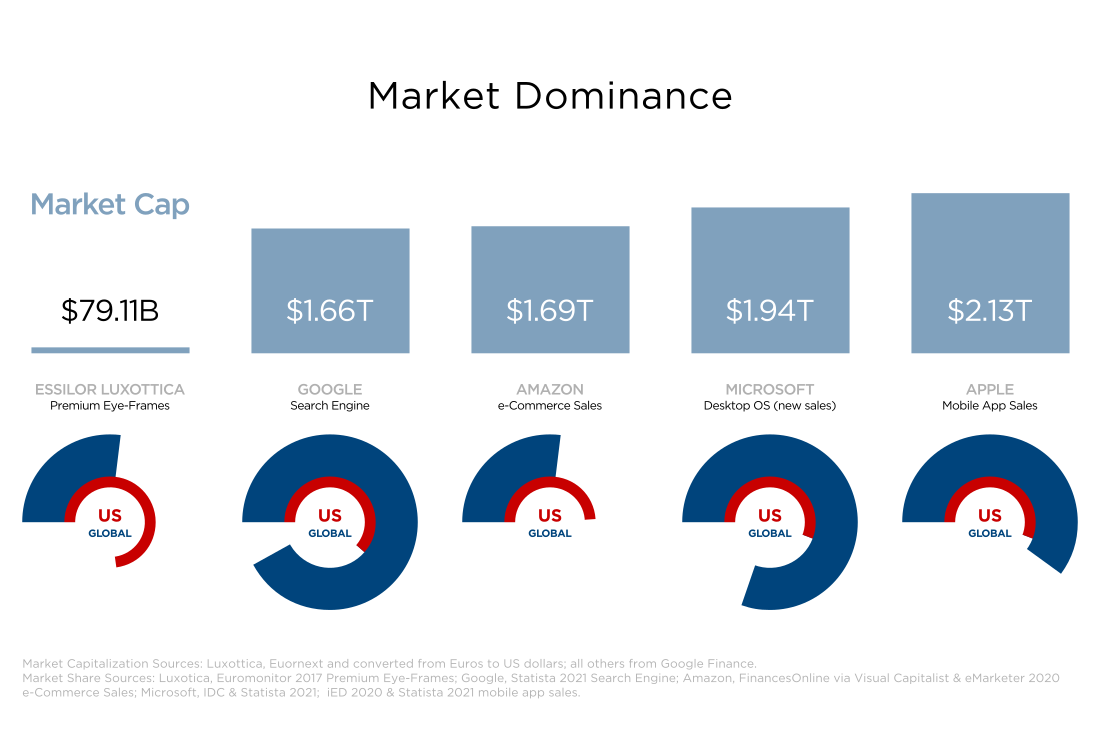
Today the combined EssilorLuxottica enjoys 73% marketshare in net retail sales of premium eyewear in the US market (but only 27% globally)—but what does that mean in the current market? Given that Google—with 92% global search market share, and a market cap of $1.7T—is entering the eyewear market; given that Amazon—with 49% US e-commerce market share, and a $1.7T market cap—is entering the eyewear market; given that Microsoft—with 76.6% global desktop market share, and a $1.9T market cap—is entering the eyewear market; given that Apple—while without market dominance in any of their core product lines outside of mobile app sales, is nonetheless the world’s largest company with a $2.1T market cap—is also entering the eyewear market… where by comparison, Luxottica has a paltry $79.1B market cap. It has been speculated that within the decade Apple may be the largest employer of opticians in the U.S. market. Given the largest, most powerfully technology companies in the world have revealed their intent to completely disrupt the premium consumer eyewear market, I do not believe that any U.S. court is going to determine that Luxottica’s dominant position lacks competition and—especially for the sake of Silicon Valley—needs to be broken up.
Again, it feels silly even addressing this point of view were it not, in my personal experience, a near ubiquitous talking point in Silicon Valley, whenever the subject of Luxottica is broached in the context of smart glasses.
The tech industry as a whole ought to look more deeply into what they can achieve working with the Italian eye-frames industry in the broadest sense.
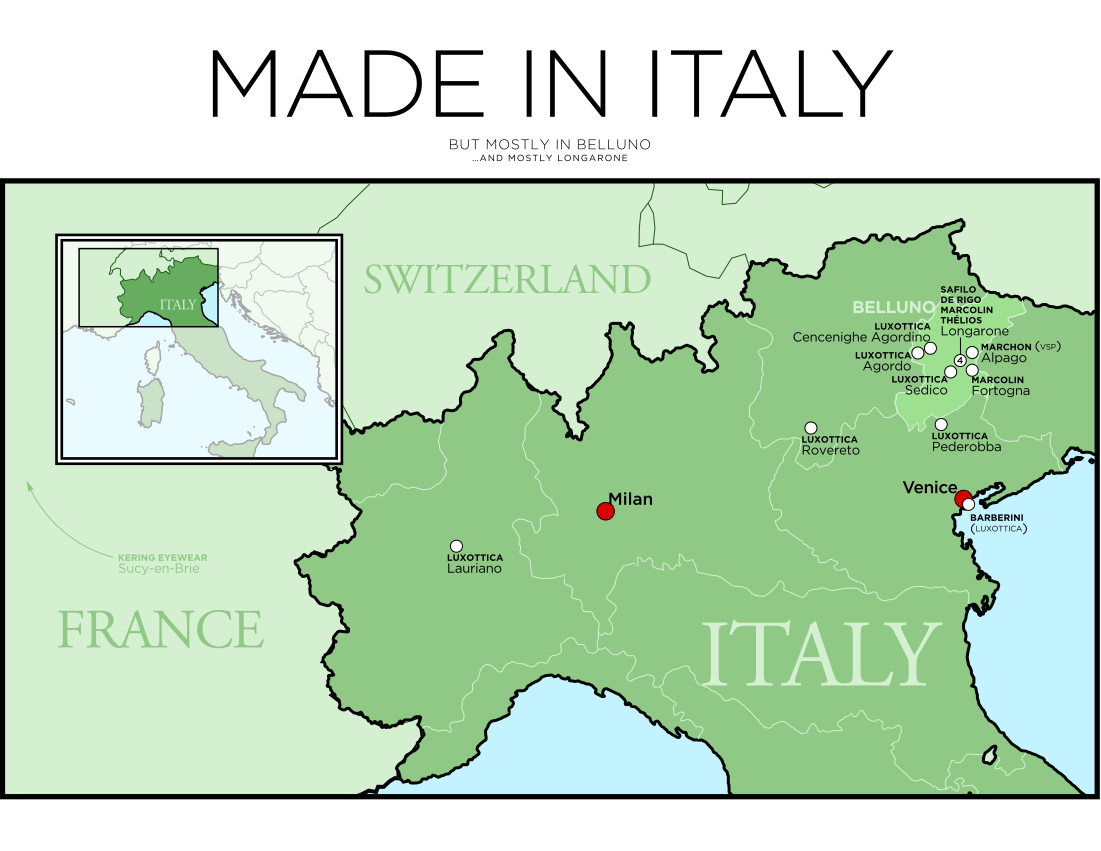
Whether Luxottica’s U.S. market dominance in premium eyewear, or Italy’s market dominance in the category around the world, for both design and build quality, Italy is synonymous with high quality eyewear.
In this parting perspective I will make a case to the supply chain managers—at Apple and elsewhere.
I corresponded with a variety of attorneys—including two each in New York, DC, and Brussels, respectively—seeking an expert on international trade law that would go on record regarding the use of Italy as a location of final assembly for smart glasses—more specifically I sought: what advantages might exist in the context of U.S. trade agreements, and tariffs.
While there was a great deal of interest—if nothing else my inquiry was met with fascination, and some informative conversations took place—though no one was at liberty to go on the record and be quoted for an article. A couple were personally inclined, but the decision was ultimately settled by the standard policy of not commenting for an article where there was a potential client conflict of interest. Given the breadth of both the tech and eyewear companies discussed in this article, in every case there was at least one existing client conflict among their firm’s representation.
However, while the legal details are tedious, the basic idea is simple.
“Made in Italy” carries market cache that people have shown a willingness to pay a premium for. This is particularly true of eyewear.
25% tariffs on Chinese imports were set up under the Trump administration. Conventional wisdom was that these would be lifted under a new Biden administration. However, the Biden administration has left the tariffs in place, and furthered signaled this is the new normal. Furthermore, due to geopolitical realities beyond the scope of this article, many American companies are exploring—often times with great difficulty—the means to lessen their supply chain dependence on Chinese manufacturing. Though Chinese manufacturing capabilities have successively moved up the value chain, a great deal of this manufacturing still involves “final assembly.”
The 25% imposed by “Section 301 Tariffs” on goods imported from China could be circumvented—even with some Chinese components—if the product meets the terms described as “Substantial Transformation.” While there is some legal minutia and rigor involved to meet this standard, every indication is that smart glasses final assembly would easily meet this requirement.
Italy enjoys bilateral trade agreements granting it the highest trade partner status with both China and the U.S., such that some components still made in China could remain within a company’s supply chain without penalty, so long as the value add taking place in Italy, together with other components of other origin (supply chains being international), contribute the largest value, to meet the “substantial transformation” requirement.
In addition to the substantial transformation required by U.S. trade law—and some minimal requirements for country of origin exports under EU trade law—Italy itself is one of the most stringent regulatory environments for goods sold under the “Made in Italy” designation. The Italians have a deep understanding of brand value, and do not allow companies to tarnish their national brand by exporting subpar products under the name of Italy.
The challenge as I’ve been warned is that even with a 25% Chinese tariff, that labor costs in China are so low, that Italian labor costs will still likely be higher. So the question is: Does the “Made in Italy” stamp of quality manufacturing, combined with Italian eye-frames design expertise, compounded by geopolitical pressures to lessen supply chain dependencies on Chinese manufacturing, together deliver enough value for Italy to become a lead player in smart glasses manufacturing?
Regardless of what side of the pond one is on, or which industry they’re in, I would suggest this is a strategic imperative both the Silicon Valley tech industry, and the Italian eye-frames industries should strive to achieve. The longterm ramifications could prove significant for both.
You can stay on top of smart glasses, fashion eye-frames, and near-eye optic display systems by following Christopher Grayson on Twitter. He is available for for hire, for smart glasses product strategy, industry analysis, writing / editorial, and for creative direction. You can learn more about him at his website: ChrisGrayson.com. If you reach out to connect on Linkedin, please note that you arrived from GigantiCo in your inquiry or invite.
]]> The march toward a consumer viable smart glasses has always been more like a slow waltz… or worse—two steps forward, one step back. Events of recent weeks have brought us to a significant moment… but are we there yet? I have in the past referred to achieving a waveguide inside a prescription lens as a “Holy Grail” milestone, in the pursuit of mass consumer viable smart glasses.
 In smart glasses, the competition for Google is not Apple; the competition for Apple smart glasses is not Facebook; nor is Amazon, Microsoft’s competition. The competition for mass consumer adopted smart glasses is the entire tech industry versus conventional glasses. Period. That will define success in the market.
Mass consumer smart glasses adoption will not occur until the choice is between a new pair of smart glasses, and a wearer’s existing conventional eye-frames (or sunglasses)… and when making that choice, they choose the smart glasses. Another test is: if the electrical charge is dead, will the user continue wearing them, unpowered? In other words: Do they hold up as functional eye-frames, even when unpowered (not to mention as a fashionably stylish accessory)? When—to a majority of those who wear eyewear—the answer to that question is “yes,” smart glasses will have arrived.
Are we there yet?
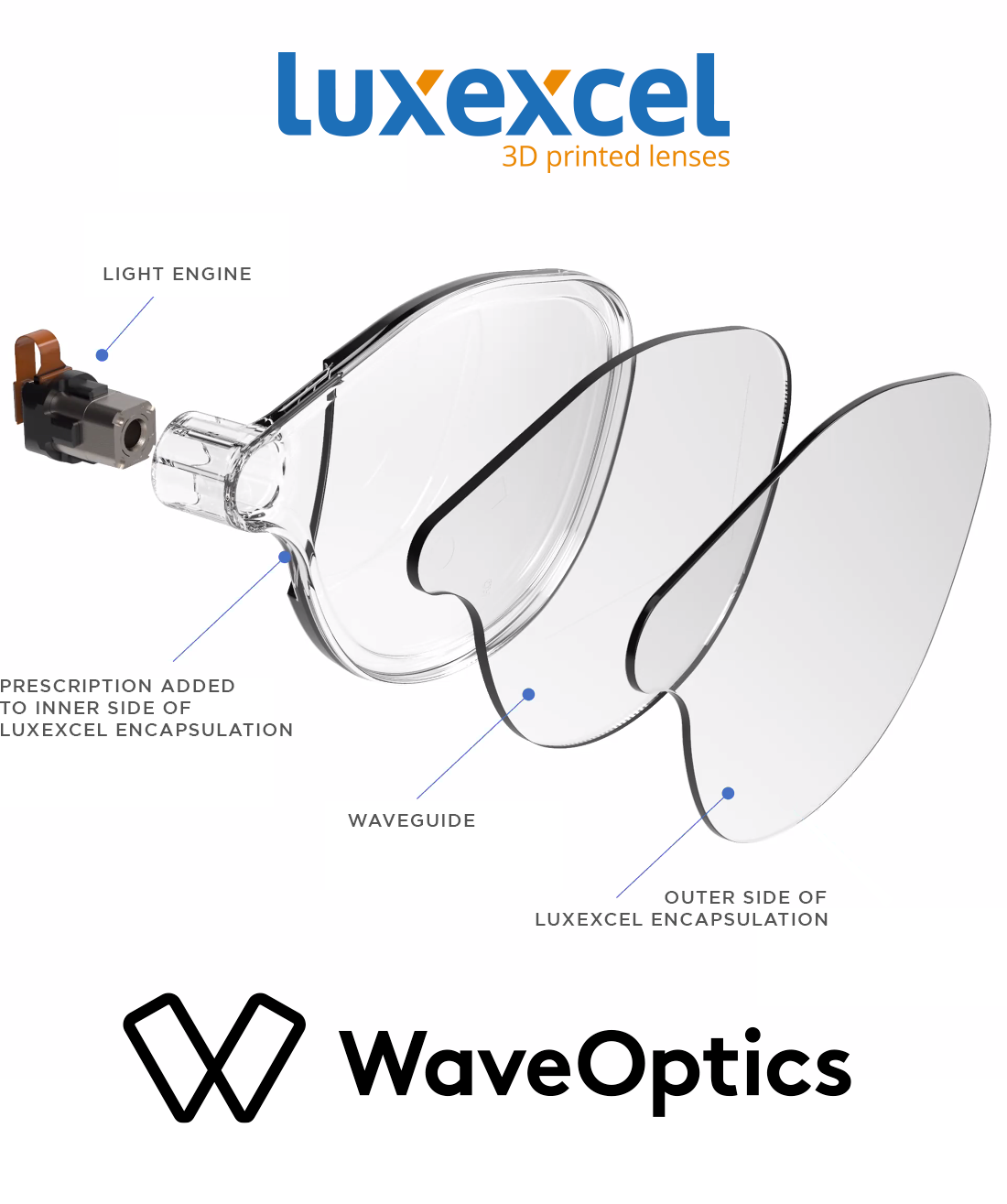
While Luxexcel’s pursuit of a waveguide within a prescription lens was known (I took a meeting with their team in January of last year to discuss their progress on this front), others had also been pursuing this goal. The same month, the now acquired (and dissolved) NORTH, then maker of Focals, held private private previews of a waveguide within a prescription lens during CES (they had no booth, and no public preview was given). The year prior, in February 2019, I broke the story of NORTH’s prescription lens waveguide patent, as a contributing writer at UploadVR… and here we are two years later. So I’ve approached celebration with caution.
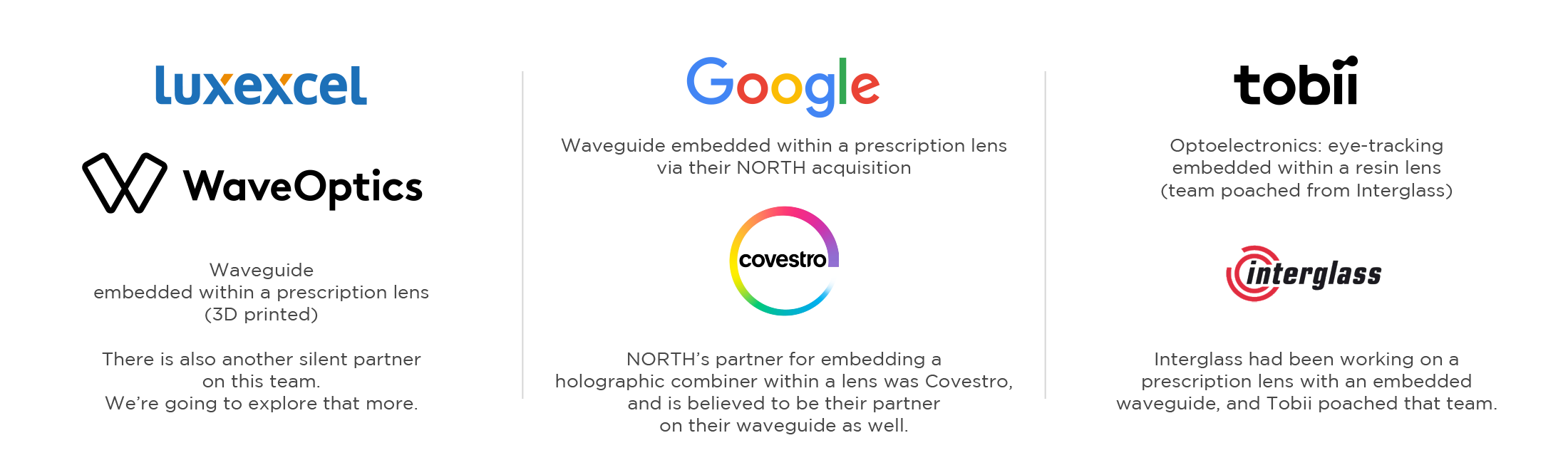
On December 4, 2020, Luxexcel business strategist, Guido Groet announced the news to the world that they had successfully executed a waveguide within a prescription lens; on February 9th of this year, waveguide display partner WaveOptics revealed their module; and last Wednesday, via SPIE, the two companies held a webinar to reveal more details… if partially. It is from the deck at this presentation that the above image is derived (The full presentation is now available online. I encourage readers to watch it).
To provide the reader context, I’ve included two prior video from the partner, briefly explaining the technology they bring to the partnership. The first is Luxexcel’s 3D printed lenses. This is a time-lapse video:
The full printing process for the prescription waveguide is said to take about 20 minutes, in bulk (number of lenses simultaneously dependent on the size of the printer bed). Last January Luxexcel’s team shared with me the hurdles ahead for their year—scaling manufacturing involved building lens printers with larger beds, and building more printers. Their pain point involved ramping up the supply chain for some of their printer parts, a problem they were focused on contemporaneous to their waveguide within a lens innovation.
Fast forward to the end of last year, and in tandem with their December prescription waveguide announcement, they also hit a volume manufacturing milestone of 50,000 lenses printed. While this is a small number for a mass market device—by comparison, Apple sold 15 million iPhones in a single quarter last year (and a stereoscopic pair of smart glasses would require two lenses)—Luxexcel had nevertheless demonstrated their ability to deliver on multiple vectors: they scaled their production (presumably resolving some of their supply chain concerns), they secured an A-List collaboration partner (WaveOptics), and they delivered the elusive prescription waveguide.
Take a moment to watch Salim Valera, Chief Scientist of WaveOptics describe the optics behind their famously large eye-box, waveguide:
But there’s more to this story.
There is at least one more significant player in this partnership. The module consists of three primary components: a 3D printed prescription lens, waveguide optics, and a display projector. This is where the story got more interesting.
On February 5th of last year, WaveOptics and MicroLED developer Plessey announced a partnership to develop a display projector. Eight weeks later—first scooped by Alex Heath at The Information—it was revealed that Plessey had entered into a partnership with Facebook. Amidst rumors that Apple had made an acquisition offer, but Plessey was reluctant to sell, so Facebook countered with a long-term contract to buy all Plessey’s MicroLED inventory, while otherwise letting them remain independent.
The Facebook announcement had come not just on the heels of the WaveOptics partnership, but also demonstrated a breakthrough backplane technology: GaN-on-Si (Gallium Nitride on Silicon), a development that—if living up to its promise—could simplify and miniaturize the optics on light engine projectors. The light from a standard MicroLED panel (or LBS projector and other light engines, for that matter) must pass through a collimation lens. That is to say, a lens that tidies up the light into a unidirectional projection, to flow properly into the waveguide’s input coupler (input grating). In theory, employing this GaN-on-Si backplane might allow for the elimination of the collimation optics all together, allowing for a significantly smaller form factor, not to mention a simpler module with fewer components, and less loss-of-light, overall. The fact that Plessey coupled this with announcement of a 1080p MicroLED microdisplay placed them at the forefront of competing light engine technologies.
Alas, nothing in optics is this simple…
Let’s go back and have a look at that prescription lens waveguide again. More explicitly, what does that projector (with the “unknown” partner) look like anyway?
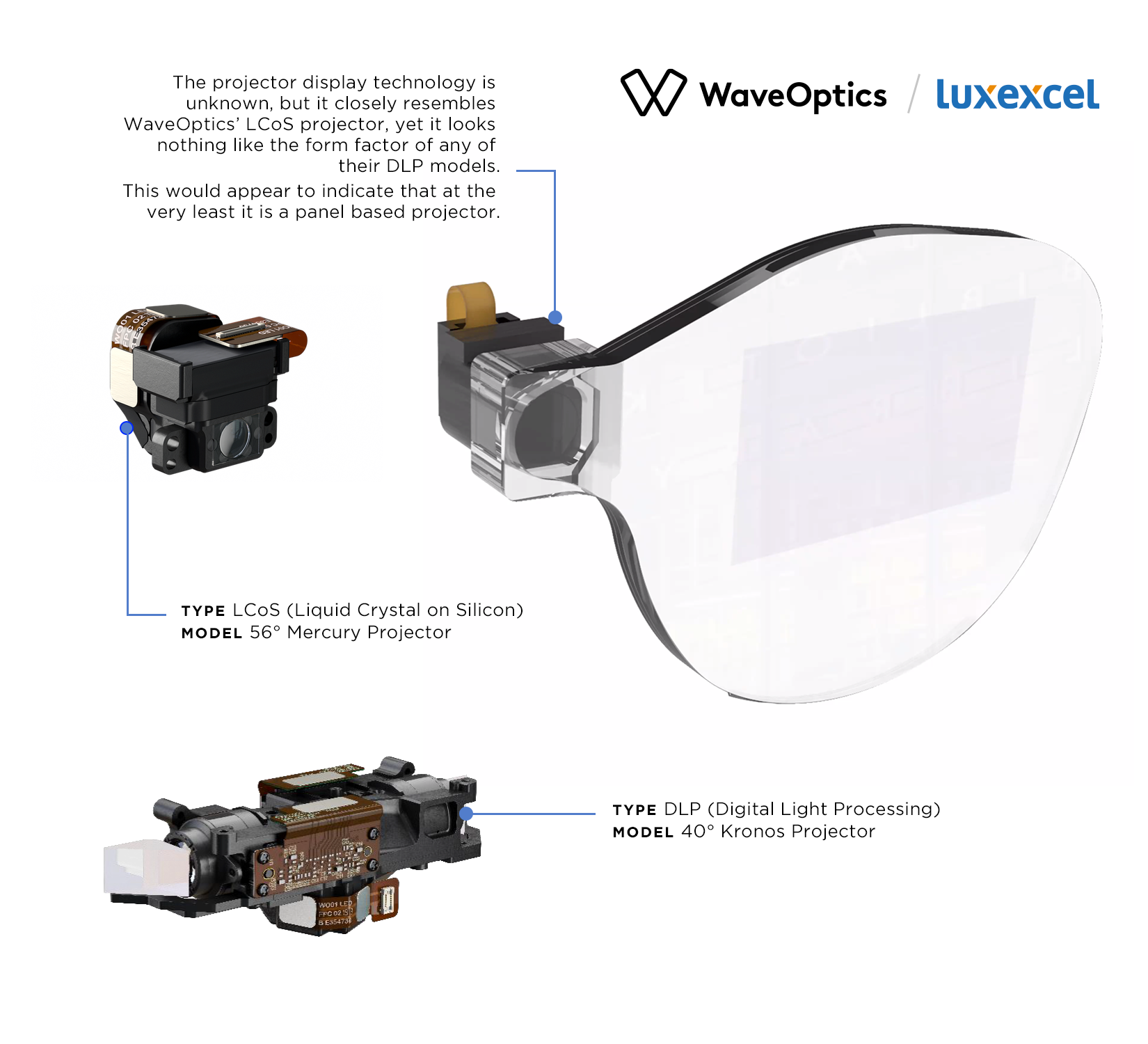
In their presentation we also learned that the module is only available in monochrome green. This tells us a lot. See, the MicroLED microdisplay industry is having a devil of a time creating a full color panel in the diode size required for a MicroLED, at a density needed in a microdisplay.
Red? Yep!
Green? Yep!
Blue? Yep!
Full color? Not there yet.
Specifically, Plessey has worked in collaboration with Nanoco to get their diodes under 4 µm in size. They can now make a 1080p HD microdisplay panel at 0.26”… but not in full color.
There are others in the MicroLED microdisplay space—significantly, LuxVue and TSMC. The former was acquired by Apple (and also has some GaN-on-Si, IP), and TSMC is the largest independent semiconductor foundry in the world and a leading Apple supplier. Apple recently invested heavily in building a MicroLED research center, adjacent to TSMC’s campus in Taiwan. More importantly, there are others with GaN-on-Si backplane technology. Plessey’s GaN-on-Si IP came through the acquisition of CamGan, a University of Cambridge spinout. They then collaborated with Jasper Display to take CamGen’s technology into scalable production. Further, ALLOS and Veeco co-developed GaN-on-Si manufacturing for MicroLED manufacturing, and have subsequently licensed the technology to Epistar, and to OSRAM (the later, recently acquired by AMS, supplier of Apple’s iPhone face scanning sensor).
Plessey has a lead in the industry… for now.
But this still doesn’t answer our question as to whether WaveOptics’ collaboration with Plessey is still active? Or did it get killed mere weeks after announced, perhaps as a result of the Facebook deal? We’ll get back to that in a moment.
We’re going to detour for a moment, and have a look at another team mentioned above, that had also been working on placing a waveguide into a prescription lens.

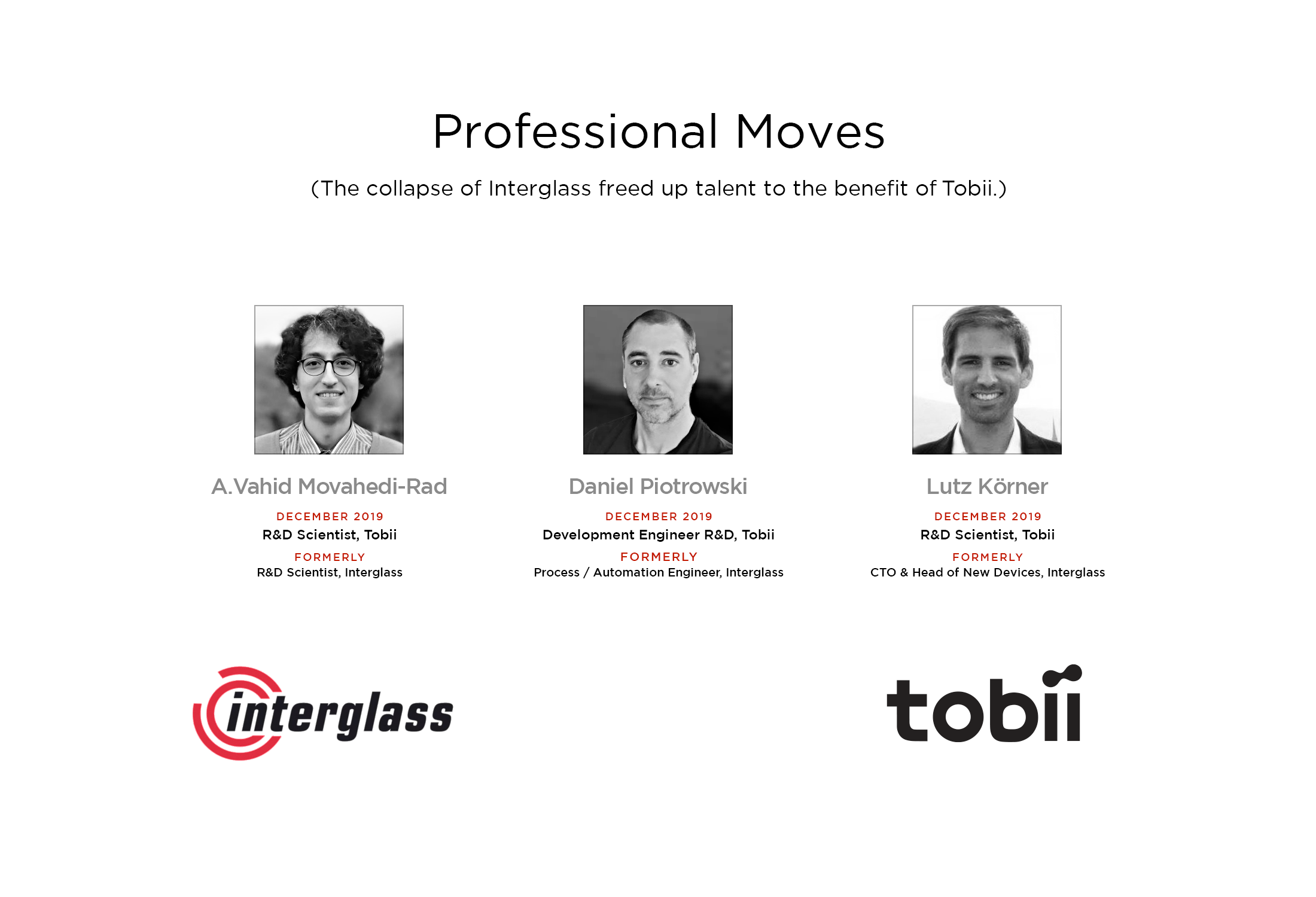
The team that Tobii poached from Interglass is significant because they were working towards a prescription lens waveguide at their prior employer. Interglass is (was?) an interesting company. They came out of École Polytechnique Fédérale de Lausanne, of Switzerland, together with a cohort of optics companies that included Lemoptix and Compsyt Light Labs. These two peers were snatched up by Intel, but for reasons unknown, Interglass was passed up. Odd because the three companies’ technologies worked as a system: Compsyt Light Labs made a color laser projector; Lemoptix made an electromechanical MEMs unit that reflected the laser into a combiner; and Interglass made a robotic resin lens manufacturing system that—among other things—embedded the optical elements of the combiner into a prescription lens.
When Intel shut down their wearable technology unit (mere weeks after releasing Vaunt), they eventually sold their IP portfolio—the crown jewel being the Lemoptix and Compsyt Light Labs patents—to NORTH (within whom Intel was already a lead investor). However Interglass, who did pitch for NORTH’s combiner business, lost out as supplier to Covestro (formerly Bayer MaterialScience). Interglass, whom I interviewed for the same article that revealed NORTH’s prescription waveguide patent, was working towards this same goal. Alas, Interglass’ team was poached en masse by Tobii, and at some point in the last few months, Interglass’ website was shut down.
Tobii’s work, while not specific to the display, is still quite significant. They’ve moved their entire eye-tracking sensor system into a lens. This is important as it shows the complex systems required for immersive AR, beyond the display itself are keeping pace, both with their miniaturization, and their incorporation into the lens.
Now let’s get back to MicroLED light engines…

Prior to Plessey’s Facebook deal, they had entered into a supplier relationship with Vuzix. There was much speculation around whether this prior supplier contract would be honored, and grandfathered into the Plessey / Facebook exclusivity deal.
In January Vuzix confirmed that they had entered into a new supplier, and light module co-development relationship with Jade Bird. Prior to this, last September Vuzix released a video that revealed both a monochrome, and a full color module. The design of the color module was revealing:
Note that the color module above is broken in to three separate projector, combined it one modular unit. In order for this to work, a special three layer waveguide would be needed, with a separate input coupler for each color. This would prove a troubling solution if one hoped to stagger waveguides with independent input couplers—a method several, including Apple and DigiLens have pursuing to expand the field of view. Instead, extra input couplers would simply be used to composite RGB input from three monochrome MicroLEDs.
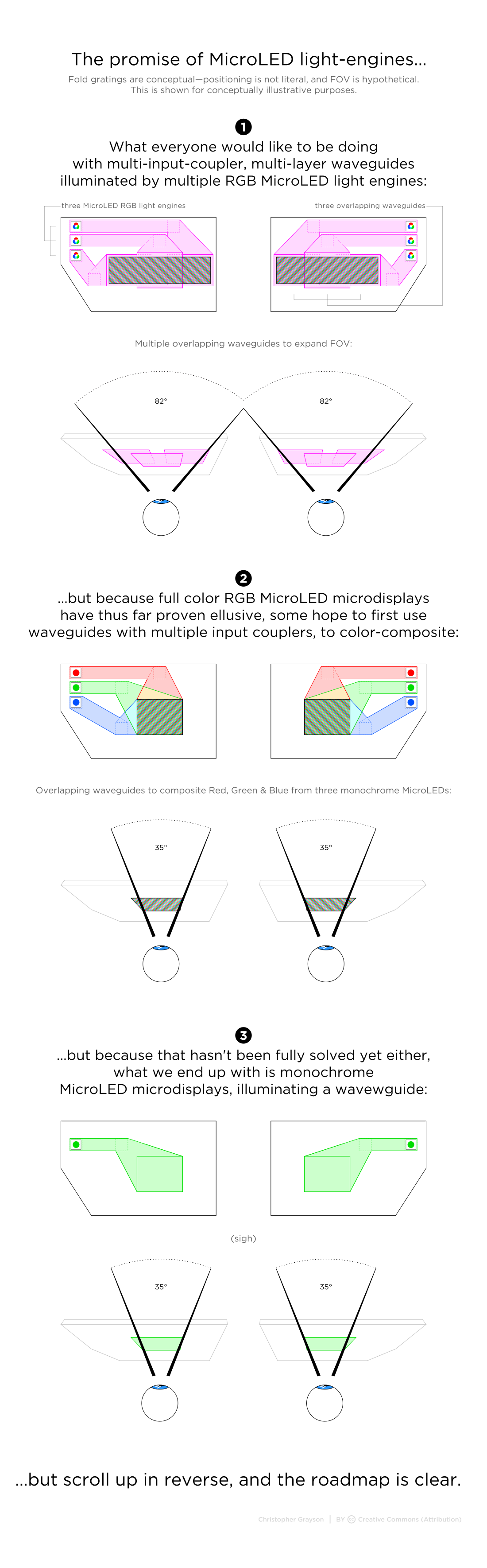
The prior video was from September, but by January Vuzix had announced the Jade Bird Display partnership, and had a better solution. As far back as at least 2018, Jade Bird had proposed using a dichroic x-cube splitter / combiner, to composite RBG, from separate MicroLED panels.
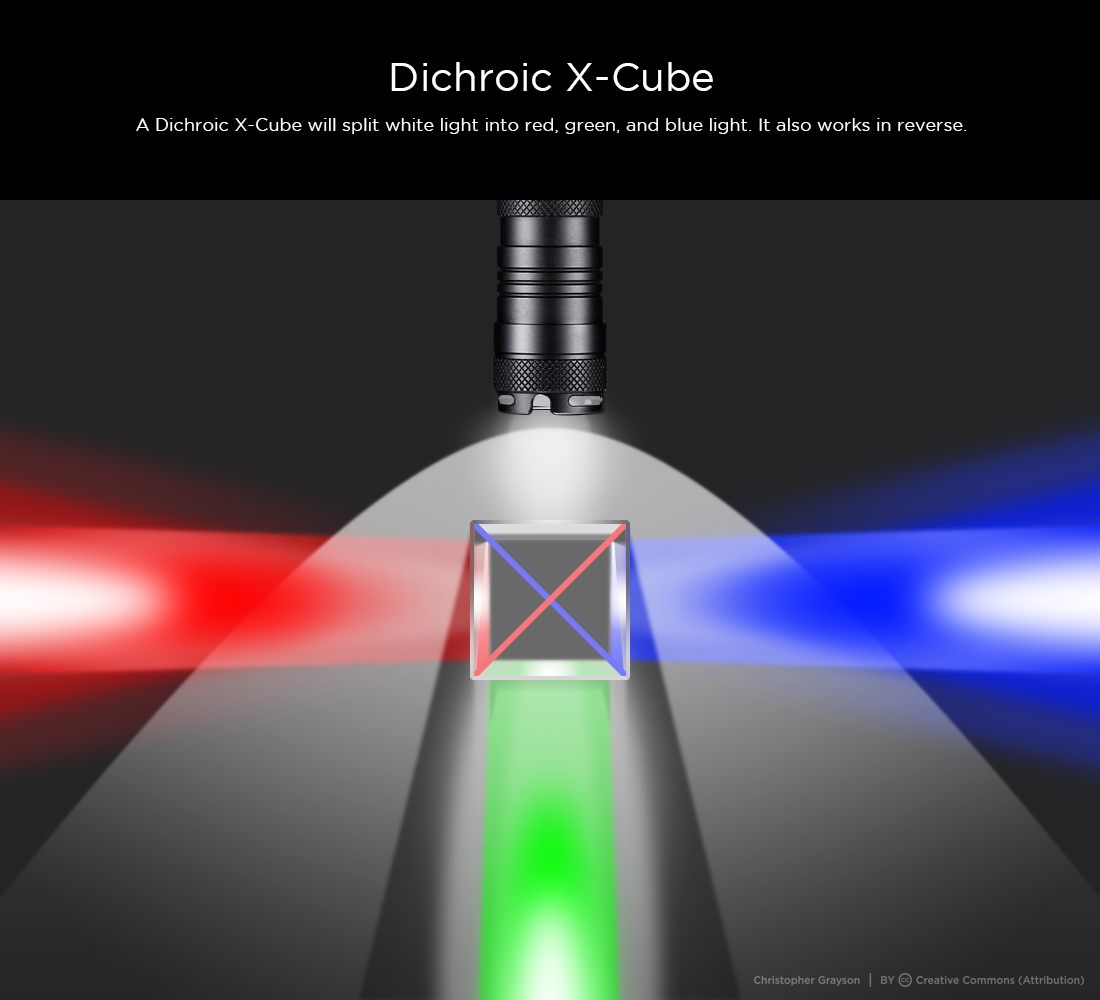
In the video excerpt below Vuzix revealed the design of two new light modules, one monochrome green, the second a dichroic x-cube compositing RGB projector (A further explanation of the x-cube used for composite is provided in a diagram beneath.).
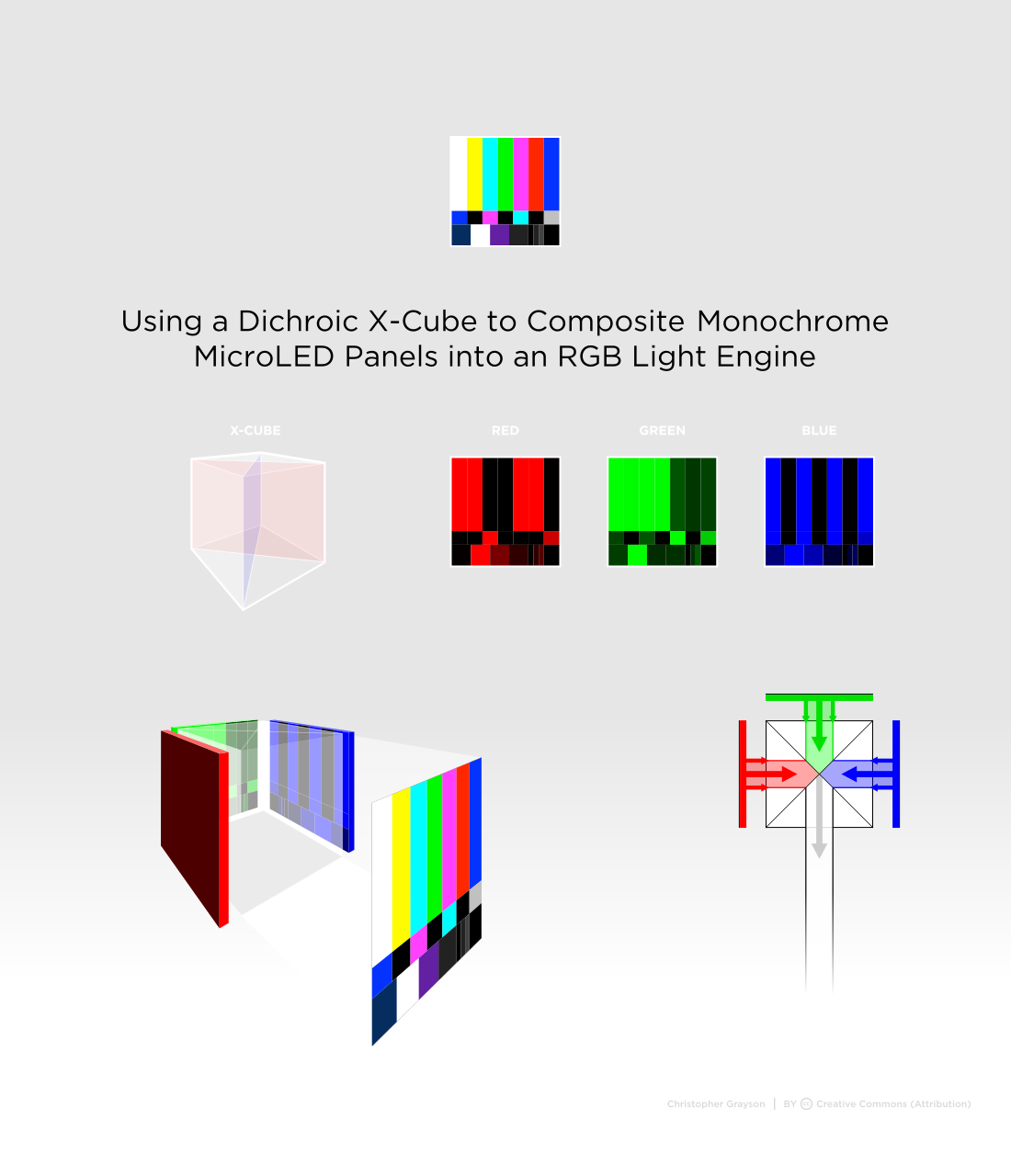
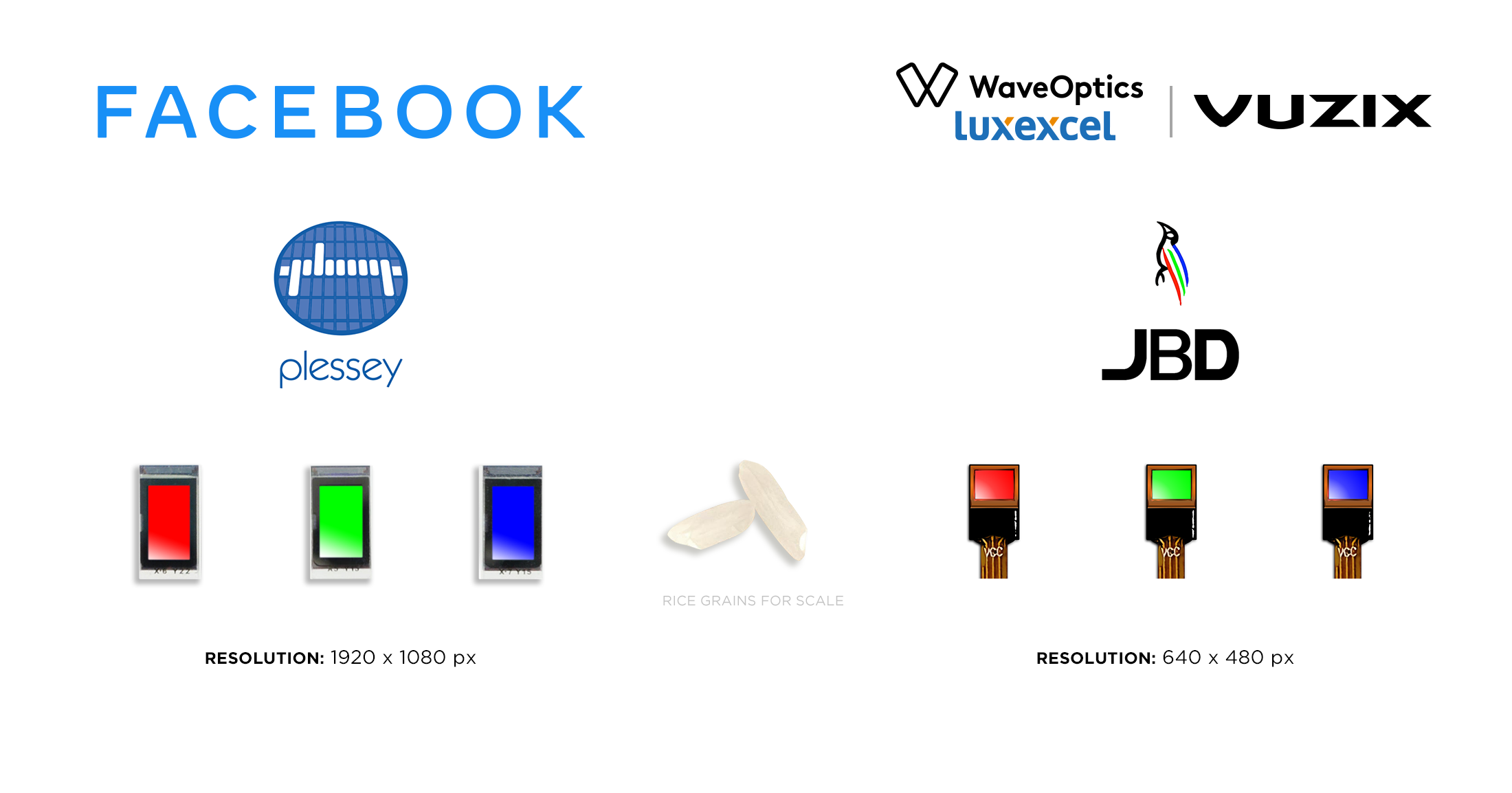
Phil Greenhalgh, WaveOptics’ CTO confirmed that the Plessey collaboration was indeed also blown up by the Facebook deal, much as Plessey’s supplier relationship with Vuzix. Also like Vuzix, WaveOptics is now working with Jade Bird. In the short term, the winner in the Plessey / Facebook contract has proven to be Jade Bird (who also recently entered into a development partnership with Kopin).
Leon Baruah has unique insight given that he was Senior Sales Manager for Plessey up until the date they entered their arrangement with Facebook (not much to sell, when you have an exclusive long-term buyer). The following month he joined Jade Bird as Director of Marketing and Sales, and it appears Plessey’s non-Facebook clients followed. Leon could not speak about any partnerships except those already in the public domain—until this article, that was only Vuzix and Kopin. Given Plessey’s exclusivity with Facebook, their former clients had few choices—as Greenhalgh noted, the MicroLED microdisplay market is “a limited option space.”
Explaining Jade Bird & Plessey similarities and difference, Baruah said they both “have concentrated the efforts on µLED microdisplays and the processes for both companies are more suitable for microdisplays, i.e. <1.0” diagonal but smaller the better. Both companies utilise monolithic hybridisation method for wafer level production of microdisplays. This is where the similarities stop as the processes are vastly different.”
“Both JBD & Plessey have unique strengths in the manufacturing processes,” Baruah continued, “but JBD started with µLED displays in 2015 whereas Plessey started looking at µLED displays in 2018 so JBD had a head start in this respect,” emphasizing the head start of his new employer.
Baruah suggests “in the mid-long term, full colour µLED microdisplays will be launched,” but suggested the dichroic x-cube “approach is a viable solution and with our technology we can still end up with a projector that is really small ~1.35cc.” Greenhalgh suggested from his experience, “three video channel x-cube systems are fraught with image quality, alignment, manufacturing, electrical drive and size considerations,” but on Jade Bird’s efforts in this area caveated, “never say never.”
Greenhalgh expects we are “2-3 years from seeing a full HD panel with energy confinement, constant current drive backplane that is small enough to be used in [an] AR light engine.” This is inline with both projections for expected Apple smart glasses, as well as with remarks made recently by Mark Zuckerberg on The Information’s 411 podcast with Alex Heath.
Getting a waveguide display into a prescription lens is truly a milestone. Eventually the industry will get to an HD resolution MicroLED color microdisplay, and soon after perhaps three will drive a multilayered waveguide with an expanded field of view. For now, the x-cube composited color module is too large to consider multiple units in a consumer design (it’s honestly questionably viable in a consumer form factor, with only one projector), and some are skeptical of the quality it can deliver.
But this past week the industry took a major step. Getting a waveguide into a prescription lens has been a Holy Grail pursuit for a decade, and Luxexcel and their WaveOptics partner have delivered.
You can learn more about their collaboration by attending SPIE’s AR/VR/MR event next week, where Luxexcel’s Chief Strategic Officer, Guido Groet will be speaking on Monday March 29th, 10:00 AM - 10:25 AM PT.
Plessey was contacted for this article and declined to comment. Here, enjoy a demonstration of their breakthrough 1080p HD, MicroLED microdisplay in monochrome green:
Christopher Grayson is a marketer, market analyst, writer, and former advertising creative director. He is available for consulting projects, editorial, and creative direction (He is also available for hire.).
Christopher Grayson has also been a contributing writer to UploadVR, and to 20/20 Magazine. Readers can stay abreast of smartglasses, near-eye optics, and the fashion eye-frames industry—by following Chris Grayson on Twitter.
]]>
I was fortunate to have met Jonathan a decade ago, and we became further acquainted when I interviewed him in 2016. With the announcement of his departure, I put together a Tweet storm chronicling his thirty-five years of contributions to the industry. I’ve reassembled them here with minimal details added, given the change in medium… and—my penchant for burying the lead—conclude with a teaser, regarding DigiLens future, post-Waldern.
Jonathan Waldern is an innovator, a maverick, and a true pioneer, without whom the Augmented and Virtual Reality industries would not be what they are today. Both as an engineer and inventor, he moved the technology forward, and as an entrepreneur he has productized the technology and brought it to market.
Waldern began his career in Virtual Reality in earnest, in 1985 when he founded W Industries, to commercialize the concepts he had been exploring in the early 80s at University in Loughborough. In 1989 W Industries prototype won the British Technology Group Award, for Best Emerging Technology.
Having sold majority control of W Industries to investors, a consolidation of shares were purchased by a holding company that went bankrupt for reasons unrelated to W. Undeterred, the same team reincorporated as Virtuality, and moved forward. By the 90s Jonathan became the reigning star of the VR 1.0 era—Virtuality was the highest valuation, venture-backed VR startup of its day. If you played a virtual reality arcade game in the 90s, is was almost certainly one of Jonathan’s machines (last year, Nostalgia Nerd even produced a full length documentary on the company).
Steve Job’s discontinued development of Quicktime VR in 1997 is often sighted as the collapse of VR 1.0 (Many big players including Waldern’s Virtuality, Paul Travers’ Forté Technologies, and Jaron Lanier’s VPL Research all went under just months apart).
In spite of Virtuality’s meteoric rise, and the entire early VR industry’s precipitous fall, Waldern continued on. Always bouncing back, he founding Retinal Displays, inventing a 3-element molded aspheric optical lens system that enabling a $299 price point. productized under the Philips brand as SCUBA in Europe and the US, and by Takara in Japan, over 160,000 units were sold. To put that number into context, it would be another 15+ years, only when the combined sales of Oculus Rift DK1 and DK2 totaled 175,000 units in June 2015, did a consumer VR headset beat those numbers.
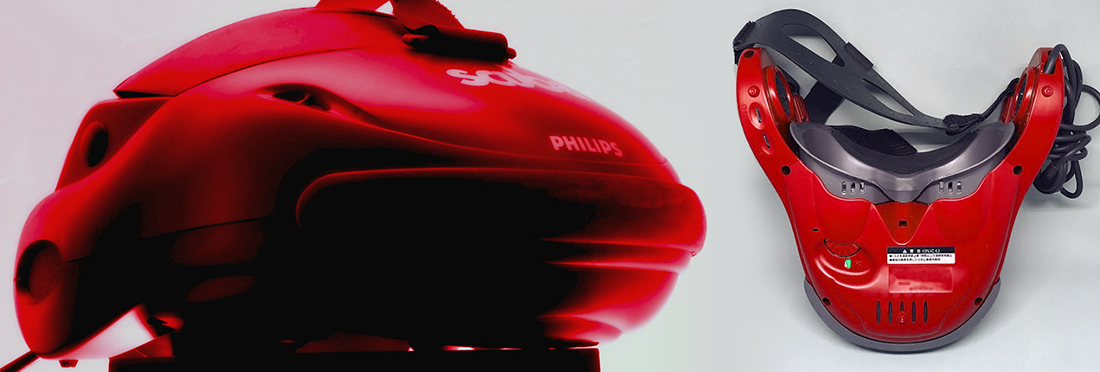
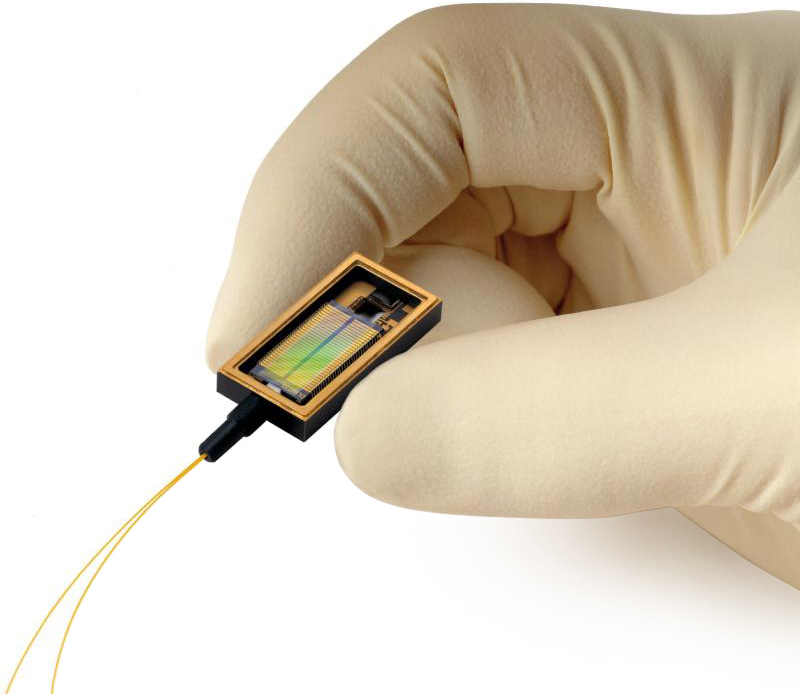 Waldern then left the world of consumer electronics products and gaming behind, founding DigiLens Telecom, developing components for telecommunications infrastructure—including electrically switchable gratings that would lay the technological groundwork for the optics that would come to differentiate DigiLens Inc.’s future waveguide displays. This paved the way for his return to display systems.
In 2004 Waldern founded SBG Labs (Switchable Bragg Grating) which itself would then be rebranded DigiLens Inc. DigiLens built on the switchable holographic grating DigiLens Telecom had perfected for telecommunications components, and applied them to near-eye optic displays.

Building revenue early on, DigiLens created a dash-mount waveguide display, in collaboration with Rockwell Collins, for the avionics of Embraer Jets.
In near-eye optics, DigiLens productized HudwaySight, a detachable heads-up AR display available for use with many motorcycle helmets.
DigiLens continued their partnership with Rockwell, building stereoscopic systems for the US military, incorporating their WFOV AR waveguide into Rockwell’s IDVS system.
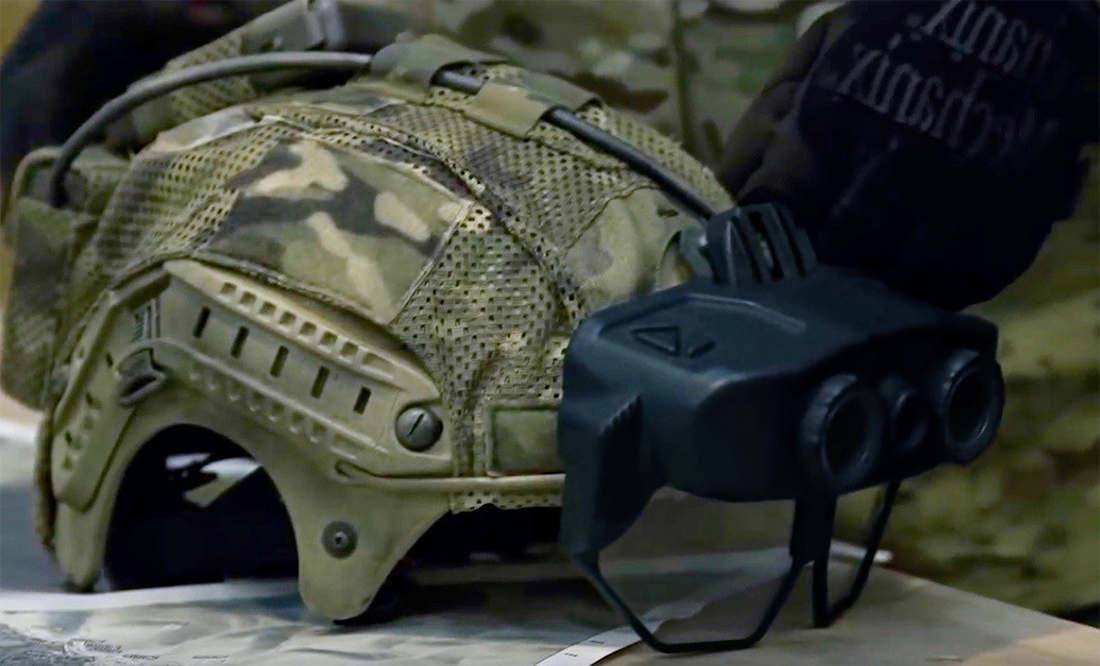
Technology that would make its way into DigiLens commercial optics, as seen in their line of Crystal reference systems. DigiLens maintains industry leadership in wide field of view waveguide optics. DigiLens continues to lead, with their Visualize Design v1 modular reference system.
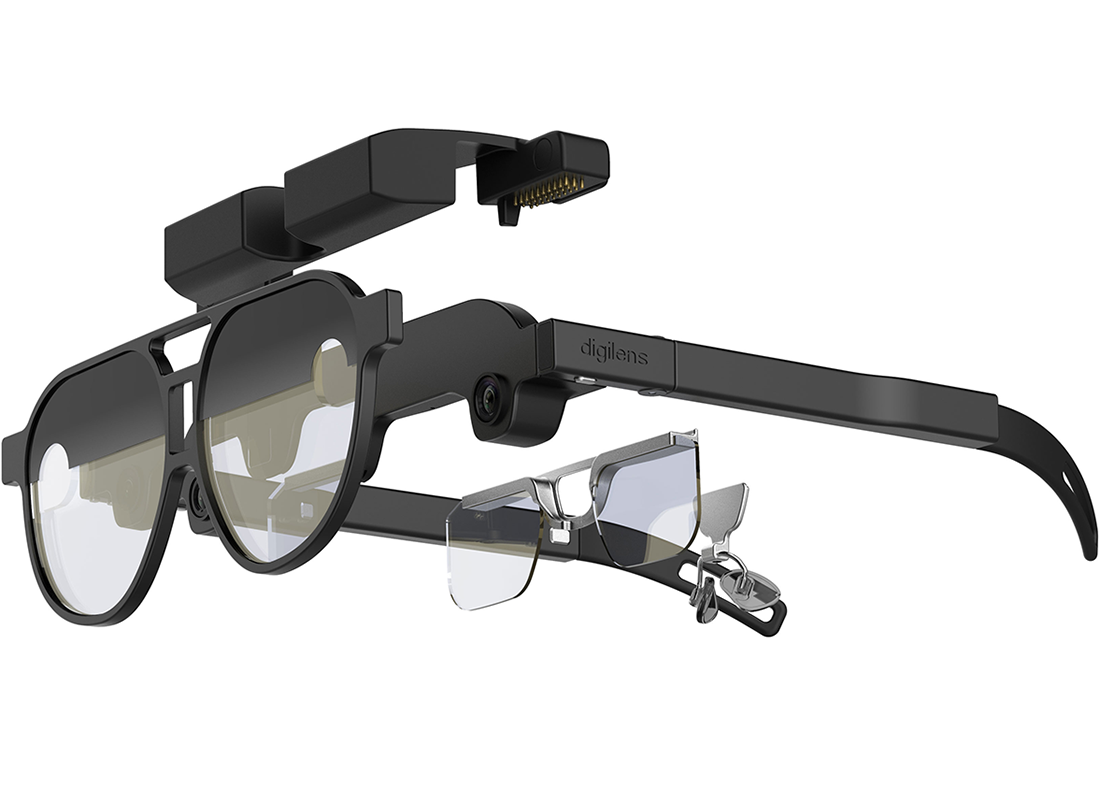
While Waldern launched W Industries within the year of Jaron Lanier’s VPL Research, Lanier proved a more successful cultural commentator than entrepreneur, and enjoys greater name recognition. While I respect Lanier as a prognosticator and intellectual, I would suggest that Waldern’s contribution to the industry has been vastly greater.
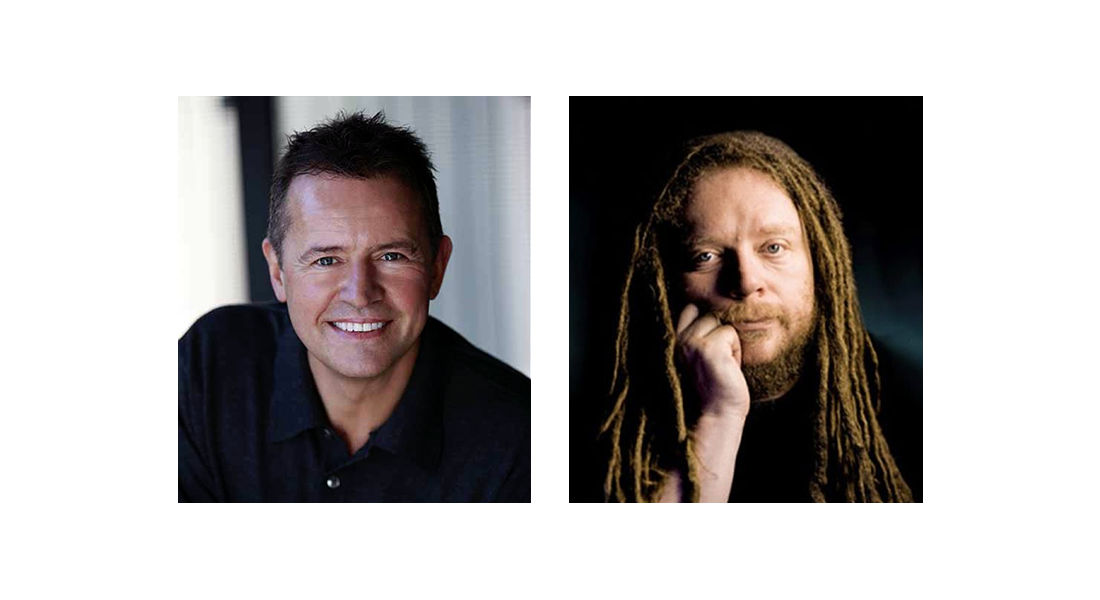
Given this is Display Week 2020, I would like to take the opportunity of Jonathan’s bio to bring attention to some speculation: While it is now proven that MicroVision is the light engine component supplier to Microsoft’s HoloLens; it was also revealed this week that they’ve miniaturized their LBS light engine into a temple embedded module; it is also known that DigiLens has been working with an otherwise undisclosed partner for the LBS light engine in their Crystal line of reference frames. It is further known that SBG Labs’ / DigiLens former Director of Optical Engineering and CTO, Bernard Kress—who later became Principal Optical Architect of Google Glass—is now Partner Optical Architecture on HoloLens at Microsoft (incestuous little industry, isn’t it?). That’s enough dots to connect, speculate on your own from here:
This was originally published as a Linkedin Pulse article.
]]>FACEBOOK’S SMARTGLASSES ARE TAKING SHAPE
A week ago today The Information broke a story about Facebook’s “exclusive” deal with Plessey. Plessey is a UK based manufacturer of MicroLED displays. These displays are used as the light-engine to drive a near-eye optics display, more specifically a waveguide.
 The story was retreaded through the tech-press by the usual suspects. As it made the rounds I noticed most of the coverage had a few things in common: one, the allegation that anonymous sources claimed Apple wished to buy them, but they chose an exclusivity contract with Facebook instead; secondly that some of the tech journalists—typically generalists, without a focus on near-eye optics—seemed unclear about the actual technology that Plessey produces. The intention of this article is to offer some clarification of what Plessey does, and what Facebook gets, and cover the collection of relationships Plessey brings to the table.
LET’S GET APPLE OUT OF THE WAY
Might Apple have made a bid? Maybe. Maybe not. The Information invokes Apple in the headline, citing two anonymous sources. When a story ostensibly about a Facebook deal, is headlined instead by name-dropping Apple, it says a lot less about this deal and a lot more about the power of Apple’s brand. Call it a pet-peeve, but leading every headline about other companies not Apple, with a headline invoking Apple—in order to drive site traffic—is kind of lame, and used to exhaustion. The fact that the story is otherwise nothing about Apple makes it an annoying click-bait technique.
The intrigue over “Did Facebook steal the deal from Apple?” is also a huge distraction from what is otherwise a genuinely compelling story, one that I feel got lost. That’s the story I hope to deliver for you here… so let’s move on.
PLESSEY’S PREEXISTING CONTRACTS
Besides Facebook, Plessey has preexisting contracts, perhaps most notably with Vuzix. Last May, Plessey entered into what was described as a “long term” relationship to supply the light-engine for Vuzix’s waveguide display used in their flagship Vuzix Blade smartglasses. While the terms of the contract were not publicly delineated, given the joint press release described it as “long term,” I’m willing to assume this meant a minimum of at least a year. So Facebook’s “exclusive” contract to buy up all of Plessey’s manufacturing capacity would appear—based on the existing coverage—to violate (or to have bought out) Vuzix’s own supplier relationship with Plessey. While I have no insider scoop, if this were the case, the market would have been expected to respond in a negative fashion, and it did not. In spite of claims of exclusivity, this leads me to believe that Plessey’s supplier relationship with Vuzix was likely somehow preserved, perhaps grandfathered into the deal… details.
SO WHAT DOES PLESSEY ACTUALLY DO?
Some of the coverage made it clear that the writers did not understand what Plessey actually makes. Specifically in reference to Vuzix, VentureBeat wrote:
Plessey previously supplied smart glasses maker Vuzix with wearable screens, and has most recently focused on microLED technology, one of several display technologies competing for viability in future AR glasses.
Plessey did not supply Vuzix with “wearable screens”. Plessey supplied a component known as the light-engine for Vuzix’s waveguide—a component they manufacture themselves—that together comprise the two principle parts of a near-eye optics module. Let’s have a look.
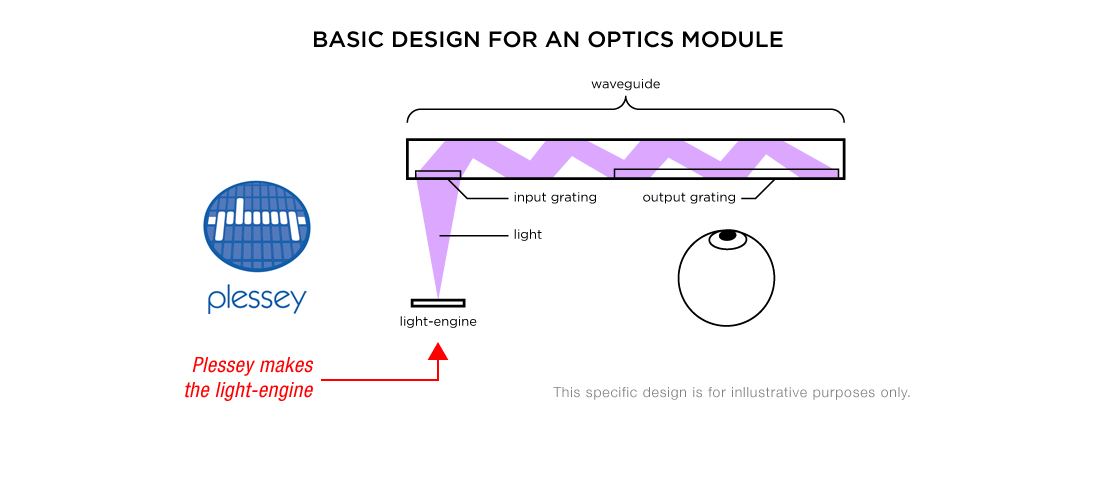
WHAT OTHER IMPORTANT RELATIONSHIPS DOES PLESSEY HAVE?
Plessey have several key strategic relationships. The uniqueness of Plessey’s offer is tied directly to many of these important relationships. Those which we will explore here include Jasper Display, Compound Photonics, and then we will look at WaveOptics, who bring their own set of relationships that will be explored below.
KEY PLESSEY RELATIONSHIPS
 Jasper is a semiconductor company with whom Plessey partnered to codevelop their GaN-on-Si (Gallium Nitride on Silicon) backplane. Simply put, the backplane connects the MicroLED to the rest of the electronics. In the recent past the backplane for a MicroLED would have been sapphire-on-silicon (SoS). GaN-on-Si offer many advantages over SoS for MicroLEDs used as a light-engine in a near-eye-optics display. It has manufacturing cost advantages, higher brightness, lower power consumption, and given the unique property of “collimated light,” it simplifies the optics.
Clive Beech, Senior Director, Business Development at Plessey, explained last year in an interview with All About Circuits:
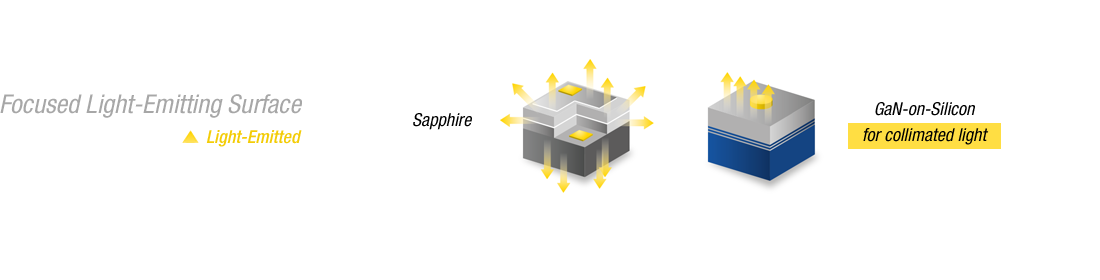
Over 130 separate layers go down before you end up at the top of the gallium nitride structure. They’re all very thin layers, so the total thickness of those layers is only of the order of three microns. Some [layers] are only a few nanometres thick, but all the different layers serve distinct purposes, in terms of matching the silicon crystal structures, the gallium nitride crystal structure… We can actually take the light from each pixel and instead of having what’s called Lambertian emission which is effectively in all directions, we can collimate it and bring that light into almost like a projector output, sending it directly into the lens and optics of the waveguide.
 To fully realize their design in a productized form, Plessey partnered with Compound Photonics (CP) to design the module, as here explained in Compound Semiconductor Magazine:
Under this partnership, Plessey will bond CP’s high speed digital low-latency backplane silicon wafer with Plessey’s proprietary GaN on Silicon monolithic microLED array wafer. In turn, CP will use its experience in microdisplay assembly, test, and packaging to create display modules from the bonded wafers in combination with CP’s NOVA high-performance display driver architecture to deliver a complete solution compatible with the industry standard MIPI display pipeline.
SO FAR…
So from the above, we can see that Facebook’s Plessey deal brings with it their own existing collection of partner relationships: Jasper works with Plessey to produce their backplane, and Compound Photonics works with Plessey to produce their module. These relationships are a given. Together they make the world’s smallest, highest resolution, low power consumption MicroLED displays for use as a light-engine to a waveguide.
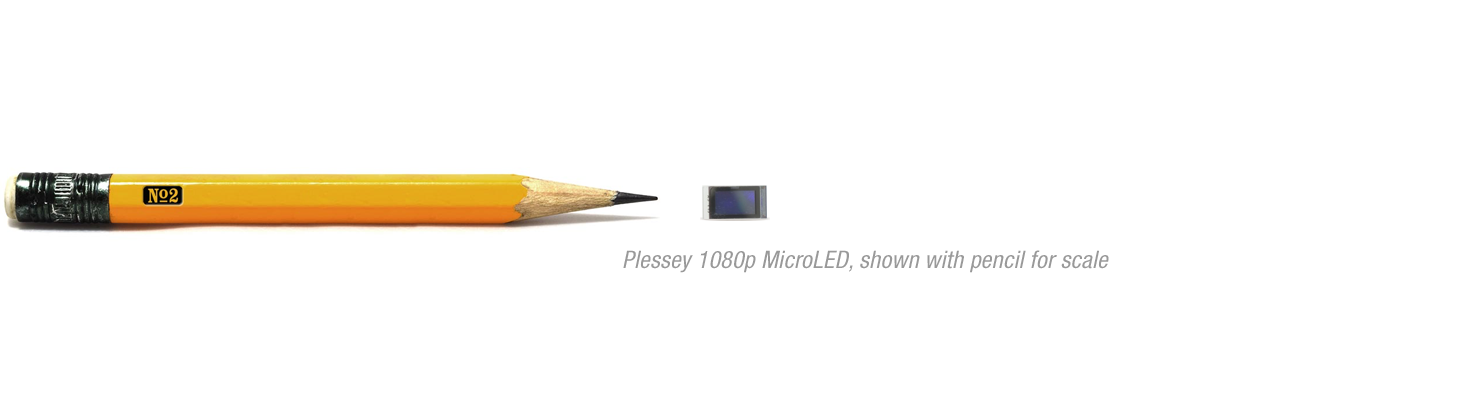
BURIED THE LEAD AGAIN…
Now we’re going to get a little speculative… but not outlandishly so.
 Plessey has a close relationship with a fellow UK based company, WaveOptics. Scarcely two months ago Plessey & WaveOptics announced a strategic partnership of their own. If Plessey has a partnership to develop a MicroLED to waveguide near-eye optics display module with WaveOptics, and if Plessey has an exclusivity supplier relationship with Facebook, then does it stand to reason that Facebook by extension will also be using WaveOptics waveguides?
As they say in the business: Hardware is hard. Optics are harder.
Nobody—not The Information, nor VentureBeat, nor any other outlet I’ve seen cover the Facebook / Plessey deal—has explored this likelihood. Possibly because they don’t seem to understand the technology. Above, we saw that Plessey makes the light-engine component of the optics system. Yet nothing about WaveOptics has been disclosed, regarding the Facebook / Plessey deal. Here below we visualize how their partner WaveOptics makes the waveguide component of just such a system:
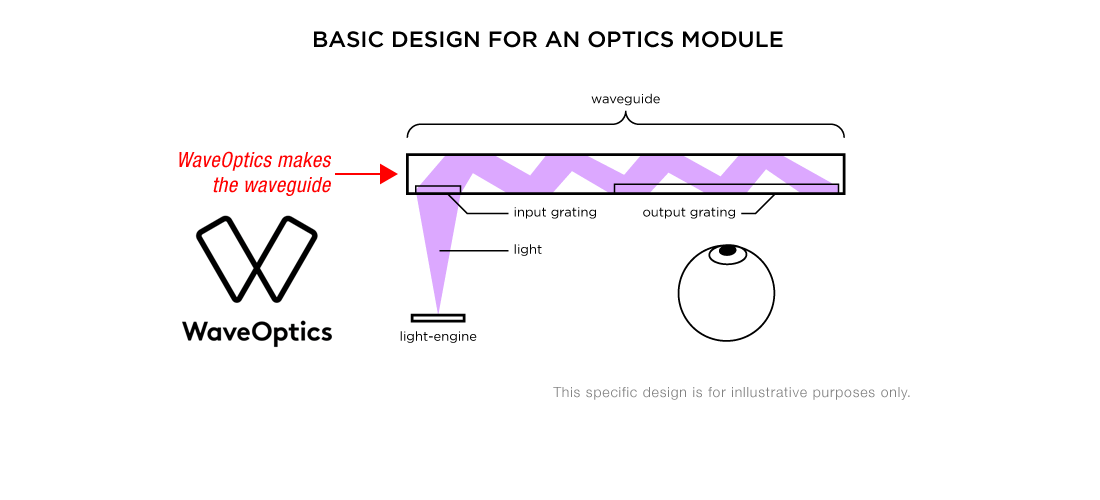
DOES FACEBOOK HAVE A WAVEGUIDE YET?
Being a vital component necessary to complete a near-eye optics displays system, does Facebook have any preexisting waveguide partnerships? Although they have some of their own IP, there is no publicly available information of any prior/existing Facebook waveguide supplier partnership… yet Plessey’s technology is effectively worthless to Facebook until they have a waveguide for it to illuminate.
SO… WHAT IF WAVEOPTICS ARE PART OF THE FACEBOOK DEAL?
If—as seems likely—through their partnership with Plessey, WaveOptics is including in the Facebook deal, we should also take a quick look at a couple of WaveOptics’ other partners.
 Two WaveOptics partners of note are Schott and Goertek. The former, Schott is a materials supplier that a mere few weeks ago entered into a contract to provide WaveOptics with the 1.8 Refraction Index RealView™ glass, used to make their waveguides. The later, Goertek is both one of WaveOptics largest investors, and a large Chinese manufacturer (perhaps most recently known for manufacturing Apple’s wireless AirPods) and who also have the exclusive contract to manufacture WaveOptics waveguides. The later is kind of a big deal. In response to U.S. / China trade relations, Goertek made a huge investment to diversify manufacturing outside of China, and in 2018 built their largest, newest factory in Vietnam.

BUT WAIT, THERE’S MORE…
Just a quick reminder that last September Facebook—through a project code named Orion—was reported to be in talks with Luxottica to produce cobranded smartglasses. The CNBC article that broke the story made special note of Luxottica’s Ray-Ban brand, but it was not in any way clear that specifically a Ray-Ban designs would be involved. In any case, Facebook declined to comment and Luxottica did not respond to request for comment for that story (just as WaveOptics did not respond to requests for comment for this one).
SO WHAT DO WE KNOW?
We know that Facebook is working on a waveguide display strategy with a MicroLED light-engine. We know that Plessey has entered into a contract to give Facebook exclusive supply of their MicroLED light-engines for that display (and that Plessey has partnerships with Jasper to supply their backplane, and Compound Photonics to build their module). We also know that Facebook will need a waveguide for that light-engine to drive. While they have some IP, no existing Facebook waveguide contract is known to be in place. We know WaveOptics just signed a supplier partnership deal with Plessey that could appear to make them contractually bound to be a partner to the Facebook deal as well. Between Goertek’s investment in WaveOptics’ and their existing manufacturing license, a final optical system would most likely be assembled by Goertek (using Schott RealView™glass), and perhaps at their new factory in Vietnam.
It is also possible, if uncorroborated that the frames may be supplied by Luxottica.
A great deal can be learned—and even more informed speculation can be made— about Facebook’s future smartglasses, based on the recently revealed Plessey contract.
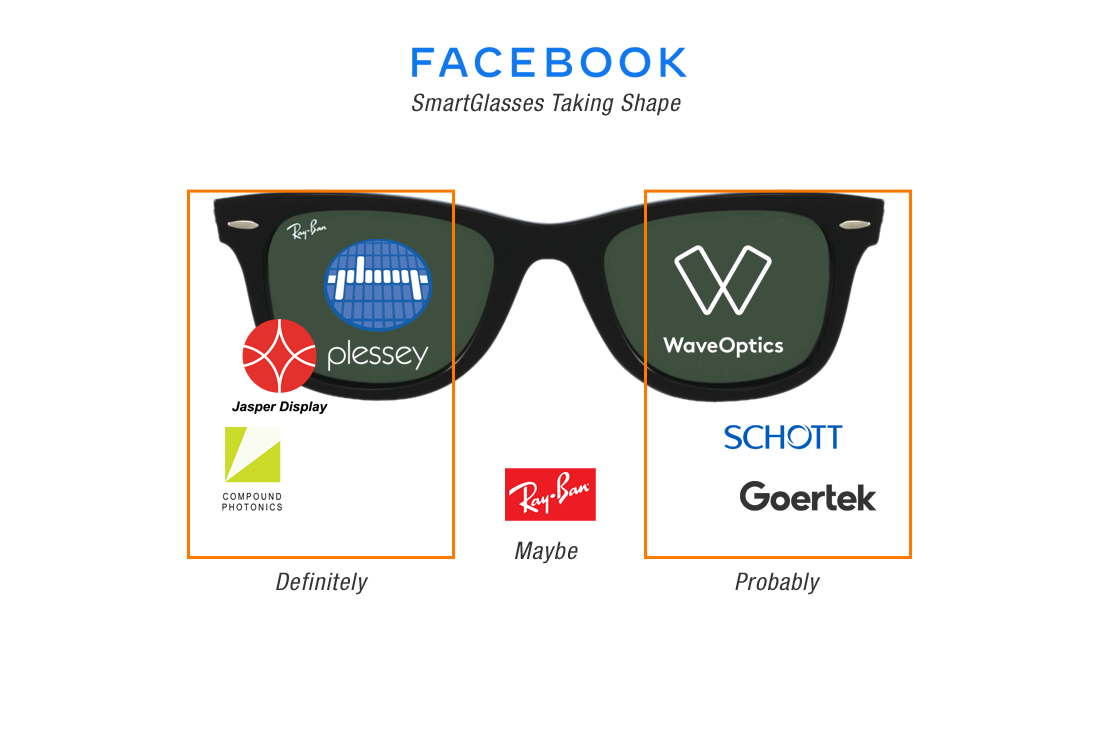
Christopher Grayson is a marketer, market analyst, writer, and former advertising creative director. He is available for consulting projects, editorial, and creative direction.
Contact: chris [at] chris grayson [dot] com
Readers can stay abreast of smartglasses, near-eye optics, and the fashion eye-frames industry—by following chris grayson on Twitter. In addition to publishing here at his blog GigantiCo, and at Linkedin Pulse, he has also been a contributing writer to UploadVR (largest tech publication dedicated to VR & AR), and to 20/20 Magazine (largest trade publication for optometrists & opticians).
]]>This is a 2019 end-of-year overview / Pre CES 2020 roundup of the smartglasses industry. We start with Apple supplier AMS’s acquisition of OSRAM that closed in December and look at OSRAM’s assets specifically in the context of AMS as an Apple supplier. Given OSRAM’s recent breakthrough in pico-laser technology, we take a deep-dive into the near-eye optics display market, specifically regarding laser illuminated waveguides. We then explore how OSRAM’s
 laser-tech may already have impacted Apple’s product strategy around Smart Glasses. We then explore other business developments inside Apple leading to a push-back on their rumored product launch date.
We also look at the movement of talent within the smartglasses industry specific to those with experience using laser driven light engines. We then examine how Apple’s decisions have reshaped the opportunities in the smartglasses market, with an eye to CES 2020.

 This year has been a wild ride for OSRAM. The once vaunted German lighting brand is among the world’s largest manufactures of LEDs. Historically they have competed with the likes of General Electric and Philips Electronics in light bulbs, and still hold a significant share of the market in professional stage lighting. However the once high-replacement churn of incandescent lightbulbs has been superseded by long-lasting LEDs. This has had a huge impact on the profitability of lighting companies, and unlike Philips and GE that have vastly more diverse product lines, OSRAM—once a brand owned by Siemens—was spun off in a 2013 IPO.
While still among the top global players in the market, the lower replacement schedule of LED bulbs has made it much less profitable business. As a consequence OSRAM diversified, most significantly with their state of the art opto-semiconductor factory in Kulim, Malaysia, completed about one year ago.
OSRAM’s slow response to the market resulted in a substantial decline in share price. The new Malaysian semiconductor factory meant to revitalize their business was a €370 million ($436 million) investment. Having only been up and running for a couple of months, by February they acknowledged rumors that the company was on the block, initially in talks with Bain Capital joined by Carlyle Group. As the acquisition moved slowly, a competing bid was put forward by AMS (Austria Mikro Systeme), most known for their 3D face-recognition sensor used for Apple’s Face ID biometric lock technology, launched with their flagship model iPhone X.
 After the monster hit of landing the Apple iPhone Face ID sensor business, AMS itself struggled to please the market. In January, AMS received a patent for a breakthrough, a “behind the screen” sensor design which could help eliminate the iPhone “notch.” However, this did not keep AMS’ stock price from taking a 13% tumble in February upon warnings from Apple pointing “to stagnating smartphone demand and a cooling Chinese economy.” By April, AMS had a 20% rebound when they announced they would be offering their face recognition sensors to Android makers. Apple previously had an exclusivity contract that appeared to have now come to an end.
Only days before OSRAM acknowledged rumors of their potential sale, OSRAM also had a optoelectronic breakthrough with a high brightness pico-laser:

While much has been noted about OSRAM’s expansion into automotive—in both lidar navigational systems, and augmented reality windshield glass—and automotive will surely be a large market for the merged companies, for the sake of this article, we’re going to focus on those technologies that have an immediate impact on AMS’ Apple devices business in general, and future Apple smart glasses in particular.
As AMS & Bain competed to acquire OSRAM, the company began revealing the fruits of their new opto-semiconductor factory: products in R&D unveiled as they moved into production. Their new pico-lasers, particularly their high-brightness green laser (shown above), was merely the first of many new product revelations, which would be appealing to AMS’s Apple client.
The competing offers—together with Germany’s cumbersome regulatory environment—led to a drawn out bidding war that lasted much of the year. It is also reasonable to suggest that OSRAM’s CEO and Board may not have been as divided as portrayed—splitting their loyalties between bidders could have been just as much a negotiating tactic.
In the end, AMS prevailed… and by extension Apple.
During the course of the bidding war—and pertinent to both Apple & smartglasses —OSRAM also unveiled:
 NEW EYE-TRACKING TECHNOLOGY
While Apple acquired SMI (SensoMotoric Instruments) back in 2017, their technology is bulkier than competitors like that of AdHawk, (which Intel invested in, the same year). OSRAM’s eye-tracking solution has achieved miniaturized scale at parity, or smaller than AdHawk, as well as manufacturing the needed optical MEMS Chip (Micro-Electro-Mechanical Systems), of the dual axis gimbal variety also employed with pico-laser driven near-eye optical system we’ll cover more again below. AdHawk has a unique technology (shown at left): predictive eye-tracking software, while OSRAM’s offering comes paired with software that counters “dizziness” sometimes experienced by VR & AR users, resulting in nausea. With OSRAM’s acquisition, AMS can now match AdHawk’s hardware… yet at scale (Apple scale). The merger will allow AMS to bring a best-in-class eye-tracking solution to their largest client and others.
MINIATURIZED INFRARED LED (FOR FACE RECOGNITION)
In the midst of the bidding war, OSRAM introduced the world’s smallest infrared LED (IRLED), specifically produced as a projector to be paired with a face recognition sensor, the kind of sensor made by AMS, for the Apple iPhone, as discussed above…
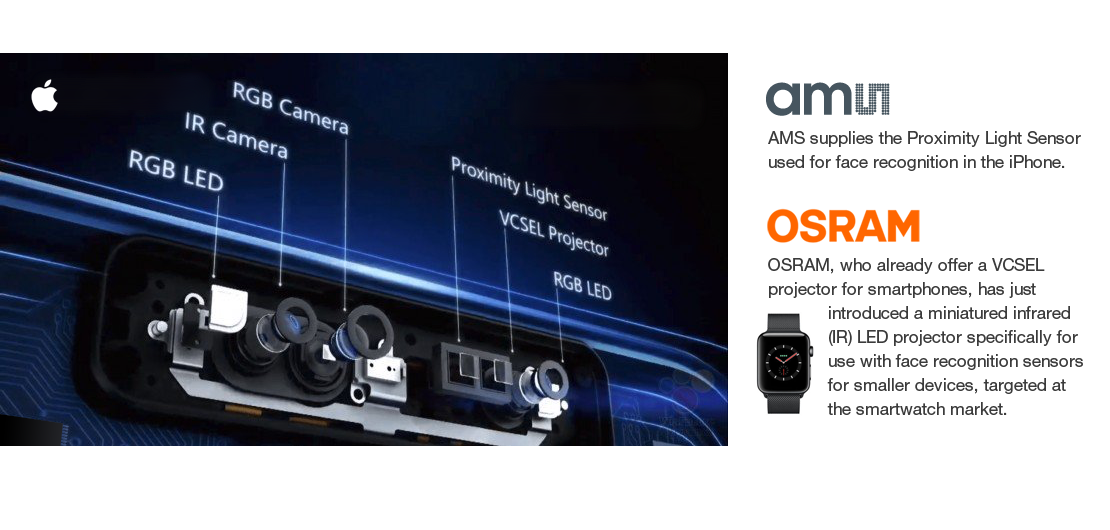
…but while AMS currently supplies Apple with the proximity light sensor for the iPhone, the companion component, the iPhone’s VCSEL Projector (that sprays the user’s face with a pattern of infrared dots) is currently supplied by Finisar. OSRAM makes a competing VCSEL Projector. AMS’ OSRAM acquisition will allow them to offer the entire projector & sensor system from a single supplier. Given the conclusion of their exclusivity arrangement with Apple earlier this year, AMS will also be able to offer the full system to Android handset makers. Further, with OSRAM having just introduced their IRLED nano-projector marketed as ideal for face recognition on smartwatches and other small wearable devices, AMS could make a complete projector & sensor system for the Apple Watch, and offer biometric security to other wearable device makers.
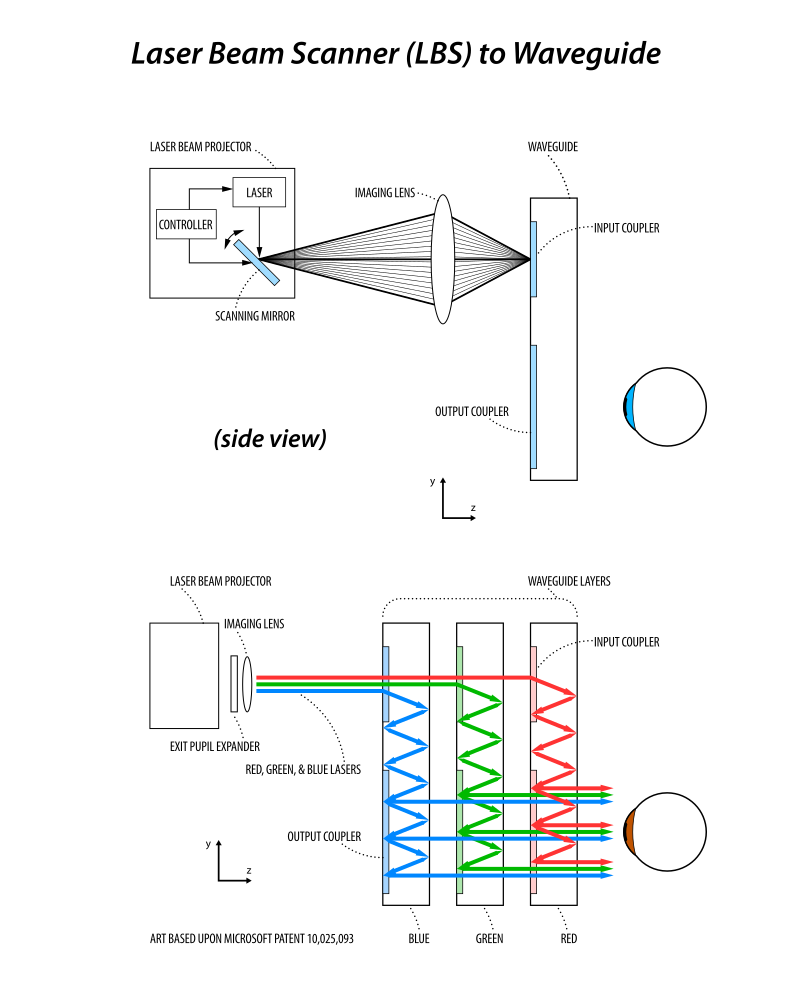
FOCUS ON OPTICS
As I’ve covered extensively in the past, there has been a battle for dominance between waveguides and laser-to-holographic combiner displays in low-profile (consumer viable form factor) near-eye optic display systems.
After some context I’ll show how AMS’ OSRAM acquisition fits into this contest.
APPLE’S OPTICS (TO DATE)
After investing $200M in Corning’s material optics group, the same month they poached optics engineer Michael Simmonds from BAE Systems’ waveguide team, Apple followed with their acquisition of Akonia Holographics, maker of holographic waveguide displays. Coupling Apple’s prior acquisition of MicroLED maker, LuxVue, to a MicroLED manufacturing contract awarded to TSMC of Taiwan, it appeared that Apple’s display module for a consumer smart glasses product was fully formed: a MicroLED light-engine illuminating a holographic waveguide.
HYBRIDS ARRIVE
Entering the fray this year have been laser-to-waveguide hybrids: using a pico-laser to illuminate the input coupling of a waveguide. These new hybrid displays—introduced in the past year by both DigiLens, and Creative Microsystems—have received a lot of attention, given their incorporation into Microsoft’s long awaited HoloLens 2 (with display developed in partnership with MicroVision).
The principal advantage to these new pico-laser driven waveguide designs is that they’ve been shown to produce a wider FOV (Field of View) than possible with existing MicroLED or LCD light-engine modules.
How they achieve a wider FOV however, is slightly different in each case. From Microsoft/MicroVision, to DigiLens, to Creative Microsystem, they’re all doing something a little different to achieve a wider field of view, but they’re all achieving it by illuminating their waveguide with a pico-laser rather than a panel based light-engine such as a MicroLED. This is interesting as the whole industry was leaning towards MicroLED for the future direction in waveguide based smartglasses’ light engines… then suddenly!
The pivot required a closer look (I confess, I overthought this for some time).
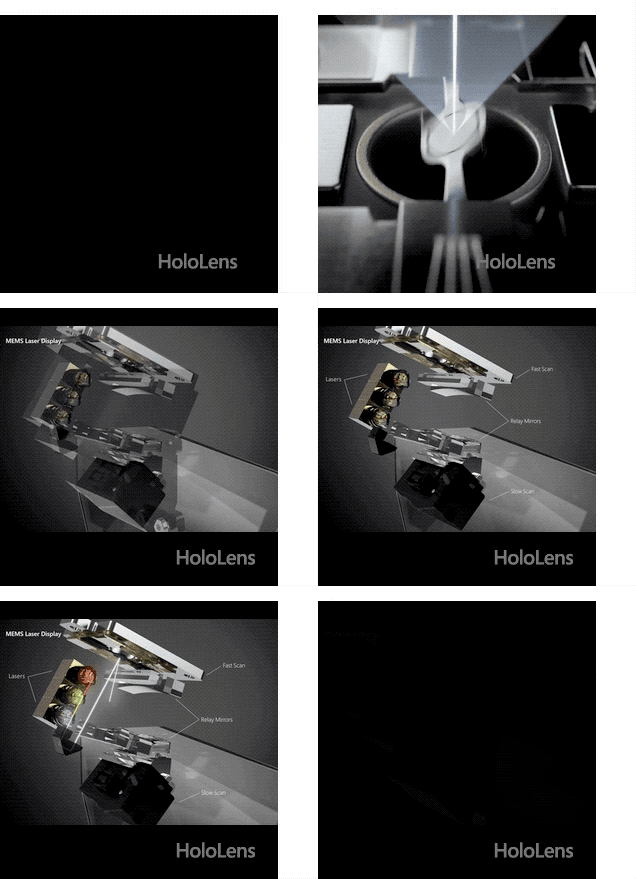 While everyone is doing something different, ultimately it comes down to pixel size. A high quality MicroLED can be manufactured that produces a point of light of about 5 μm (μm = micrometer or micron = one millionth of a meter). That sounds tiny (and it is), however a pico-laser can produce a point of light of about 0.5 μm (one-half of one millionth of a meter, or about 1/10 the size of the smallest mass producible MicroLED). Microsoft, and their partner MicroVision have been first to market with a laser light engine to waveguide hybrid display. Some have suggested this is over-engineered—it is a stupendous feat of optical engineering—Microsoft has shown that it can be done, and mass produced. Most of what is publicly known about HoloLens’ display comes from a talk given by Alex Kipman, two months ago at ETH Zurich. I had previously reported Microsoft partnering with MicroVision (through a contract, a license, and a source), but with no official acknowledgment from Microsoft or MicroVision, many saw further confirmation in one of Kipman’s ETH slides. Because I’ve been asked by others about Microsoft’s waveguide supplier, I’ll make a speculation: it appears to me that Holographix is their likely waveguide supplier, though this is not confirmed (nor has it been reported elsewhere). While many like MagicLeap are using nano-lithography, others like DigiLens, and Apple owned Akonia are using holographic gratings, Kipman specifically describes a stamped manufacturing process for surface relief waveguides that sounds as though he is describing the manufacturing method known to be employed by Holographix
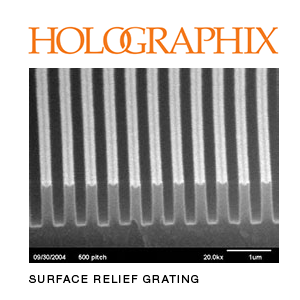 (described here in this archived version of their website). Holographix is a high volume manufacturer of custom replicated optics and optical assemblies. They supply components to defense / aerospace, telecommunications and other industries. For waveguide display systems, Holographix is best known in the trade as the supplier to the avionics arm of BAE Systems (British Aerospace) supplying waveguides for both dash mount and in-helmet (near-eye) HUDs. Holographix has the capability to meet both the volume needs and precision requirements of HoloLens 2; they make SRG waveguides of the kind used in HoloLens 2; and they have a unique manufacturing process that fits the description from Kipman’s keynote. This leads me to believe they are Microsoft’s supplier for HoloLens 2’s waveguides. That assessment has not been confirmed at the time of publishing (I will update if/when new information comes available). Given I’m often asked and Microsoft has not disclosed, that is my qualified speculation.
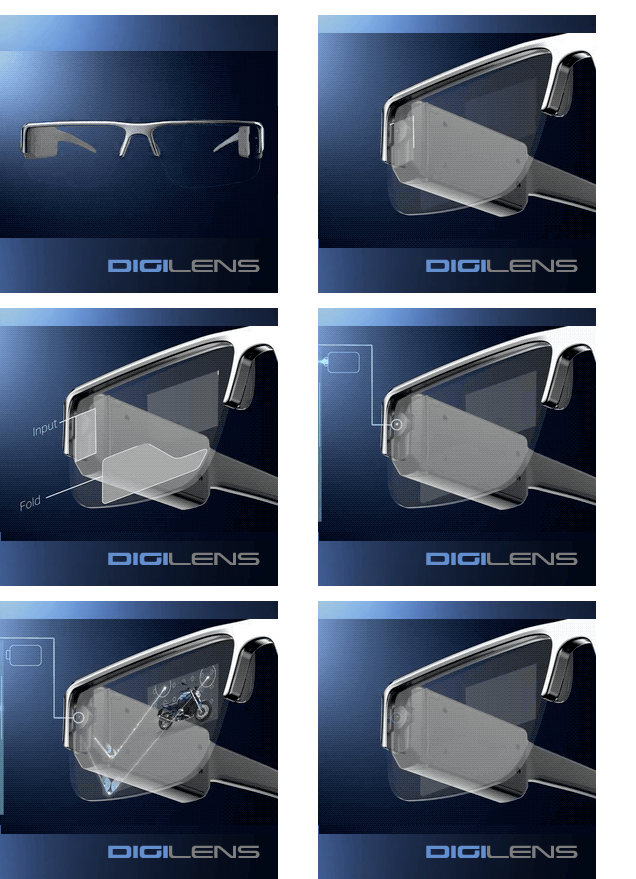 DigiLens has for some time been the market leader in FOV for waveguides. One of their principal stumbling blocks has been that the resolution of available light engine technology has not kept up sufficient to expand the FOV without sacrifices to display quality. If the resolution is higher, the panel may be too large for the input grating. If the input grating is modified to accommodate a larger panel, then you have a very bulky device. DigiLens has produced some larger waveguides for automotive dash-mount HUD prototypes, and commercially available avionics HUDs (the DigiLens / Rockwell Collins produced AeroHUD provides similar heads up cockpit data as the Holographix / BAE Systems’ LiteHUD) but the large light engines in these displays are not a viable solution for anything head-mounted. In December 2018 DigiLens unveiled their first pico-laser driven, stereoscopic waveguide display, a reference model with a 50° FOV. They have stated that they are working with pico-projector manufactures to make a laser projector with a sufficient resolution to scale with their FOV. The light engine remains their current limitation. Laser projectors are the solution they are currently pursuing to solve for that.
TriLite, based in Vienna, Austria, is one such laser projector light engine supplier. After 2019’s VGA resolution dev kit, they’re now taking orders for 2020’s 720p resolution Trixel 2 module. Their modules resolution and corresponding FOV growth projection is on the one hand aggressive, yet on the other shows how light modules currently lag behind waveguides at providing adequate resolution for wider FOV in smart glasses displays. We’re still a long way from “retina display” resolution:
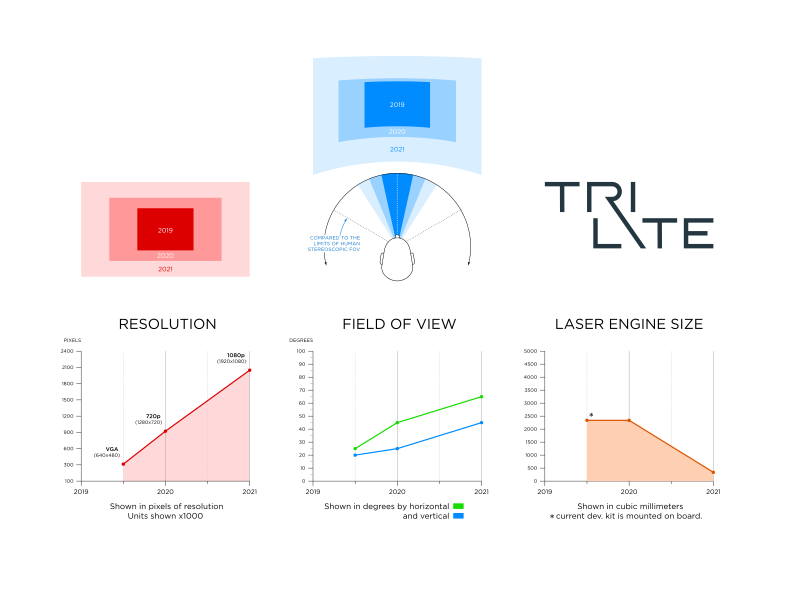
Then we have Creative Microsystems (CMC), a somewhat obscure U.S. military contractor who supplies the Army with price-is-no-object AR headsets with a 110° FOV…
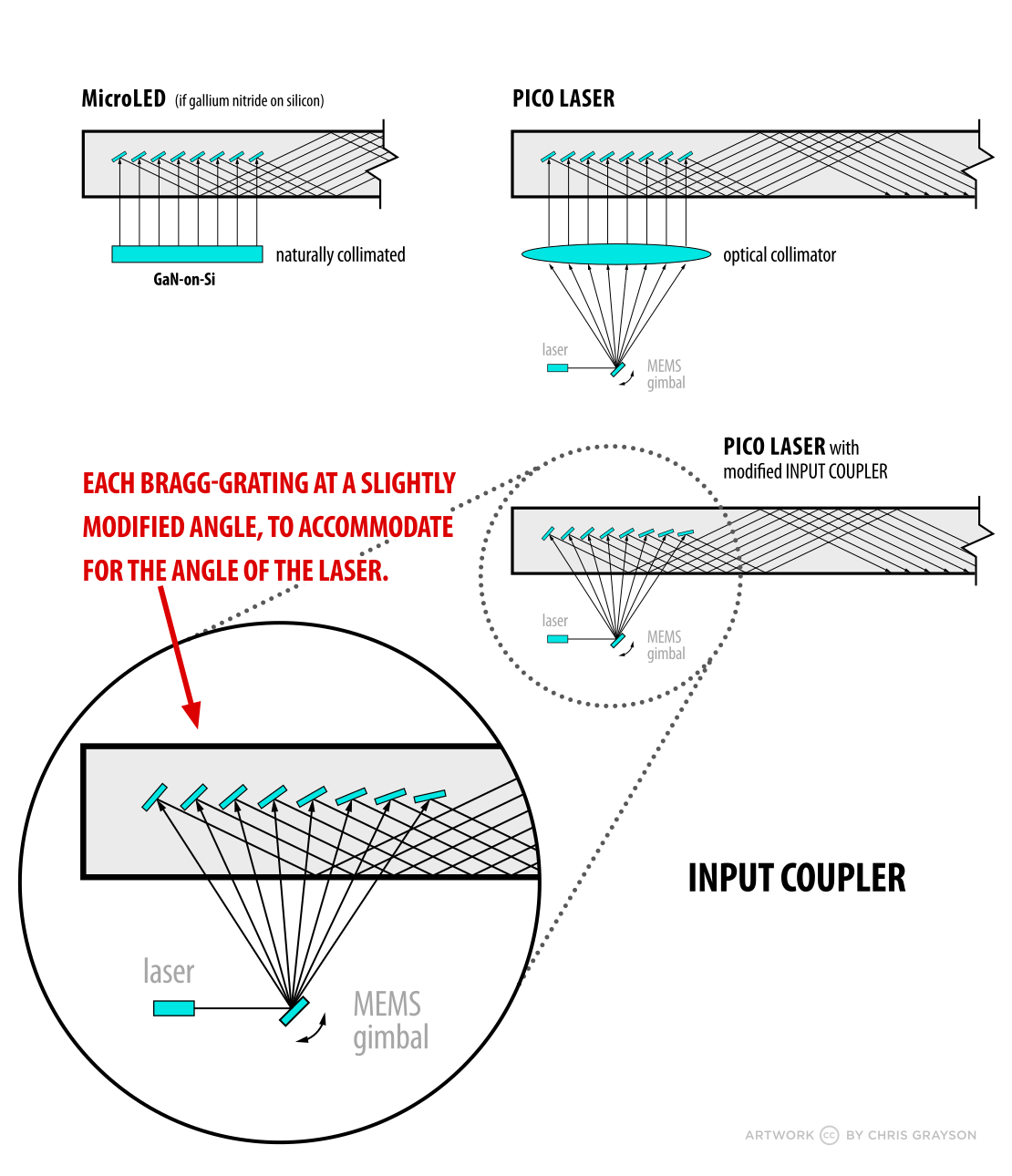
…I interviewed CMC co-founder, Bill Parker earlier this year.
As we spoke he began to describe what set their design apart, and allowed them to achieve their staggering 110° field of view. With enthusiasm he began explaining how their waveguides had specially designed input couplings. That an input coupling (a.k.a. bragg grating) for a typical waveguide was designed for “collimated” light—that is to say, rays of light that are parallel—as is the case when the light engine is a flat plane, such as a MicroLED. However, because a laser emanates from a point (typically bounced off a MEMS mirror), the light rays fan out. As they fan out, the angle of projection changes. While optics exist to collimate light, he explained how CMC’s input coupling was designed from the ground up to receive light pivoting out from a single point, rather than for a panel display. As he explained this I reached for an audio recorder app, and asked to get this on record.
Once recording, Bill seemed to dodge re-explaining how their input coupling was customized for a laser—I felt he may have revealed more of their secret-sauce than intended. He did, however, give additional detail that I will quote here:
So the wide field of view challenge, when you have a source like an LCoS panel or a DLP—those things are big—so they’re starting out with a large area that you have to illuminate uniformly… and that goes back to the understand of how you put light on there… the étendue—how efficient that light is going to be able to maintain its brightness going through an optical system—is constrained in a system that has a lens, and that lens can have an aperture, it’s going to have its exit size, and its going to have a pupil. The pupil where the least confusion of the light is, where you get the best contrast, from the pupil being the right size for the source and the étendue.So you put all that together, and a laser has an advantage because its source size is extremely small… and because of that it can get a large aperture equivalent without have to sacrifice brightness. And it can do that with the right grating [coupler] combination very efficiently. The price you pay is that with a narrow wavelength source, the interaction with the diffraction gratings—whether they’re holographic… like a DigiLens approach, or with a surface relief like Microsoft and everybody else—those bounces are constrained by the bandwidth of the light source. A laser is very narrow, an LCoS illuminated with LEDs is very broad, so you can fill in between so you don’t get as much of a screen door effect, and that is sort of the other side of the coin. So you get the potential for doing wider field of view, higher brightness, higher contrast using laser, but you get this hit in the construction of the device. So what we worked on primarily was how to get a really good image, really high contrast, very high brightness, and we pulled that off.
I inquired again, “You made a comment before about the input grating being ‘angle specific,’ so is that saying, like if you had [a panel such as MicroLED] and so it’s wider, and you’re shining directly in, whereas a laser is coming from one point… and so your input grating has to capture the angle of the laser…”
Yeah, the name of the game is total internal reflection. So you want all that light to be propagating through the input grating, and through the [waveguide], and back out again… If you think about the math of that: the steeper the angle, the less likely it is to be able to take that turn from the grating, and get in to the total internal reflection angles. That’s a challenge that is overcome with… the right fabrication and design. Everybody’s got the same physics to deal with. In our case we got to it first.
When I inquired with Bill for a follow-up, he was not available for further comment. As a consequence, I created the technical illustration above from my jotted written notes. The illustration is more conceptual than literal, but if the input coupling (or input bragg grating) is explicitly designed to receive light emanating from a point, rather than collimated—together with Bill’s further elaborations above—Creative Microsystems have shown that a much smaller laser-based light engine can drive a much wider FOV.

LASERS VS WAVEGUIDES TO HYBRIDS
Up to this past year—prior to their use as a light engine to a waveguide—lasers displays had been an alternative, competing technology to waveguides. While laser based near-eye optics display systems were first successfully commercialized by MicroVision almost two decades ago, these were bounced off of very simple beam-splitter combiners. Only more recently did a pair of companies out of Switzerland—Composyt Light Labs, and Lemoptix—partnered to build a system that embeds holographic mirror optics into a traditional eyeglass lens, for an approach now know as a “laser to holographic combiner” display. After their acquisition by Intel, this display tech was used in the briefly debuted Intel Vaunt glasses, before being popularized in Focals by Canadian smartglasses startup, North. Intel invested in North, who then consolidated the Composyt Light Labs & Lemoptix IP with their own extensive portfolio.
THE PEOPLE
This has significant talent / human resources implications on those teams now pursuing laser to waveguide hybrids, as we know the expertise in laser illuminated near-eye optics is, at this stage, somewhat limited. Hence, following the talent can reveal a bit about who is pursuing what.
Composyt Light Labs & Lemoptix IP may have passed through Intel and landed with North, but the entire optics teams of both companies were hired by Magic Leap. While Magic Leap’s current developer device employs nano-lithographically manufactured, surface relief waveguides, their IP portfolio shows an extensive exploration of exotic display concepts. By bringing on board the core of both Composyt Light Labs & Lemoptix’s optical engineering teams, it heavily suggests that laser to waveguide hybrids are in Magic Leap’s future.
WHO IS APPLE POACHING?
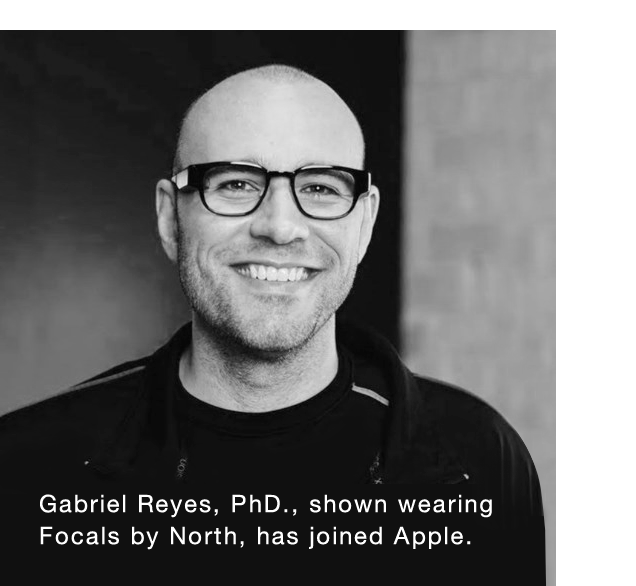 Also notable are the seven known North employees—maker of Focals—who have joined Apple. These hires were not in a block, like Composyt & &Lemoptix joining Magic Leap, but rather a migration from various levels including four intern-level engineers (even one retail employee from their store in Brooklyn); but up the value chain includes Product Design Engineer, Farhan Hossain. Hossain came more as a career migration, after an earlier departure from North, even spending time at micro-display panel manufacturer eMagin. Gabriel Reyes may be the most significant poach. A research scientist with a doctorate from Georgia Tech, his dissertation on wearable computing and recipient of the Google PhD Fellowship. Reyes had been North’s chief Research Scientist and New Concepts Project Lead at North—likely as much a blow for North to lose, as for Apple to gain…
Apple’s most significant talent acquisition in optics came with their purchase of Akonia Holographics. While the acquisition was not revealed until August 2018, the deal could have been done perhaps as early as February 2017. My own sources said they were rumored to have had a field of view breakthrough, but nobody knew much. The team has remained in Colorado, and equally mute since the acquisition.
What I recently discovered is that Akonia has continued filing their patents under their own name rather than Apple’s. Because they’re assigned to Akonia, they remain undiscoverable under any Apple patent search. Most significantly—rumors proven true—in September of this year Akonia was indeed awarded a patent simply titled “Field of view enhancement.” The filing was in April of 2017, and was published in August of this year. I’m not aware that it has yet received any media attention in the trade press.
While much of the patent art is rather abstract, Fig. 3 most clearly illustrated their innovation (I’ve replaced black-and-white pattern fills with color for clarity below). My cursory evaluation is that it is reminiscent of the multilayering holographic waveguide technology developed for wide FOV by DigiLens (not implying infringement, only to say they appear to be doing something similar.). It also has some superficial similarity to a layering technique employed by Magic Leap to achieve multiple depths of field (NOTE: This is not to be confused with a different optical display patent published under Apple’s name the same month {20190285897}, that did receive some media attention, which also related to a wide field-of-view, but was based on a laser-to-holographic-combiner system more similar to that employed by North’s Focals.).
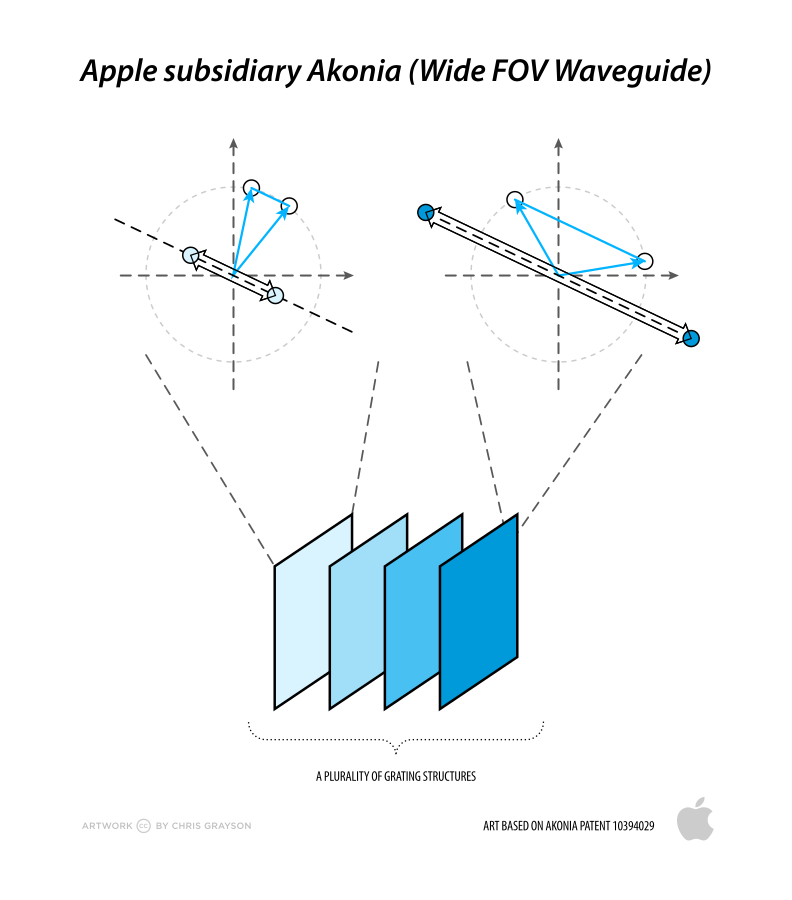
Below, we have another patent that received a bit of attention last month. Unlike Akonia’s wide FOV patent above, this one was filed in Apple’s name, and therefore quickly picked up by the likes of the Patently Apple blog.
Like many Apple patents, it is written in a style that protects the invention while keeping as many details as ambiguous, or as broad as possible. What I have sussed out from this filing is that it is written to cover (1) a waveguide near-eye optic display that uses holographic input and output couplers, and that (2) the light engine can be one of many sources, but gives special attention to LBS laser projectors. Further, (3) it may feed into an optical collimator lens, and that (4) within the waveguide, the light path includes a “light-redirecting element” between the input and output couplings that may be similar to DigiLens’ “fold grating” design. For the points above, some of the operative language is quoted here:
The display system defined… wherein the input coupler and the output coupler each include a holographic optical element… A display system… that receives light from the display unit and that redirects the light out of the optical system, wherein the optical system includes a first input coupler, a first output coupler, and a waveguide; and a light-redirecting element interposed between the input coupler and the output coupler… a display unit based on a liquid crystal display, organic light-emitting diode display, cathode ray tube, plasma display, projector display (e.g., a projector based on an array of micromirrors), liquid crystal on silicon display, or other suitable type of display… Light… may be collimated using a lens such as collimating lens…
To further decipher: a “projector display (e.g., a projector based on an array of micromirrors)” refers to a laser to MEMS Chip with micromirror(s) on an electromechanical gimbal. It also seems a bit cheeky for the patent filing to including “cathode ray tube,” seemingly implying some of these other display technologies may also be (contextually) obsolete, and highly unlikely to be used as their light engine. It is my belief that while they didn’t wish to limit themselves, they also didn’t want to tip their hand as to which direction they’re pursuing.
As with the prior Akonia patent the Apple assigned patent also addresses the FOV issue:
It can be challenging to design devices such as these. If care is not taken, some of the field of view produced by a near-eye display may not be viewable from a single eye position.
But one of the more intriguing passages is buried in the various forms that a secondary “light-redirecting element” may be configured:
In arrangements where the light-redirecting element is interposed between the display unit and the input coupler, the light-redirecting element may include a secondary input coupler and a secondary output coupler on a second waveguide.… A light-redirecting element may be used to redirect or redistribute light that would otherwise be outside of the user’s field of view towards the user’s eyes. The light-redirecting element may be interposed between the display unit and the input coupler, may be interposed between the input coupler and the output coupler, or may be integrated with the output coupler.
The patent filing goes on in this manner describing a full exploration of various input / output coupling configurations, including a completely independent secondary waveguide (which would presuppose having its own secondary light engine), within the same lens structure—or even two light engines with independent input couplers, merging into a common output—as a means of expanding the display’s the field of view.
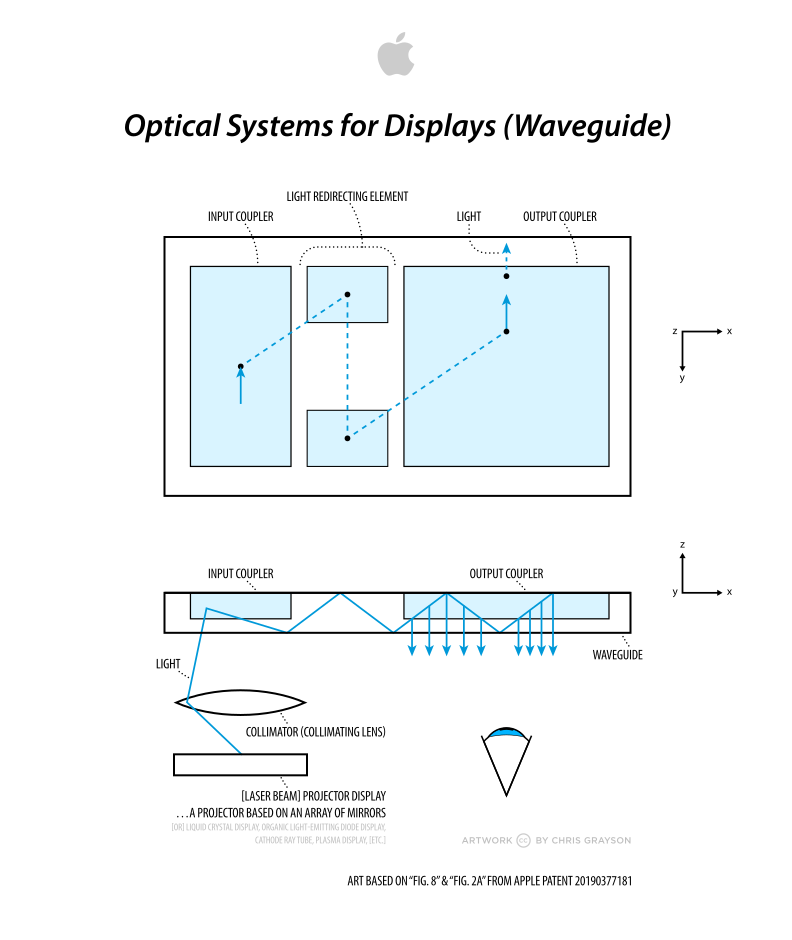
My conclusion with Apple’s developing optics’ IP is that they are designing in a direction that is consistent with DigiLens. I have in the past cited DigiLens as a potential Apple acquisition target. I have doubled down on this in the past, and will triple down here: DigiLens and Apple are pursuing complimentary technological paths in their optics. It would be reasonable to suggest that Apple may still give DigiLens a look.
Further, circling back to Apple’s supplier AMS’ acquisition of OSRAM that opened this article: DigiLens is working on LBS as a light engine to holographic waveguides. AMS’ OSRAM acquisition has brought them into their existing stable of suppliers, just as they’ve introduced an industry-leading laser product, right at a time when LBS projectors are becoming the preferred light engine for waveguide near-eye optics. DigiLens expertise dovetails neatly into that product development strategy.

Starting around 2017, most notably with a scoop by Bloomberg Apple analyst, Mark Gurman, many industry prognosticators had pinned 2020 as the date that Apple would be introducing a consumer smartglasses product. These numbers jibed with my own sources, and until a mere couple of months ago, 2020 was still the projection date. It was even moved up: most, including myself, had been predicting a fall 2020 reveal, for a 2021 market release. Then TheInformation—tech industry paywalled news site—broke the story of an all-hands-on-deck Apple management meeting in Steve Jobs Theater, at Apple headquarters in Cupertino…
…to announce the delay, and reset of Apple’s smartglasses product. This was quite an unusual precedent for Apple, who typical silo new product development behind many layers of “need to know” internal secrecy. Given the years of hype, dare I suggest, this event seemed designed to leak. And leak it did.
This occurred after a tumultuous year for Apple, most of it swirling around their future smartglasses. In early February, Variety broke the exclusive that Avi Bar-Zeev—presumed product lead on Apple’s smartglasses—had left Apple. Then in late March, fashion editor Vanessa Friedman’s Is Apple Saying Goodbye to Fashion? ran in the New York Times. By June, Jony Ive had resigned as Chief Design Officer. But Ive’s departure had been imminent for years. The New Yorker’s February, 2015 The Shape of Things to Come, was not even the first to openly discuss Ive’s coming retirement.
The real story was not that Jony Ive’s was retiring—with extensive coverage of his new firm LoveFrom—but rather that Marc Newson was departing with him. Newson was officially hired by Apple in 2014, but his hire was kept a secret until his first product—the Apple Watch—was revealed late that year. Ive’s departure was long planned… with Newson’s hire his presumed succession plan.
Jony Ive and Marc Newson had been good friends for many years. Before bringing Newson into Apple, they worked on a charity project together—the 2013 Bono organized (RED) Auction at Sotheby’s—clearly testing how well they collaborated as designers. Designs included a one-off Leica camera, an aluminum desk, and most tellingly, a Jaeger-LeCoultre branded wristwatch.
The Jaeger-LeCoultre collaboration was not Marc Newson’s first watch. For a time, he designed an entire line of watches for Ikepod. Perhaps most significant, and least reported, is that while working on the Apple Watch, Marc Newson also designed a line of fashion eye-frames for Safilo. Any regular reader of my blog or Twitter account will recognize I’ve been using variations of Marc Newson’s Safilo eye-frames as a stand-in for Apple smartglasses for years (including the title image for this article). This cannot be overstated: Marc Newson was already designing eye-frames while working on the Apple Watch design.
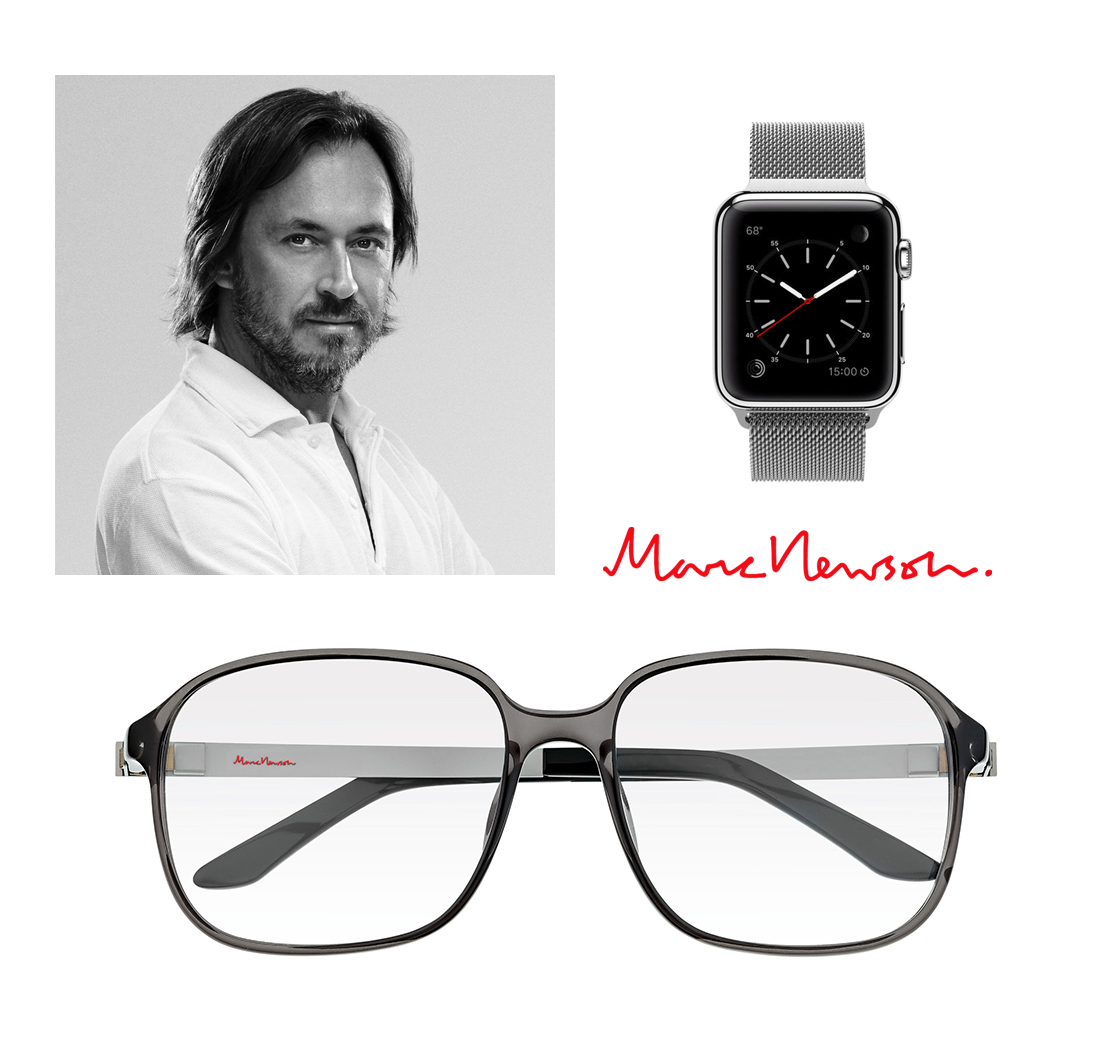
The departure of Marc Newson leaving together with Jony Ive was a wholesale rebuke of Apple’s future business direction by both the current and presumed future leadership of Apple’s product design team… and intimately connected to the product direction of Apple’s future smartglasses.
 Ive and Williams had rumbled in the past, this was not their first joust. Ive wanted to leverage the Apple Watch to pivot the company into a technology-imbued fashion brand. Williams wanted to position the Apple Watch as a medical and health-tracking device. While Apple pumped money into the fashion arena, landing product placement on the cover of VOGUE China in 2014, ran a twelve page advertorial spread in VOGUE (US) in 2015, and Ive made his final stand with Apple’s sponsorship of the MET Fashion Gala in early 2016… nonetheless by September 2016 Apple quietly discontinued the extravagantly priced Rose Gold Apple Watch, and in the same month publicly pivoted the wrist-worn gadget to a health-tracking product strategy.
Jony Ive lost, Jeff Williams won.
With the rather public departure of Angela Ahrendts in January 2019, it was also noted that Paul Deneve, former CEO of Yves Saint Laurent, who was presumed to lead sales on future Apple smartglasses, had discreetly departed Apple more than a year before. Patrick Pruniaux, poached from Tag Heuer to lead Apple Watch sales, had already slipped quietly out the door years ago, to run Ulysse Nardin. Every former fashion executive in Apple leadership was now departed… and soon, so would Ive & Newson.
In April 2019, an Apple patent was published showing smartglasses as a sophisticated health-tracking device. By June, Ive & Newson were out. By July, stories broke throughout the tech and business press that Tim Cook had found his successor in “heir apparent” Jeff Williams.
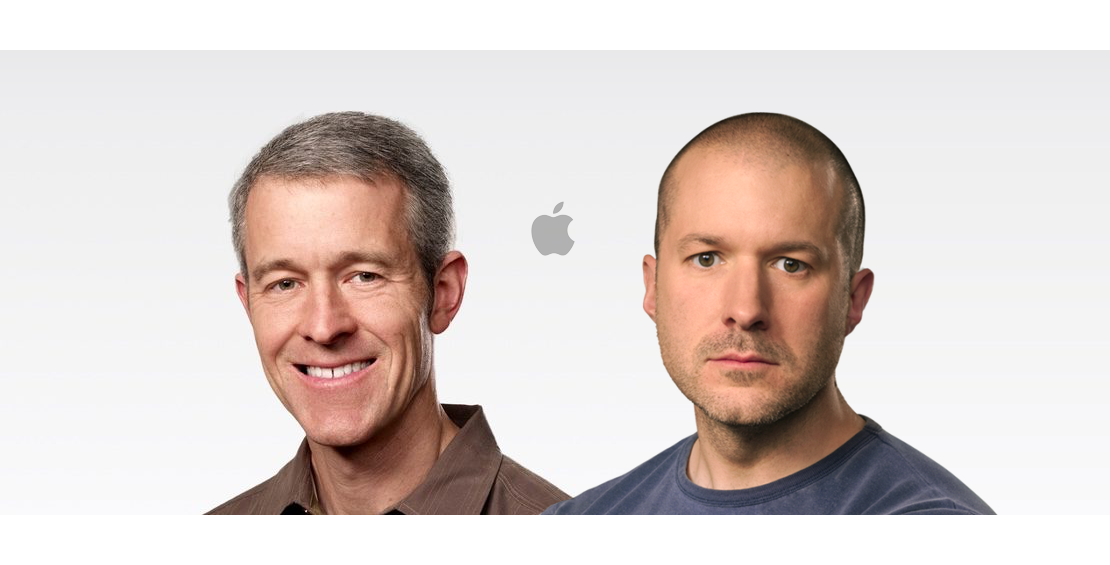
For months Apple kept a confident face, and rumors leaked that they may even be revealing their new smartglasses as early as second quarter 2020. By November 11th The Information broke their story of Apple splitting their AR hardware into two products: a “visor” headset in 2022, followed by smartglasses in 2023.
I owe props here to a colleague: Robert Scoble had been predicting multiple Apple devices as early as April, and by August details emerged of a “visor,” with smartglasses to come later. In spite of skeptics (often including myself), it appears Scoble’s source was accurate.

Even speaking as a “design guy” myself—and questioning Apple’s commitment to design leadership—I still find a great deal to admire in Jeff Williams.
Williams and Cook share a lot in common, and it’s easy to see how they relate. Just like Tim, Jeff came up through supply chain management, eventually rising to COO—literally Tim Cook’s identical career path, and last title under Steve Jobs before becoming CEO. This is important not just because Jeff & Tim understand each other, but because in a world fraught with geopolitical uncertainties, understanding how to navigate international supply chains, maintain high quality standards, and high-volume production without supplier disruptions… and without getting margins crushed by tariffs in a trade war. This is the new normal.
I did a cursory exploration of Apple suppliers & acquisitions, most relevant to a future smartglasses product—also relevant to other mobile devices—and it is clear that Apple is building out a supply chain less dependent on Chinese suppliers. Like many American companies, their greatest dependency being final assembly.
In the midst of a product pivot, the AMS OSRAM acquisition provides Apple with not only the opportunity to reevaluate their display strategy, but also to further insulate their supply chain from geopolitical risk. While OSRAM is German (AMS is Austrian) their new opto-semiconductor factory is located in Malaysia. Malaysia is in an excellent position to benefit from U.S. companies looking to diversify out of Chinese manufacturing dependency. Whether the current U.S. administration remain in office beyond 2020, the existing trade row has been a wakeup call for many industries and companies to reassess their supply chain, in light of exposure to geopolitical realities.
For a quick look at Apple’s core components, of any future smartglasses product—both acquires and suppliers:
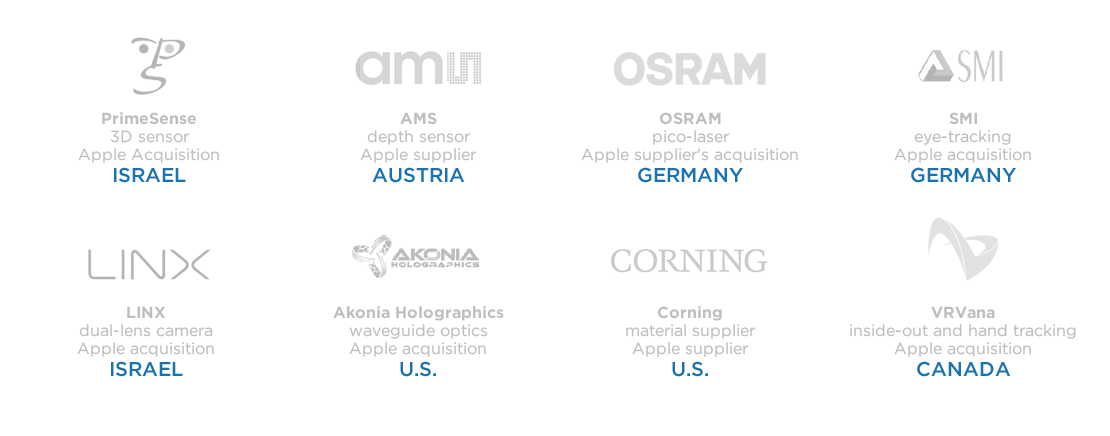
…but these countries represent the nation of origin of the parent company, not always where manufacturing is done. Apple publishes an annual supplier list, of their top 200 suppliers, representing 98 of their procurement expenditures. We know OSRAM’s relevant opto-semiconductor factory is in Malaysia. U.S. based companies like Corning, listed above also manufacture in Korea, Japan, and Taiwan; but not in mainland China (and therefore not impacted by the current trade war). AMS of Austria, who acquired OSRAM, has their own manufacturing spread between Austria, Singapore, and the Philippines.
Apple principally uses China for final assembly. They recently announced their plans to keep their MacPro factory in Austin, TX, while seeking exemptions for some tariffs.
If I were advising Apple (or anyone) on smartglasses’ final assembly, I would say look to Italy. Home to most of the fashion eye-frame manufacturing industry—including Luxottica, Safilo, and others—they produce eye-frames of high build quality, “Made in Italy” is recognized throughout the world as a symbol of premium manufacturing particularly in eye-frames and accessories, and Italy enjoys favorable trade relations with the United States. Because Italy also enjoys favorable trade relations with China, some tariffs could even be avoided by moving Chinese manufactured components through Italy, provided they meet certain requirements regarding the nation of origin of the greater percentage of the end product’s value. Italy is well positioned to benefit from a newly emerging consumer smartglasses market.

By pushing back their launch target by three years, Apple effectively told the rest of the industry, “We don’t yet have it, and the rest of you now have three more years to prepare for our entrance to the market.” This changes the game. Paradoxically, Apple’s commitment to the space fuels investment, but their ultimate entrance to the space will cool investment.
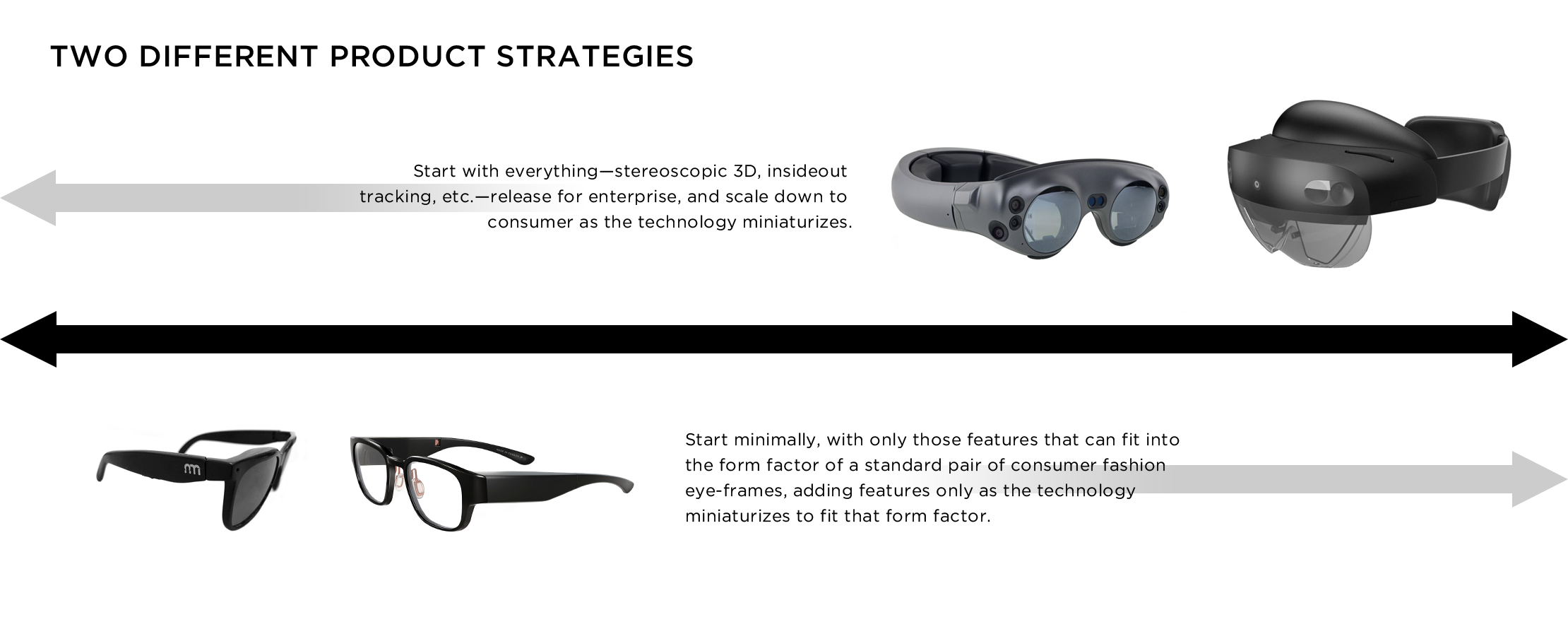
I’ve spent most of this article on the bleeding edge of display technology, here we’ll explore the alternate product strategy: starting with the minimum technology, and adding features only when they are able to be incorporated within a consumer viable form factor.
 For the most minimal of minimum viable products in the consumer smart glasses space, there have been a flurry of audio only smartglasses. Most notable among them include Bose, Huawei, Amazon, and most recently Kopin, each leveraging their own strength: Bose, obviously a market leading brand is speakers and headphones; Huawei focusing on the Asian market, in partnership with Gentle Monster eye-frames; Amazon using their Echo Frames to extend the penetration of their Alexa virtual assistant, and Kopin for their Whisper™ tech, industry leading noise cancellation technology. While these are all notable, for the purposes of this article, I’m going to focus on those which—however minimally—still retain a display.
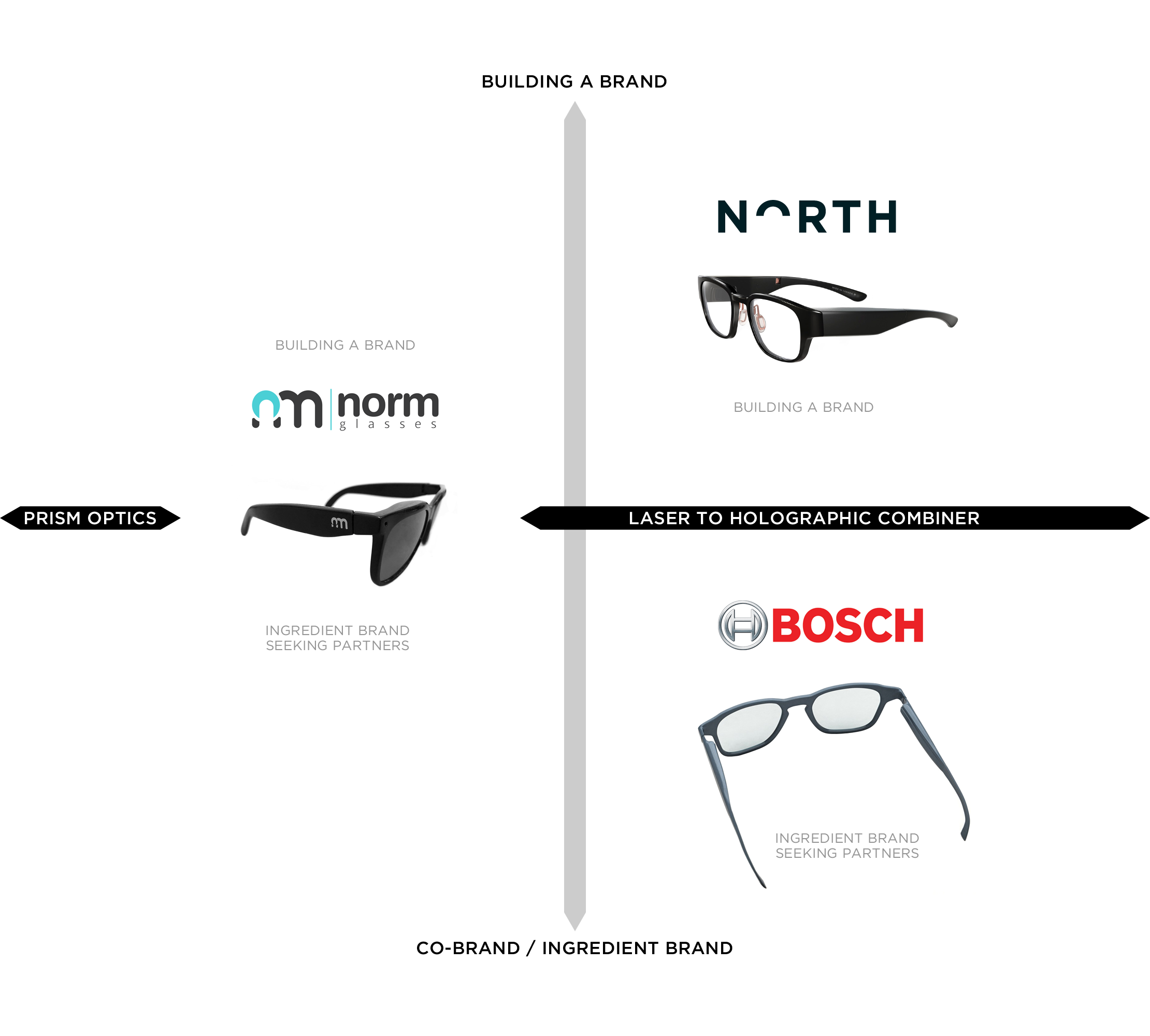
FOCALS BY NORTH
North—the Canadian company previously known as Thalmic Labs—raised an exceptional amount of investment as far back as 2016, principally from a combination of Amazon Alexa Fund & Intel Capital. Their consolidation of optics IP via Intel’s Composyt Light Labs & Lemoptix acquisitions has already been discussed in this article. For Focals version one, North chose to go with laser-to-holographic-combiner optics.
In recent weeks North has weathered a long gathering storm. They’ve put on a good face announcing the Focals version two, coming in 2020, but will not be participating in CES. I’ve written previously about North’s substantial optics IP, most notably waveguides within a prescription lens. However, they have an uphill battle. They’ve lost talent, including as mentioned above to Apple, and a recent exposé in The Verge. Product managers had expressed early concerns regarding their price-point. This alone would not be so concerning, as they responded to market realities. However one of my own criticism has been of their through-the-air-projection system’s susceptibility to obstruction, as the article noted is problematic for women who use mascara (or frankly anyone with long eyelashes, or even hair/bangs of a certain length). More troubling, North had extensive layoffs earlier this year, that resulted in the loss of $24M in funding from the Canadian government (presumably based on “job creation”).
Of further concern, North’s aggressive move to build their own brand, including North branded brick and mortar retail—a capital intensive play quite ambitious particularly for a startup of their stage—showed admirable confidence, but also came at high risk.
BOSCH
It was only a month prior to North’s announcement of discontinuing version one of Focals, that Covestro—a spin-off of Bayer MaterialScience—announced their partnership in co-developing North’s holographic combiner lenses. No sooner did Covestro make these lenses available on the market to other third parties, did Bosch announce a white-labeled smartglasses module for other eyewear brands to make what amounts to Focals knock-offs (Covestro and Bosch have pre-existing development partnerships, and while not announced, Covestro seems likely to be supplying the same holographic combiner lenses to Bosch). The Bosch white-labeled knock-off design was announced on December 10th… the very same day that North announced the discontinuation of Focals version one.
Stephen Lake, North’s co-founder and CEO is one of the more promising and ambitious entrepreneurs in the smartglasses space. A great deal is riding on Focals version two. Their cash position is not known, and Bosch has just commoditized their version one product. North is keeping us on the edge of our seats.
NORM GLASSES
 Norm Glasses—a product of Human Capable, who began as a developer of voice-command solutions for the visually impaired—have chosen a similar product direction in a fashion eye-frames form factor, but a rather different display route, via a simple and compact prism-optics module discreet enough to hide within the eye-frame.
Weighing in at 36g, Norm Glasses are the lightest among all smart glasses with a heads-up display (even lighter than a vintage pair of classic Ray-Ban Wayfarers at 45g, which contain no electronics at all).
With Human Capable’s background in audio tech, their Norm Glasses won Best of Innovation in the Headphones & Personal Audio category for CES 2020. Their glasses are first available to demo at this year’s CES (booth 22030). While Norm Glasses are being made available now in self-branded frames, they are also seeking brand partnerships in a technology licensing business model.
CHRISTOPHER GRAYSON
Christopher Grayson is a market analyst on smartglasses and the near-eye optics industry who has been published in both the tech press, and the eyewear trade press. He comes from a background in the creative department of the New York advertising industry with tours of duty at Ogilvy, GREY, and others; where he produced award winning campaigns for Intel, Nikon, and other iconic brands. In an ealier life he worked as an in-house technical illustrator at Morgan Stanley, and has since worked in event organizing including with Augmented World Expo—the world’s largest augmented reality trade event—having twice organized and curated the largest gallery exhibit of smartglasses and AR HUD display systems including AWE 2019 in Santa Clara, CA; and in 2013 at EyeBeam in New York City. Disclosure: He is currently assisting Norm Glasses as a marketing consultant.
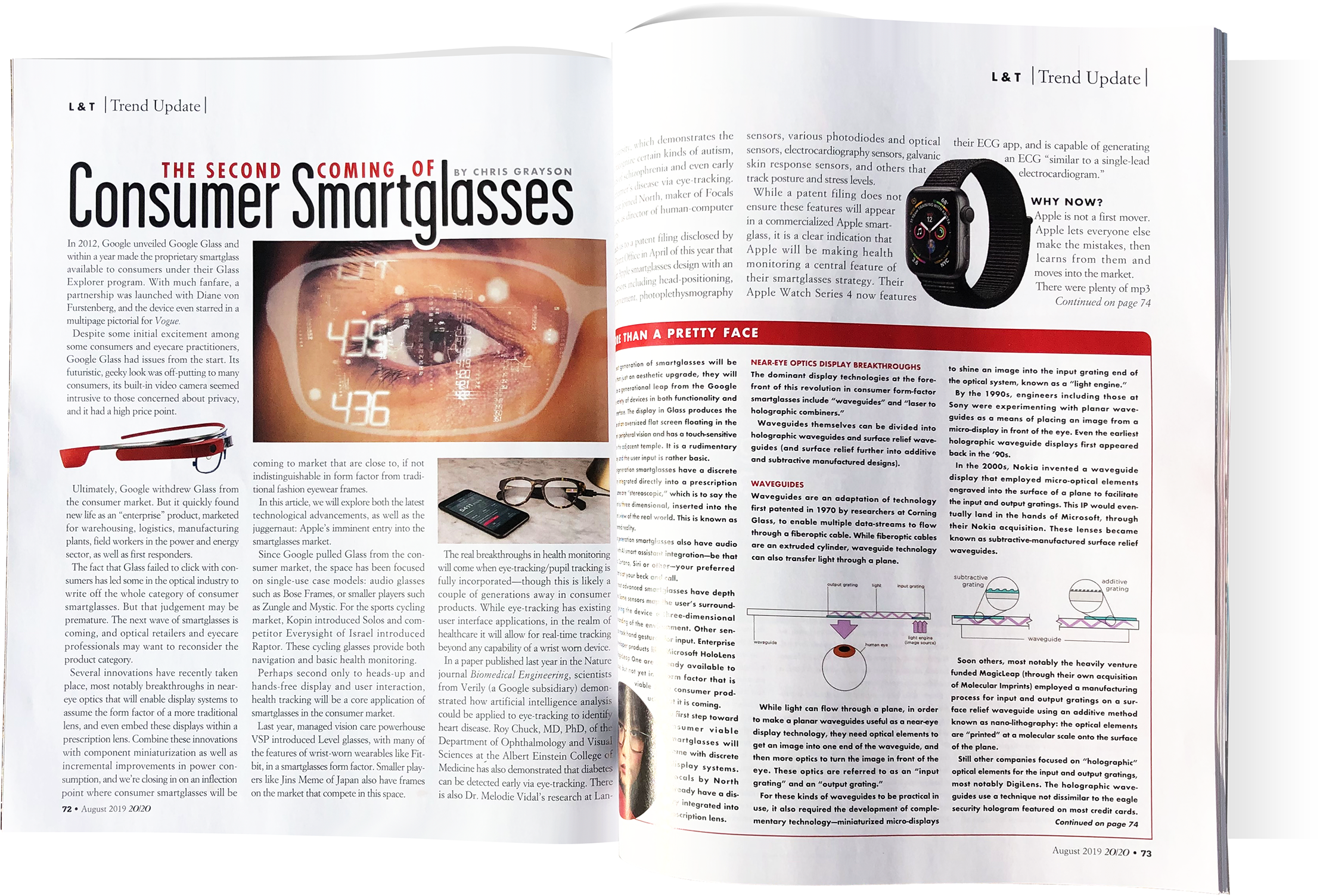
 The article The Second Coming of Consumer Smartglasses originally ran in the August 2019 print edition of 2020 Magazine—the largest circulation trade publication for the optician / optometrist industry. Below is an excerpt of the technical inset, More Than A Pretty Face. The full article can be read online at the August 2019 edition of 2020 Magazine.
MORE THAN A PRETTY FACE
The next generation of smartglasses will be more than just an aesthetic upgrade, they will also be a generational leap from the Google Glass variety of devices in both functionality and user interface. The display in Glass produces the illusion of an oversized flat screen floating in the wearer’s peripheral vision and has a touch-sensitive bar on the adjacent temple. It is a rudimentary display, and the user input is rather basic.
Next-generation smartglasses have a discrete display integrated directly into a prescription lens, some are “stereoscopic,” which is to say the content is three dimensional, inserted into the wearer’s view of the real world. This is known as augmented reality.
Next generation smartglasses also have audio input with AI smart assistant integration—be that Alexa, Cortana, Siri or other—your preferred assistant is at your beck and call.
The most advanced smartglasses have depth sensors. Some sensors map the user’s surroundings, giving the device a three-dimensional understanding of the environment. Other sensors can track hand gestures for input. Enterprise and developer products like Microsoft HoloLens and MagicLeap One are already available to purchase, but not yet in a form factor that is viable for a consumer product… but it is coming.
The first step toward consumer viable smartglasses will come with discrete display systems. Focals by North already have a display integrated into a prescription lens.
NEAR-EYE OPTICS DISPLAY BREAKTHROUGHS
The dominant display technologies at the forefront of this revolution in consumer form-factor smartglasses include “waveguides” and “laser to holographic combiners.”
Waveguides themselves can be divided into holographic waveguides and surface relief waveguides (and surface relief further into additive and subtractive manufactured designs).
WAVEGUIDES
Waveguides are an adaptation of technology first patented in 1970 by researchers at Corning Glass, to enable multiple data-streams to flow through a fiberoptic cable. While fiberoptic cables are an extruded cylinder, waveguide technology can also transfer light through a plane.
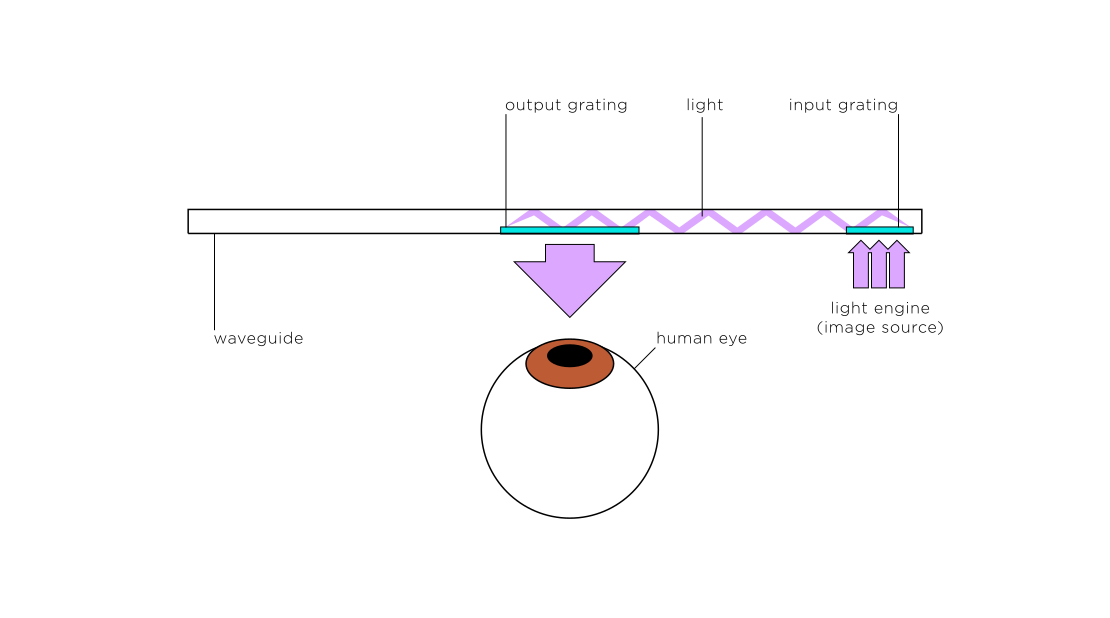
While light can flow through a plane, in order to make a planar waveguides useful as a near-eye display technology, they need optical elements to get an image into one end of the waveguide, and then more optics to turn the image in front of the eye. These optics are referred to as an “input grating” and an “output grating.”
For these kinds of waveguides to be practical in use, it also required the development of complementary technology—miniaturized micro-displays to shine an image into the input grating end of the optical system, known as a “light engine.”
By the 1990s, engineers including those at Sony were experimenting with planar waveguides as a means of placing an image from a micro-display in front of the eye. Even the earliest holographic waveguide displays first appeared back in the ’90s. In the 2000s, Nokia invented a waveguide display that employed micro-optical elements engraved into the surface of a plane to facilitate the input and output gratings. This IP would eventually land in the hands of Microsoft, through their Nokia acquisition. These lenses became known as subtractive-manufactured surface relief waveguides.
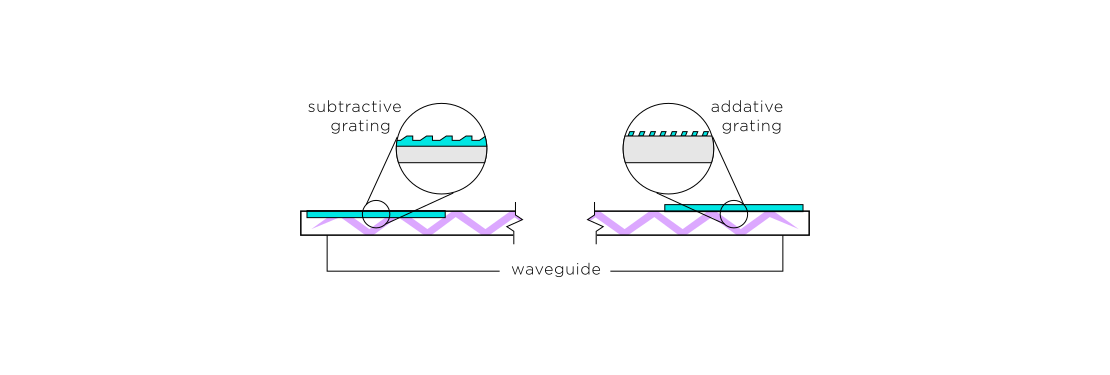
Soon others, most notably the heavily venture funded MagicLeap (through their own acquisition of Molecular Imprints) employed a manufacturing process for input and output gratings on a surface relief waveguide using an additive method known as nano-lithography: the optical elements are “printed” at a molecular scale onto the surface of the plane.
Still other companies focused on “holographic” optical elements for the input and output gratings, most notably DigiLens. The holographic waveguides use a technique not dissimilar to the eagle security hologram featured on most credit cards. Holograms like those on a credit card are exposed into a transparent substrate, which is then mounted onto a reflective surface, so that ambient light can reflect back through the hologram (which must be backlit) to create the image the cardholder sees.
Now imagine—instead of an eagle—a hologram of columns of optical elements that behave like mirrors. These holographic mirrors allow for input and output gratings of only a few microns in thickness. Further, DigiLens has perfected a method of manufacturing their waveguides from a liquid crystal based polymer, making these holographic optical elements electro-active—also known as switchable bragg gratings.
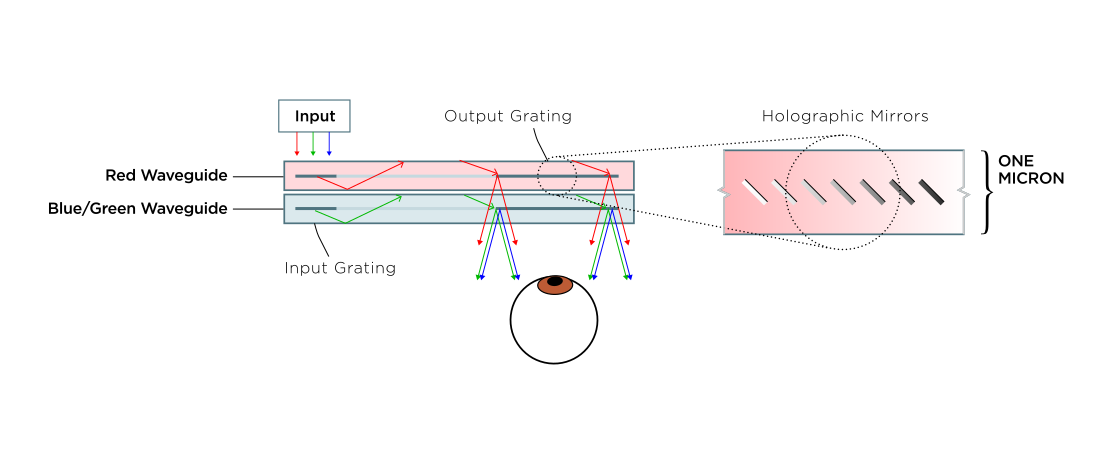
LASER TO HOLOGRAPHIC COMBINER
Pico-laser-based near-eye displays were pioneered by Microvision. With this kind of display system, a laser is bounced off a micro-mirror, mounted on a dual-axis gimbal. Early versions of these Microvision displays simply used a beam-splitter, otherwise known as a two-way mirror to combine the view of the real world with the view of virtual content. Over time, a more sophisticated optical combiner was developed, similar to the holographic waveguide. A series of micro-mirror-like holographic elements could be embedded inside a lens and the laser targeted at them, to reflect into the user’s eye. These laser displays—in their current form—have one distinct shortcoming compared to waveguides: a very narrow field of view (that being the width of the user’s view that can be augmented with virtual content). But as a competitor to waveguides, they also have a tremendous lens-crafters like Interglass of Switzerland, or Canadian consumer smartglasses brand, North, have shown that these kind of laser-based displays can be embedded within a traditional prescription lens.
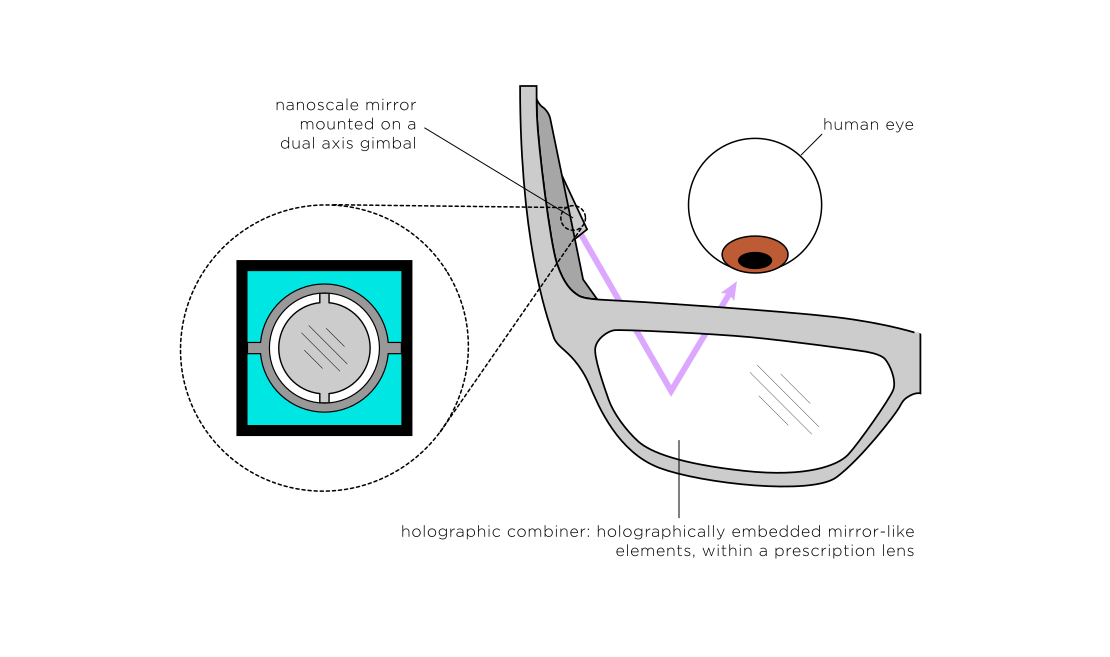
North also has a patent to embed a waveguide within a prescription lens. Interglass says they’re also working on a waveguide within a prescription lens, and DigiLens have IP around a curved waveguide applied to the surface of a prescription lens. A representative from Interglass has suggested that a holographic waveguide embedded within a prescription lens should be expected in time for the Consumer Electronics Show in January 2020.
The waveguide display also requires a “light engine,” or micro-display to project into its input grating—the image source. These are also miniaturizing, getting brighter and falling in power consumption.
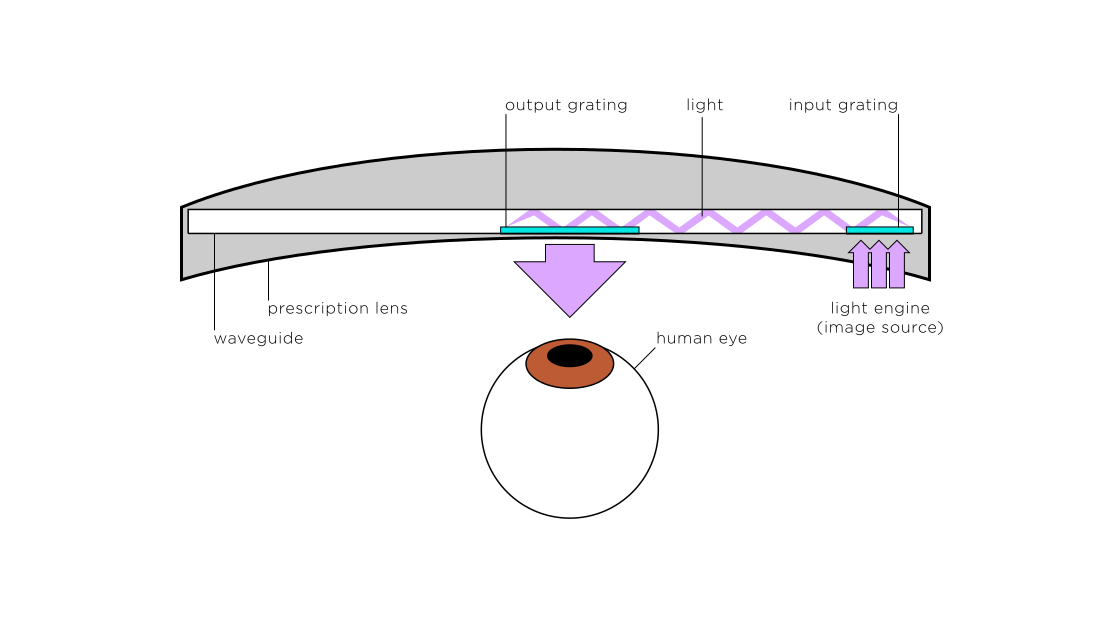
In future generations, expect lenses to combine displays with tunable focus lenses.
Many researchers, including Nazmul Hasan at the University of Utah working under Professor Carlos Mastrangelo have been developing tunable focused lenses. Used in combination with a depth sensor, the lenses change their focus from near to far, based on where the wearer is looking, or can also change with the wearer’s prescription over time.
In an interview with Smithsonian, Mastrangelo explains, “This means that as the person’s prescription changes, the lenses can also compensate for that, and there is no need to buy another set for quite a long time.”
Perhaps the most intriguing development in the tunable focus lenses space is the partnership between two Israeli companies: Lumus optics, maker of waveguide-based near-eye optics display systems, has partnered with tunable focus lens manufacturer DeepOptics, to develop hybrid tunable focus lenses with an embedded display system.

The article The Second Coming of Consumer Smartglasses originally ran in the August 2019 print edition of 2020 Magazine—the largest circulation trade publication for the optician / optometrist industry. Above is an excerpt of the technical inset, More Than A Pretty Face. The full article can be read online at the August 2019 edition of 2020 Magazine.
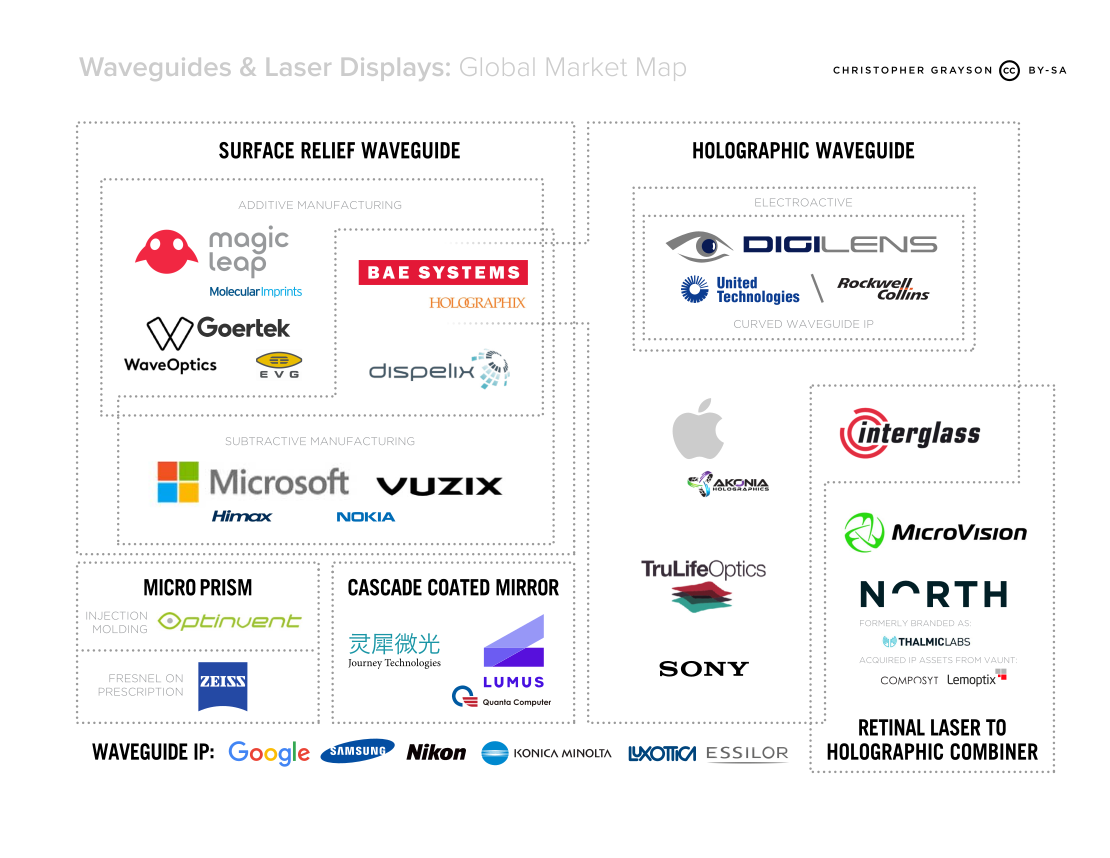
In this article we will make a comparison between waveguides and laser to holographic combiners. In doing so we will also look at North (formerly Thalmic Labs), their business success, and their IP, and place that into the context of the greater smartglasses market, and near-eye optics IP.
This article is not meant to be a scholarly treatise, but rather an accessible overview, providing the reader with a baseline understanding of the competition between waveguides and laser displays, and how advances in the field of optics are changing the landscape in the consumer smartglasses market.
A “combiner,” as the name implies, combines virtual content with the user’s view of the real world. The simplest combiner is essentially a two-way mirror. It may also be referred to as a “Pepper’s Ghost” display, referencing a Vaudeville era magic trick that employed two-way mirrors. A birdbath display is one that employs a curved combiner, a trick used to expand the display’s field-of-view.
Simple beam-splitter displays were employed in early ODG glasses, such as the model R-7. A birdbath display was used in the META 2, and a miniature birdbath display was employed by ODG’s model R-9. It is also notable that ODG’s assets were put up for auction in January, and META was recently declared insolvent.
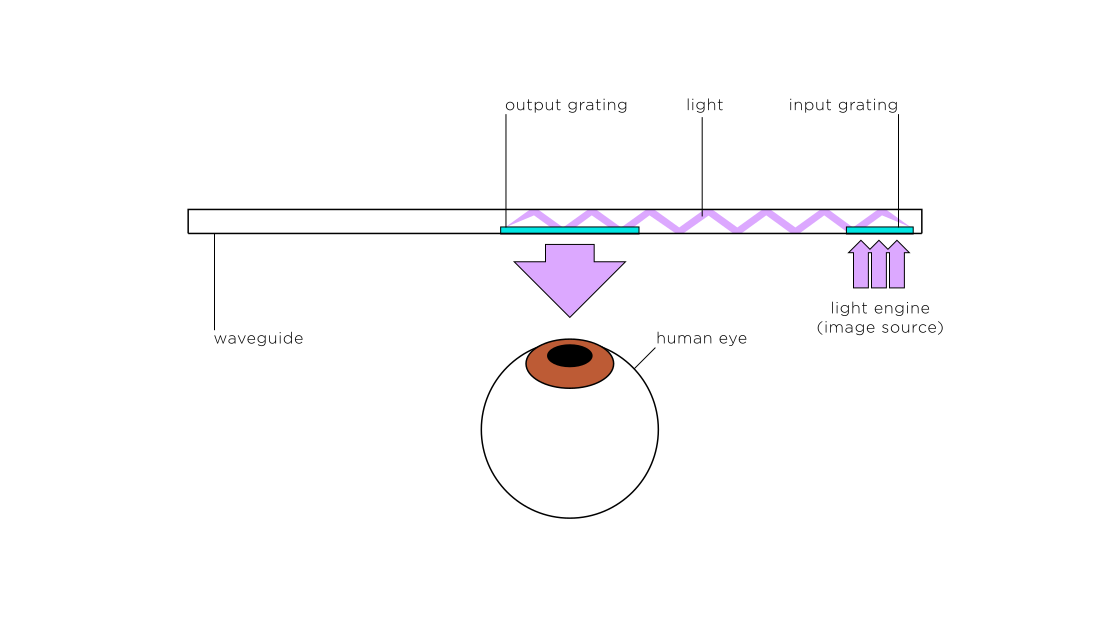
Waveguides are employed in conjunction with a light-engine (a micro-display that projects into the optics). The light-engine feeds an input grating on one side of the waveguides. The light moves through the lens, and exits the waveguide through an output grating in front of the eye. Depending on whether the waveguide is a surface-relief or holographic waveguide, the optical elements are either engraved into the lens (subtractive), applied onto the lens (additive), or exposed within the lens as holographic mirrors.
Retinal lasers were pioneered in near-eye optic display systems by MicroVision, but their combiner was a more basic beam splitter. A collection of Swiss companies perfected the use of a laser reflected off of a holographic combiner, into the wearer’s eye. A holographic combiner uses a similar technique as a holographic waveguide: a series of micro-mirrors are holographically exposed into a lens, and a laser is directed—typically using a MEM Chip with a nano-scale mirror mounted on a dual-axis gimbal—to reflect the imagery into the eye.
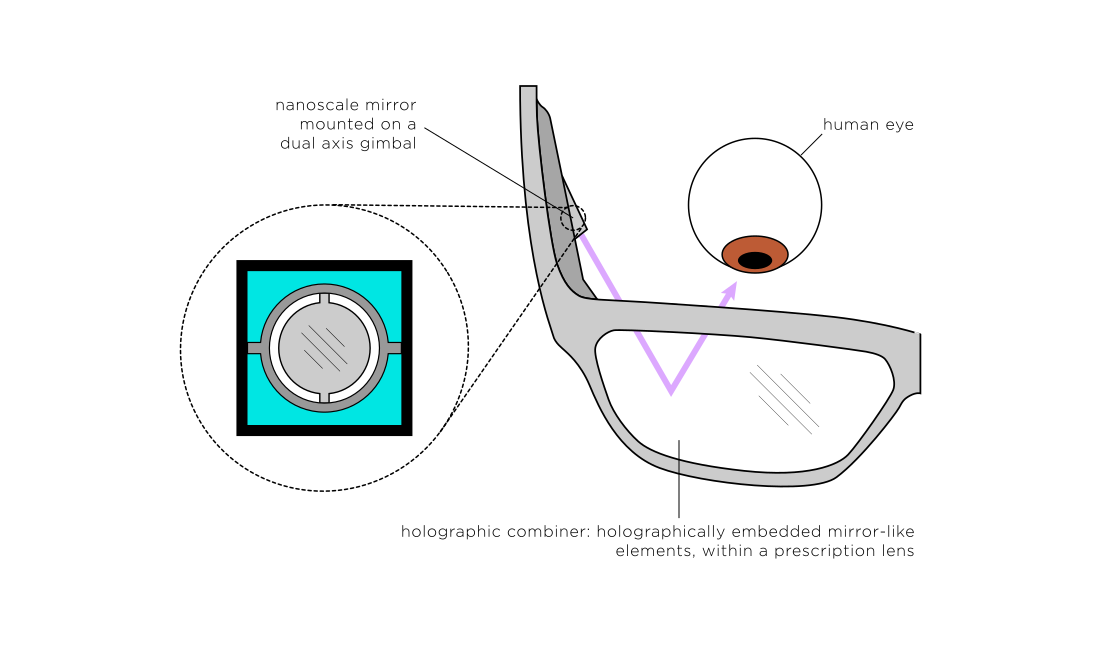
Laser displays are “having a moment,” most notably with Focals by North—which employ a laser to holographic combiner display, and have recently launched to much fanfare and success.
After initial work by MicroVision, laser displays saw more recent advancements coming out of Switzerland. A startup named Lemoptix developed some of the most advanced micro-opto-electromechanical systems (MOEMS)—essentially a laser and nano-mirror projection system—and Composyt Light Labs then employed Lemoptix laser projector into an RGB composited near-eye optics display module. Subsequently Intel acquired the combined companies. Composyt’s early devices stumbled with color compositing, and early last year a monochrome red version based on their technology was briefly deployed by Intel under the name Vaunt. However, mere weeks later Intel dissolved their wearables business unit, and discontinued Vaunt almost as quickly as they launched.
Meanwhile, a small startup in Canada named Thalmic Labs whose most notable prior accomplishment was launching crowd-funded muscle tracking gesture control armband, discretely raised $120M from Intel Capital and Amazon’s Alexa Fund to develop laser to holographic combiner based smartglasses. They seemed an unlikely candidate… until last fall, when Thalmic rebranded as North, and launched Focals. Their color display shows that they solved the color composite registration problem that had bedeviled Composyt Light Labs’ previous implementation. North then took additional investment from the Canadian government, and after a highly successful go to market they acquired the IP behind Intel’s Vaunt glasses (principally Lemoptix and Composyt Light Lab’s laser display patents). This has consolidated most of the laser to holographic combiner IP under one roof.
Laser displays also have one clear advantage over waveguides: they’ve been shown to work within a prescription lens, and further that these lenses can be mass manufactured at scale.
Not so fast.
One issue that has always plagued near-eye optics, when built in low profile form factor, is field-of-view (FOV). Microsoft’s HoloLens is a mere ~35º FOV. Though insolvent, the META 2 has a 90º FOV, almost triple that of HoloLens… but META 2 is also staggeringly large compared to Focals by North, which are available in a consumer accessible form factor. If HoloLens’ FOV is narrow compared to META’s, then Focals by North’s FOV is positively minuscule, at ~15º. This is of course fine for the alerts use-case they have been developed for, but are far insufficient for any kind of immersive AR experience. In Focals implementation they are also monoscopic, so there will be no depth or dimensionality.
Laser displays also have another disadvantage compared to waveguides: they are “through-the-air projection,” meaning that anything that obstructs the line of sight between the laser projecting from the eye-frame’s temple, and the lens (such as hair) can obstruct the projected image. Buyer-beware, don’t wear Focals with bangs.
Waveguides are enclosed, so they don’t have the obstruction issues of a lasers’ through-the-air projection system. Further, in recent months we’ve seen FOV breakthroughs in waveguide displays. Not much is known about Apple’s acquisition of Akonia Holographics, but it is clear at this point between hires, acquisitions and IP, that Apple is betting on holographic waveguides. The industry leader and pioneer of holographic waveguides, DigiLens, recently disclosed a FOV breakthrough at CES, noting that lenses with a staggering 150º FOV are imminent—the technological limitation no longer being the waveguides themselves, but in developing a light-engine of high enough resolution to drive their FOV.
This would seem to imply that laser to holographic combiner displays’ time in the limelight may be limited, but waveguides are not out of the dark yet. No one has yet demonstrated a waveguide display embedded within a prescription lens, as others have been able to show with laser projectors. Indeed, another Swiss startup named Interglass also makes a waveguide, but their principal IP concerns the robotic manufacturing of resin lens that contain embedded elements, including holographic combiners used for laser displays, not unlike those employed in Focals by North.
Getting a waveguide embedded within a prescription lens, using resin based manufacturing method is the most likely path to a consumer viable stereoscopic 3D, augmented reality smartglasses display system… and last October, North (as Thalmic Labs) was awarded a patent for just that.
A spokesperson for Interglass tells us that embedding a waveguide within a prescription lens is for them a current R&D priority, working together with “other partner companies” for which they are prohibited from disclosing. They noted an imminent patent filing that is of “a different design” than depicted by North’s prescription lens waveguide patent. Joining the competition, DigiLens noted that they too have already been awarded a patent, not for embedding a planar waveguide within a prescription lens, but rather for a “curved diffractive waveguide… that could be laminated to a [prescription] lens,” and they’re confident their design will scale at a substantially lower cost than a waveguide embedded into a resin lens. Interglass says they expect to meet an important development milestone in “about 12 months,” and will then “be in a position for a more reliable prediction” for when such lenses will be ready for mass production. If they had to predict now, “we assume that it will take about another year [from then, to achieve] mass production.” So it is a reasonable expectation that we could see the first prototype waveguides embedded within (or applied onto) a prescription lens by as early at CES 2020.
Will Interglass have their own waveguide into a prescription lens and reveal a prototype before North debuts their own design? Will another player unexpectedly emerge? The race is on.
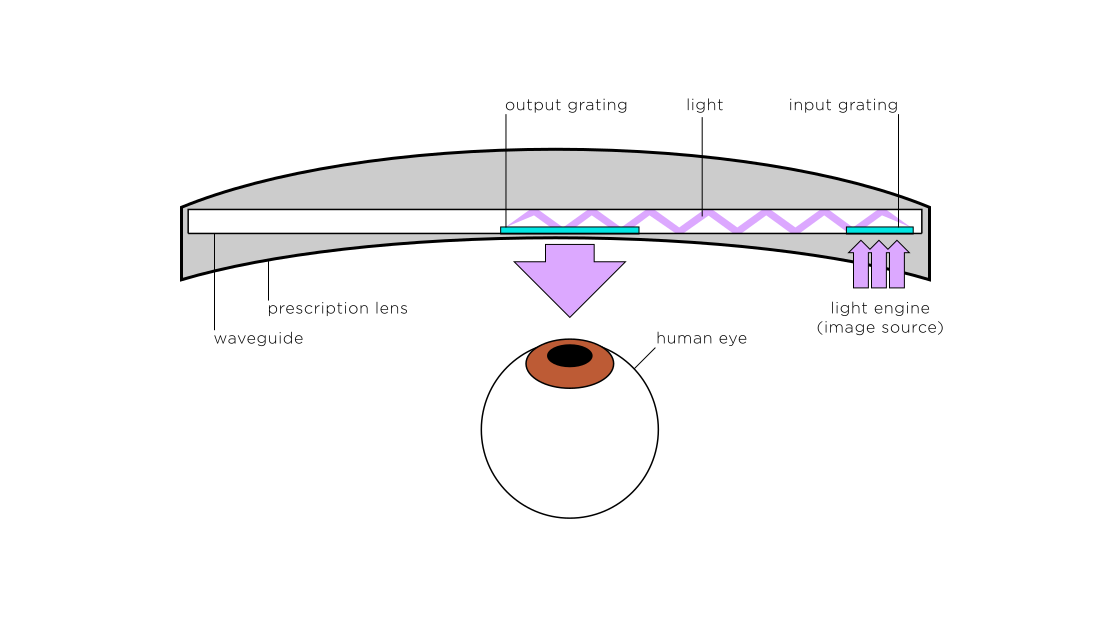
The smartglasses field is narrowing. ODG has shut down, META has declared insolvency, and many more should be expect to fold in the coming year. This is not a bad thing, it is a sign that the market is maturing, and we are approaching consumer viability. Keep your eyes open, things are just getting good.

This article was originally published at UploadVR, on February 1, 2019.
]]>NOTE: This report was last updated in mid-2019. It is no longer being revised. Some of the material is still relevant, and is available for purchase, marked down at 1/6 price.
Worlds are colliding. As Apple ramps up to enter the smart-glasses market, the French fashion stables and Italian eye-frame manufacturers are undergoing reorganizational upheaval in an industry already projected to be worth $165B by 2022.
Read this tale of intrigue and double crosses; shifting alliances and stolen IP—from the catwalks of Milan to Silicon Valley; from Israeli military contractors to Parisian couture houses—learn of the Mediterranean billionaires and high-tech titans preparing for an epic battle for control of the ultimate interface—your own eyes.
This report is a page-turner…

See sample pages below the scroll.
Includes:
250 pages with outbound links to over 350 sources. This report covers both the tech industry’s smartglasses developments, the fashion eye-frames and related industries; as well as points of convergence. Every effort has been made to write each section in as “plain-English” as possible, where it can be understood by experts and non-experts alike.
• People in the smartglasses field who wish to have industry intelligence and learn where their business is intersecting with fashion and eye-frames.
• People in the eye-frames industry who wish to have an understanding of how the tech industry may disrupt their own business.
• Those in the tech industry, possibly already working in AR or VR, who may not be in smartglasses, and wish to be more informed about this side of the business.
• Researchers and analysts in either media or investment who want industry intelligence.
• Optometrists and other professionals in other related fields who wish to better understand developments that will soon impact their careers and business.
Sample Pages:
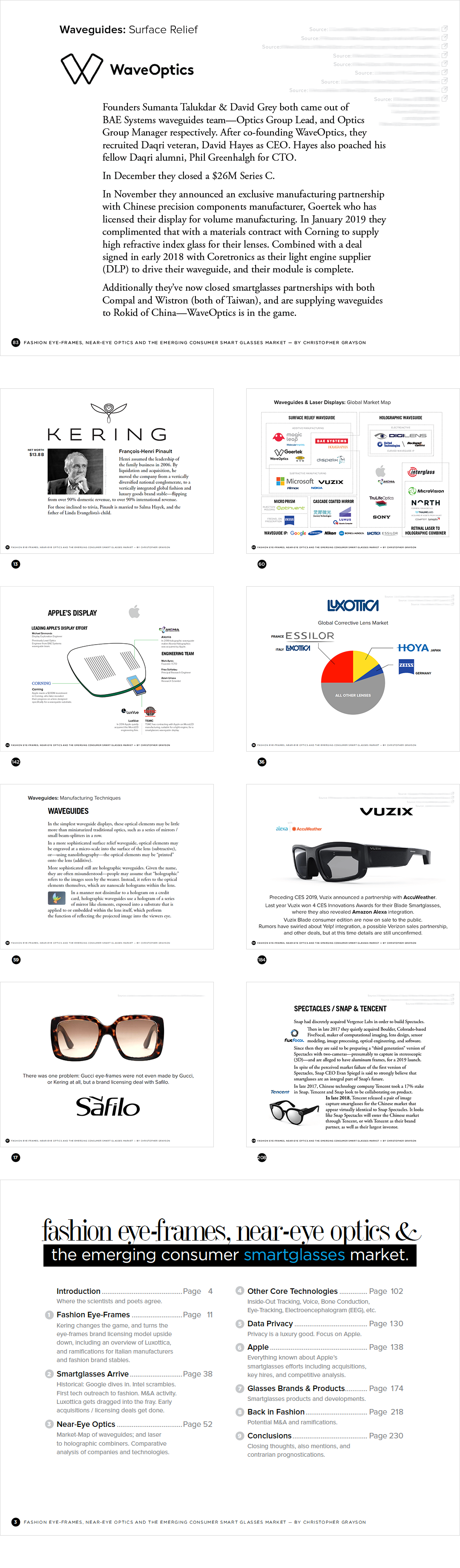
Legal: For any facts or opinions included in this report, whether by this author or provided by third-parties—while best efforts have been made—Christopher Grayson makes no guarantees that information supplied is accurate, complete, updated or timely, and does not provide any warranties regarding results obtained from its use, nor should it be taken as investment advice.
AdHawk
Amazon
Apple
BAE Systems
Bose
Carl Zeiss
Corning Glass
DeepOptics
DigiLens
Dispelix
Everysight
Facebook
Flex
Foxconn
Google
Insightness
Interxon
Intel
Kopin
Lumus
Magic Leap
Microsoft
Quanta
Samsung
Skugga
Sony
Snap
ThalmicLabs / North
Vue
Vuzix
… and many many others.
Luxottica
RayBan
Oakley
Safilo
Kering
Marcolin
LVMH
Louis Vuitton
TAG Heuer
Richemont
Montblanc
Warby Parker
… and many many others.
• 248 pages with outbound links to over 350 sources.
• New information out of CES 2019.
• Deep dive into the competitive market of near-eye-optics, with a focus on holographic waveguides, and laser to holographic combiner displays.
• An entire chapter on Apple and their AR and smartglasses efforts.
• Historical material on both the fashion eye-frames industry and the smartglasses industry that have brought us to where we are now.
• Disruption happening in the eye-frames industry.
• Supplemental chapter on related core technologies.
• Timely chapter dedicated to issues of privacy.
• Dozens of consumer smartglasses devices and startups profiled.
• Short biographies on many key players.
• Conclusions and opinions on the state of the smartglasses market.
• 250 pages with outbound links to over 350 sources.
The report contains information and analysis that you will not get anywhere else.
In 2011 a phalanx of stereoscopic cameras were introduced to the market (as well as several smartphones with stereo cameras). These failed because there was no consumption device — the Oculus Kickstarter would not launch for another year.
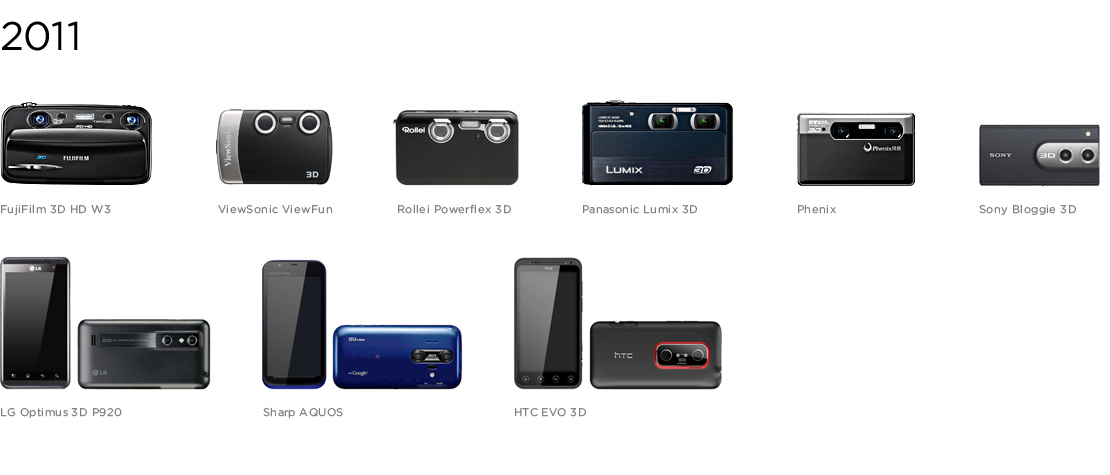
When Oculus did reignite interest in virtual reality, it was held firmly in the hands of the gaming industry that, for obvious reasons, values 360° over all else. This resulted in a flood of 360° ball cameras onto the market, most of which did not even include stereo vision — the result was the inside-the-tin-can flat panorama, made with a product that was not pocketable in form factor. I have predicted that this format, and these cameras will fail as a product category.
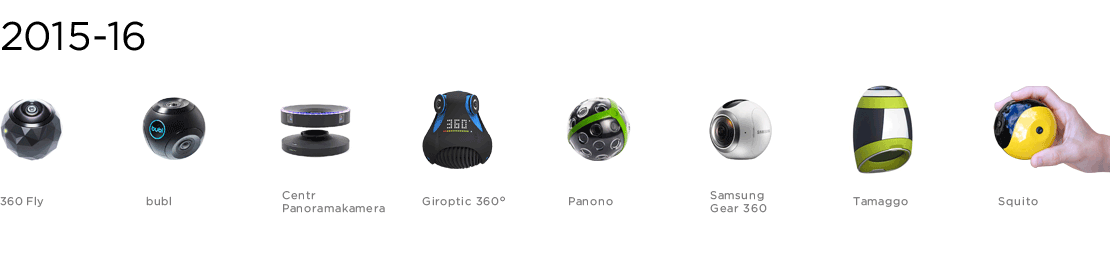
In addition to UGC content, I’ve also promoted 180° stereoscopic VR for cinematic content — in cinematic VR the director still has a role, and as Greg Madison of Unity has stated, rendering content behind a cinema viewer’s head is “a waste of pixels.”
 Yesterday night I attended LUCID’s product launch party. On the same day Google announced their own VR180 format in a partnership to produce cameras with Lenovo and LG — the timing of Google’s announcement with Lucid’s launch party is surely not coincidental. This week Google also rolled out VR heat maps into YouTube’s VR analytics platform showing that fully 75% of users never stray beyond the front 90° field-of-view in 360° video content.
The path to broad consumer adoption will ultimately take place through the smartphone. Fortunately, unlike un-pocketable 360° ball cameras, the form factor of 180° stereoscopic cameras is capable of being absorbed into the phone.
Apple and Samsung are ultimately the only players that have enough market share to do this at scale. Samsung should have done so with the introduction of Samsung Gear VR. Apple should have done so already — unfortunately, if iPhone case leaks are accurate, they won’t be doing so in this year’s model either.
Stereoscopic videography in a smartphone will not only bring 180° VR content creation to the masses, but also turn any Samsung Gear or Google Cardboard style smartphone-enabled VR headset into a video-through AR headset, providing a bridge to AR glasses.
The technology is here, what is the industry waiting for?
]]>